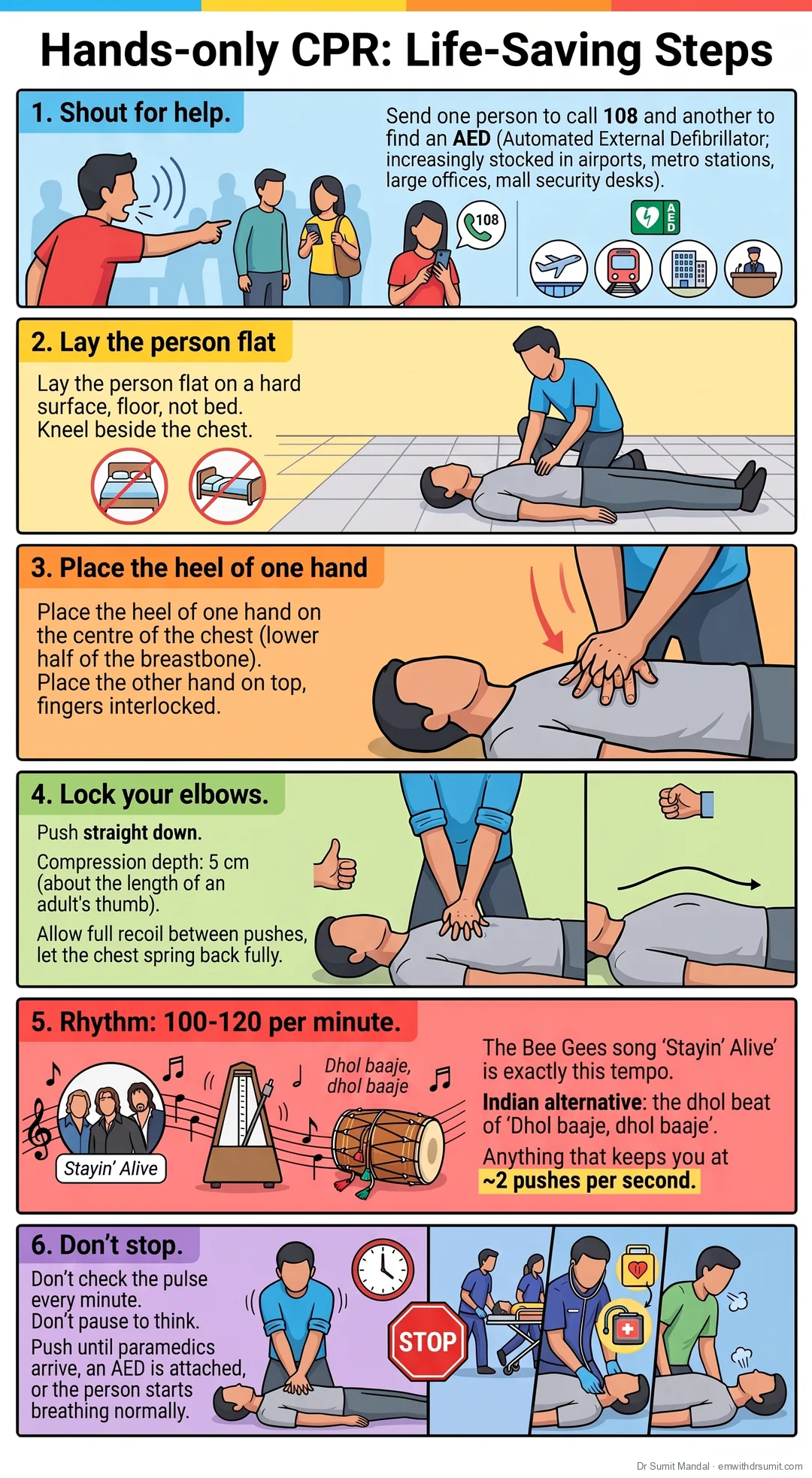
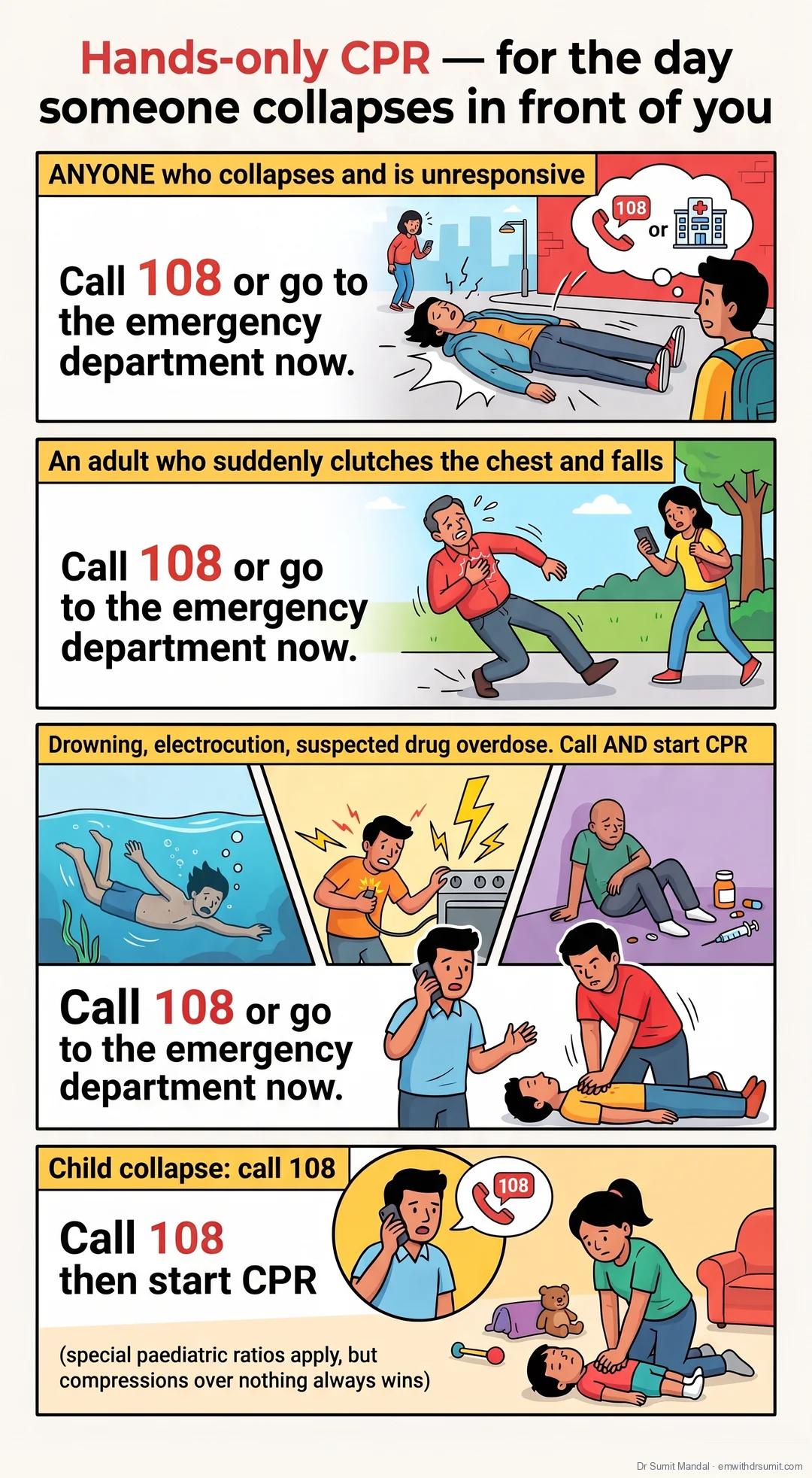
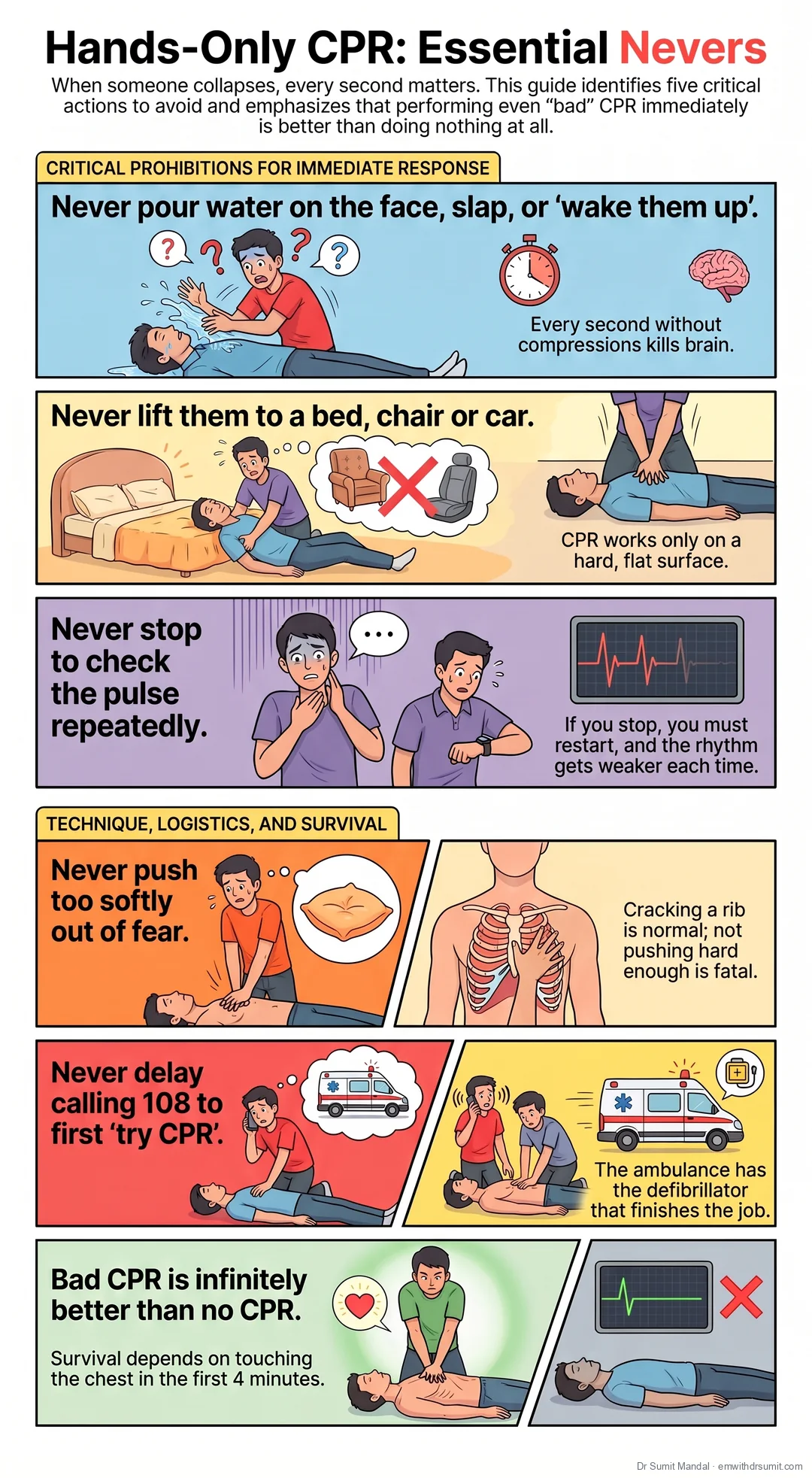
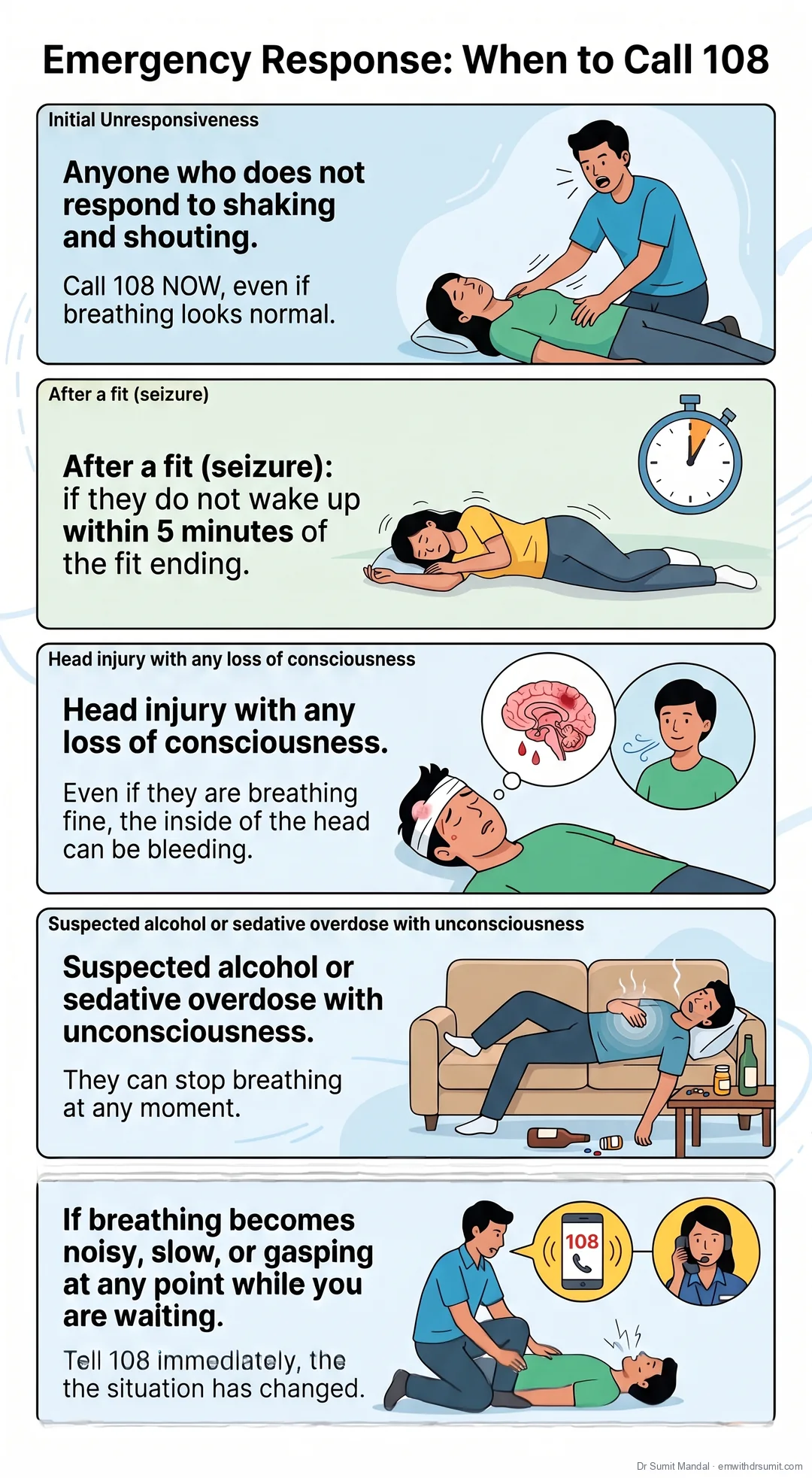
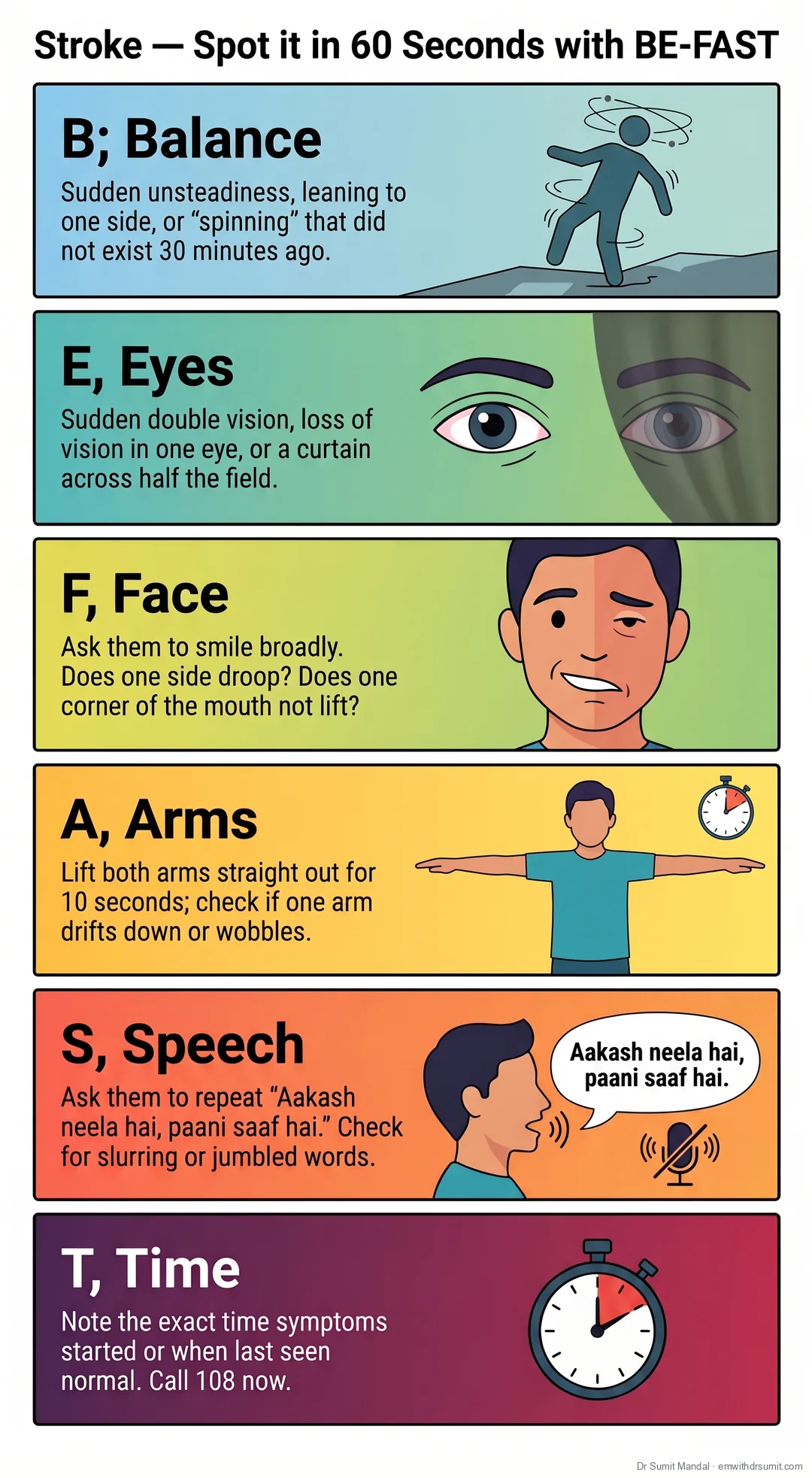
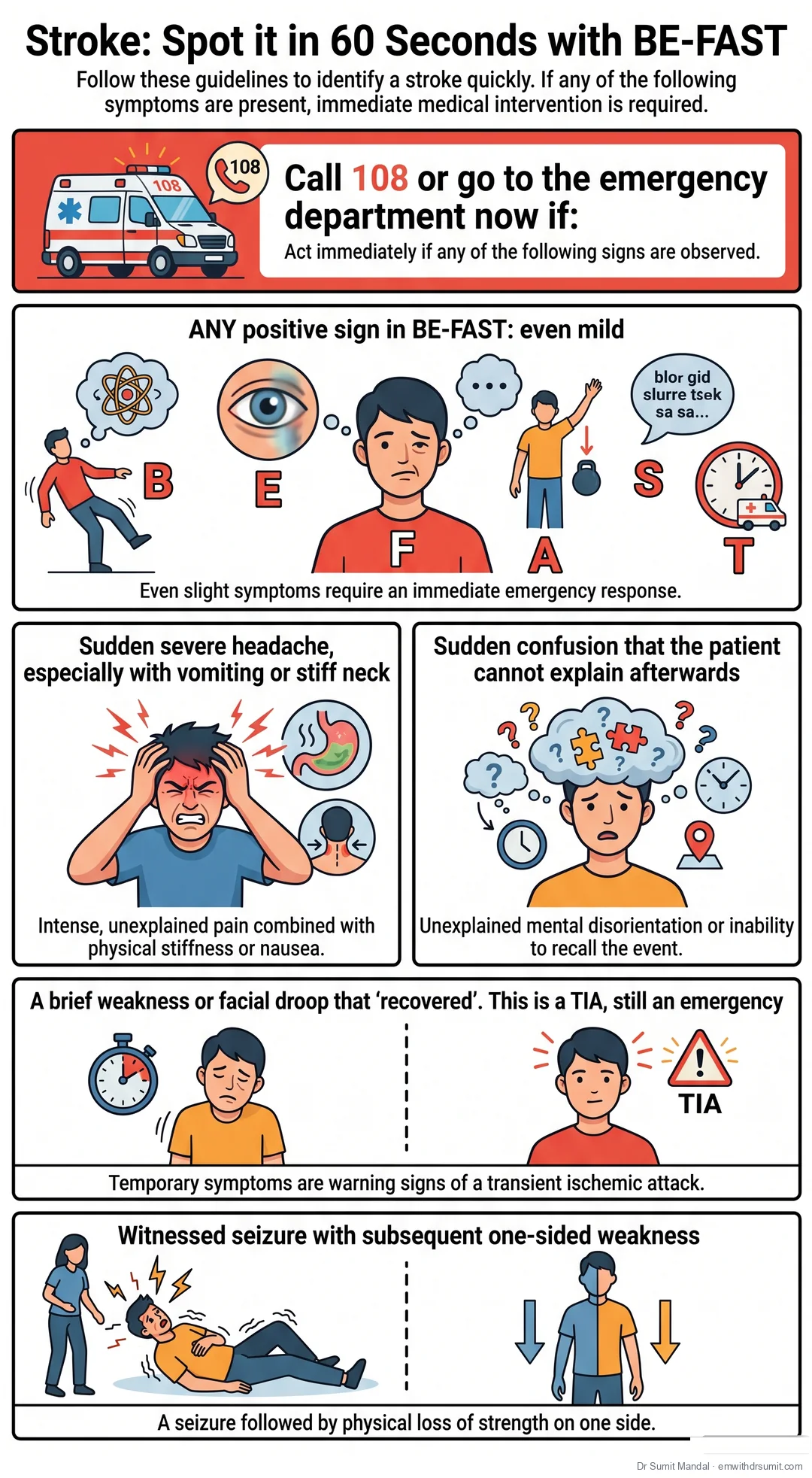
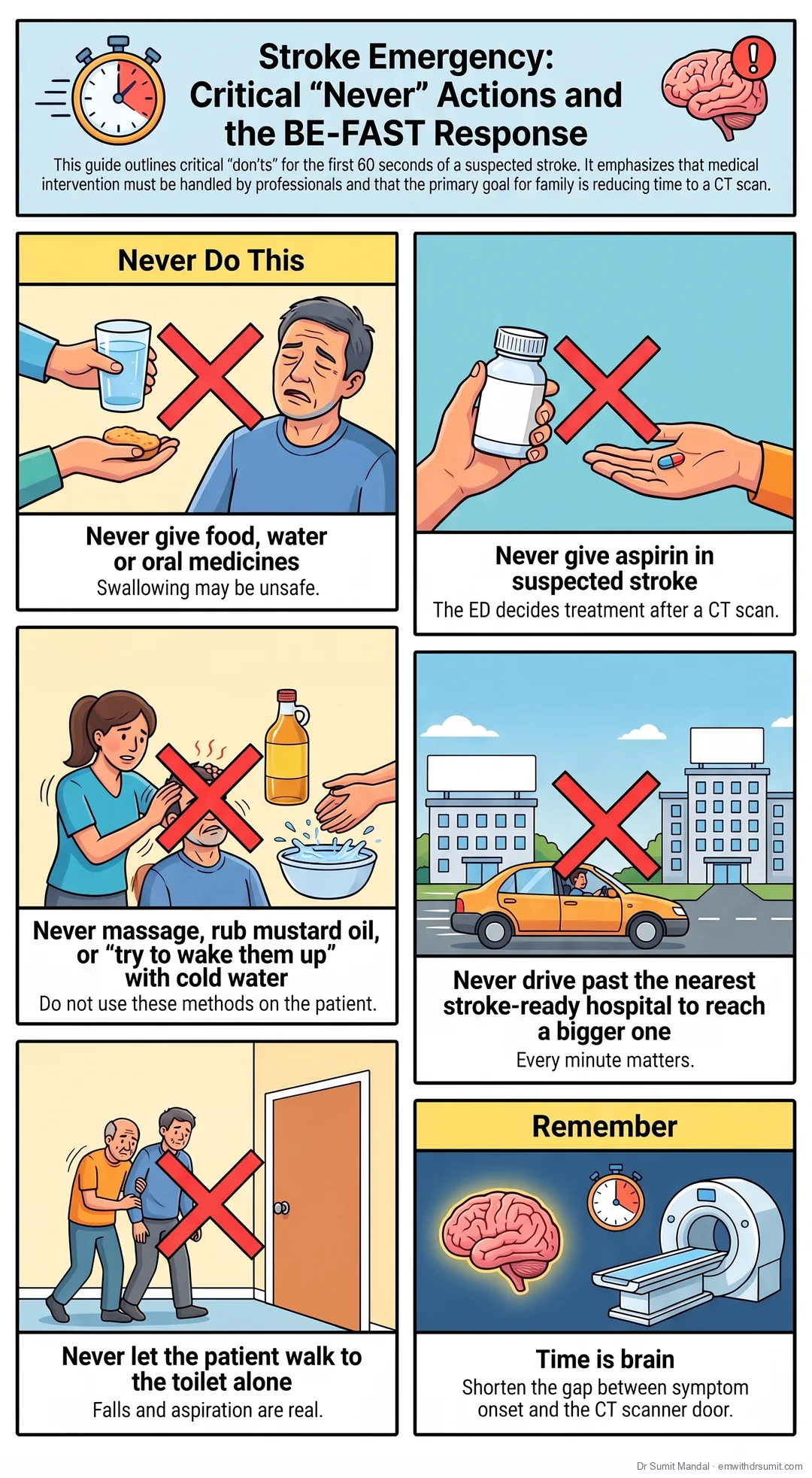
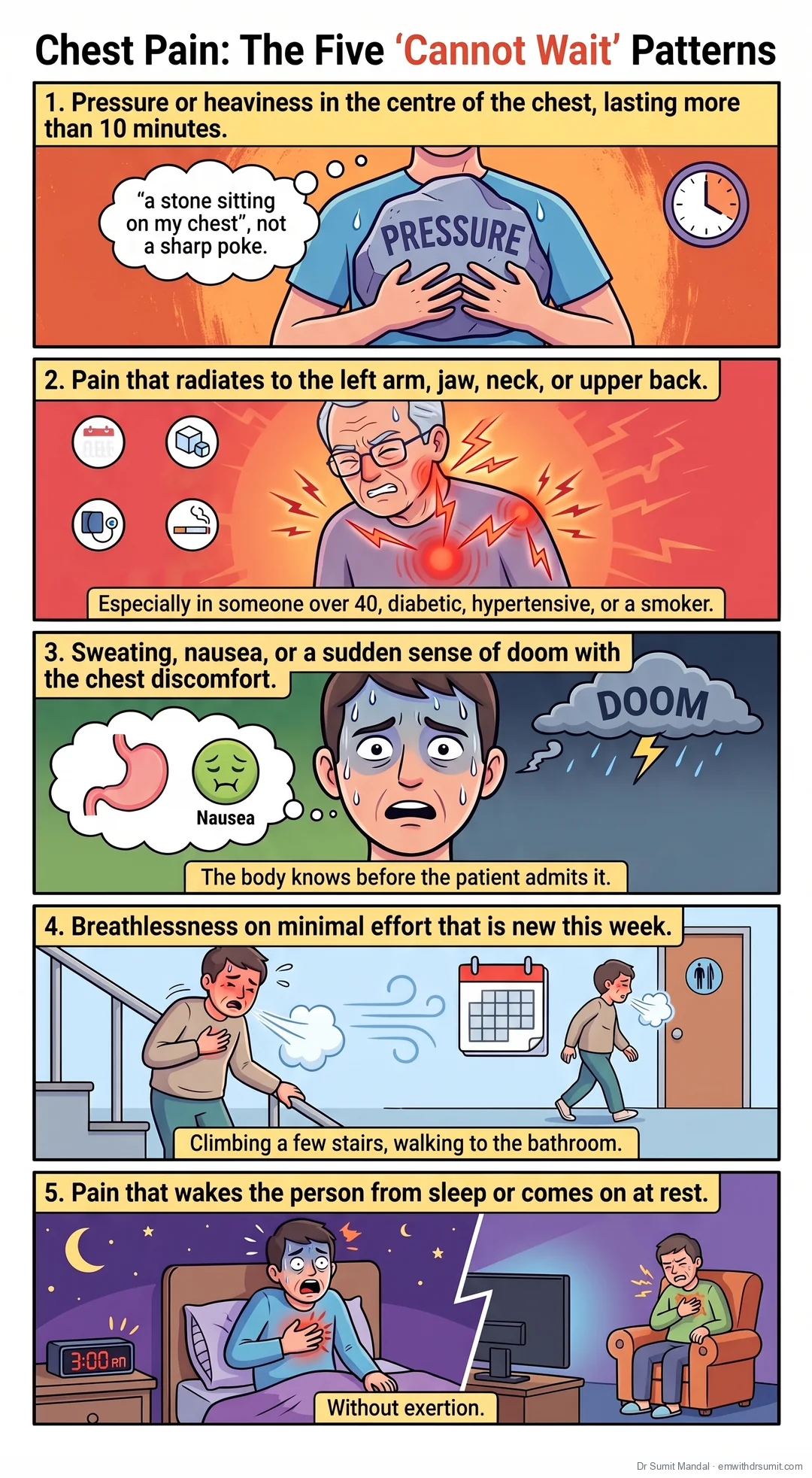
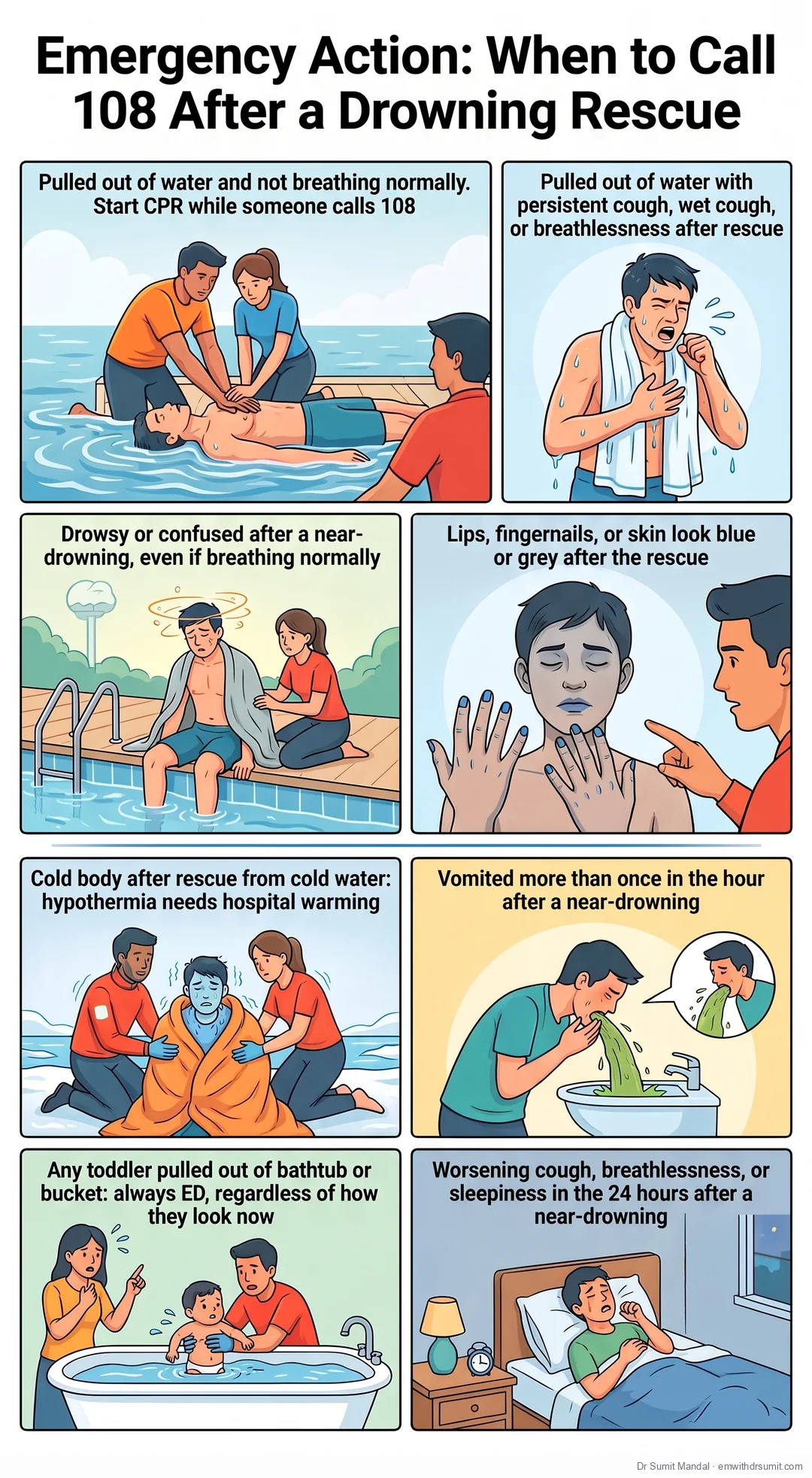
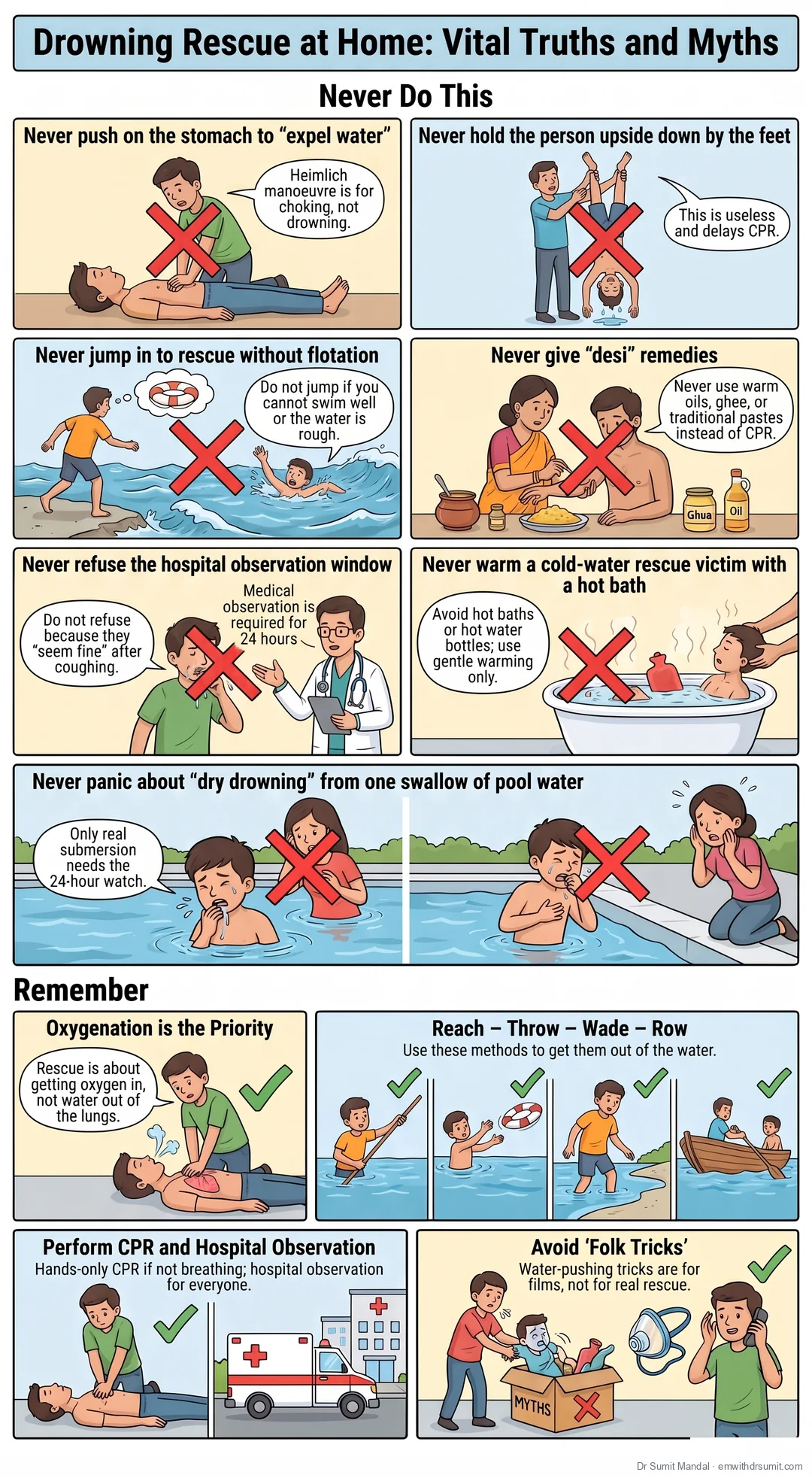
When someone is hurt or collapses and the ambulance is still on its way.
Hands-only CPR: for the day someone collapses in front of you
Hands-only CPR: jis din kisi ke saamne koi gir jaaye
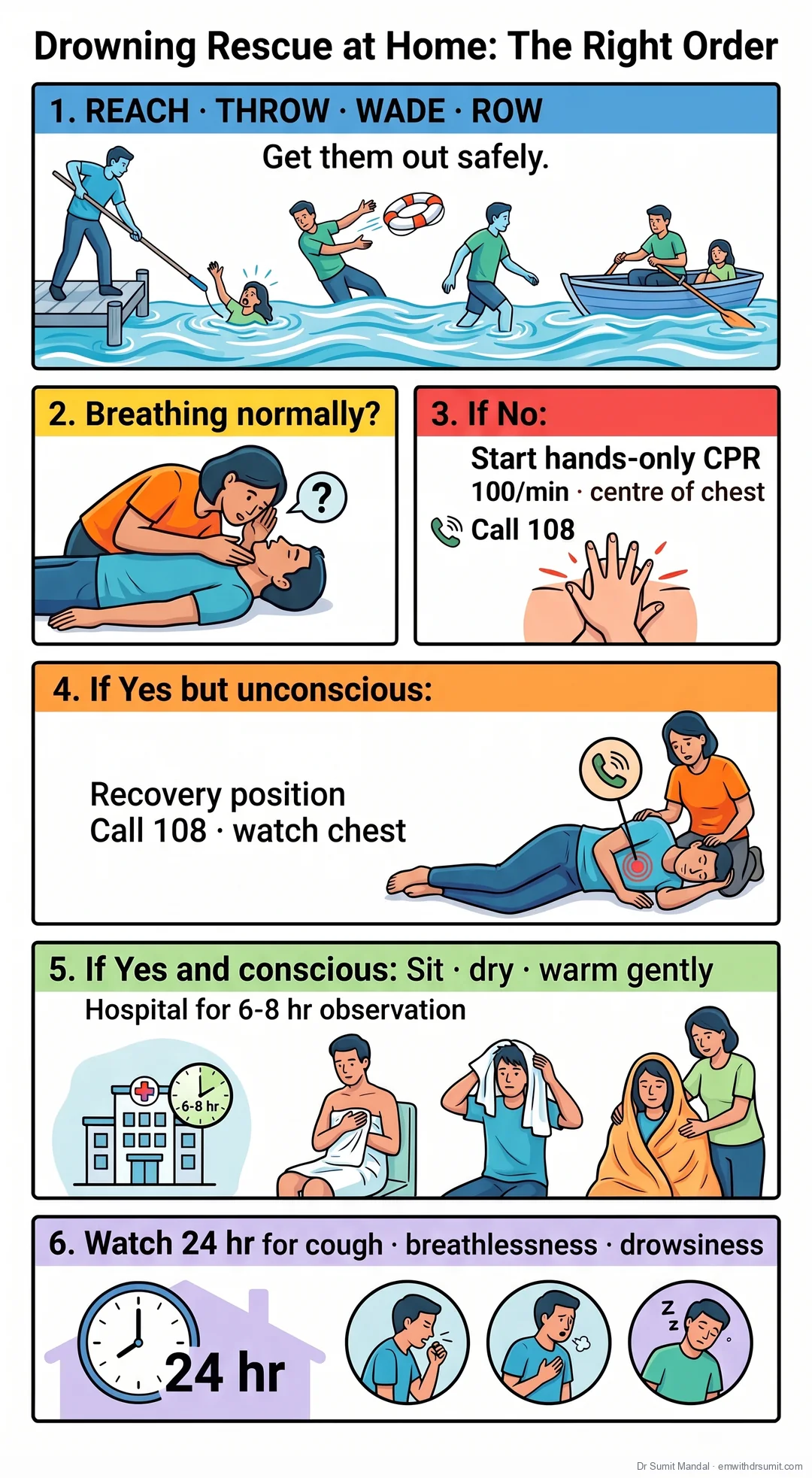
Most cardiac arrests in India happen at home, and bystander CPR triples survival. You do not need a course or a certificate, just two hands, 100 beats per minute, and the will not to freeze.
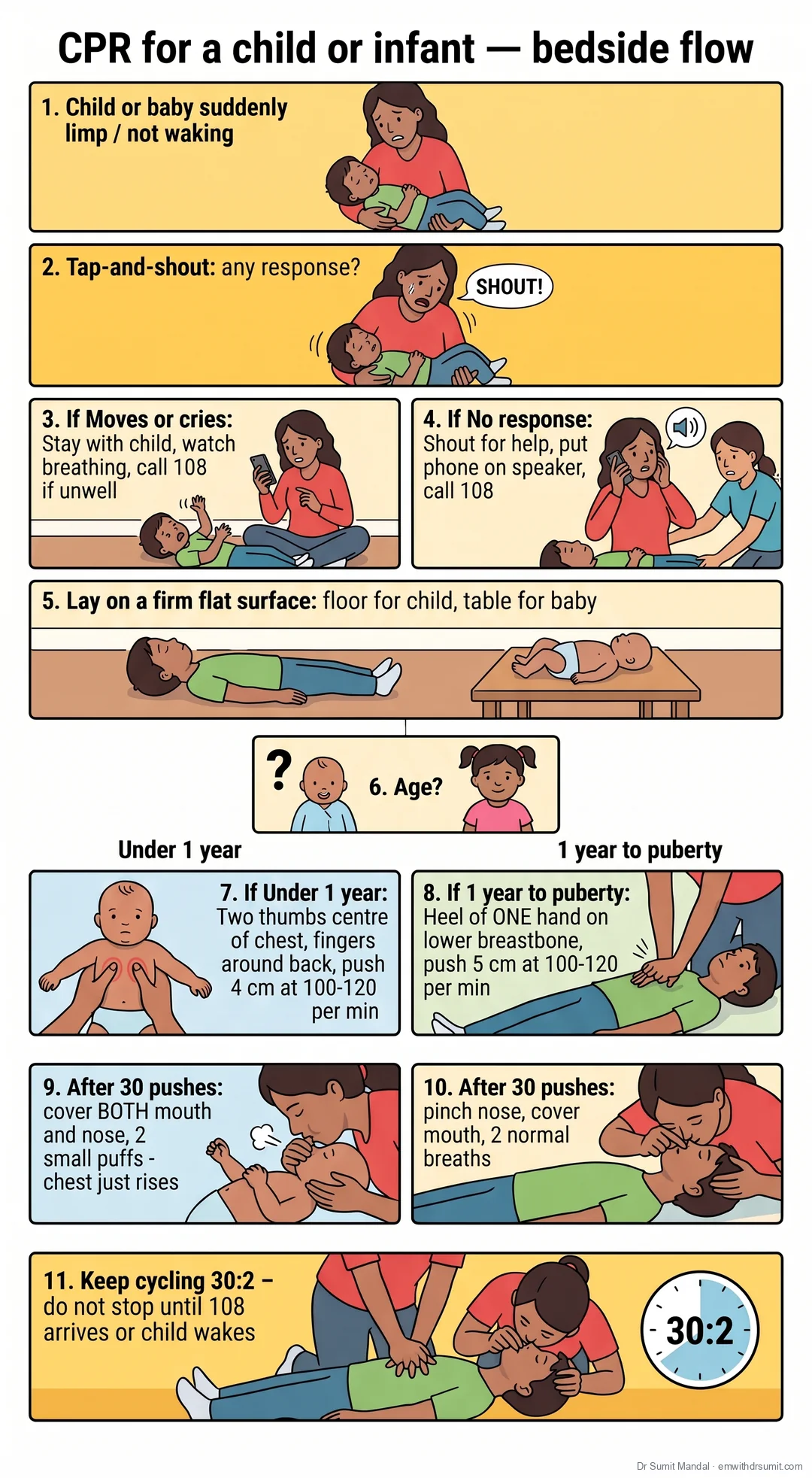
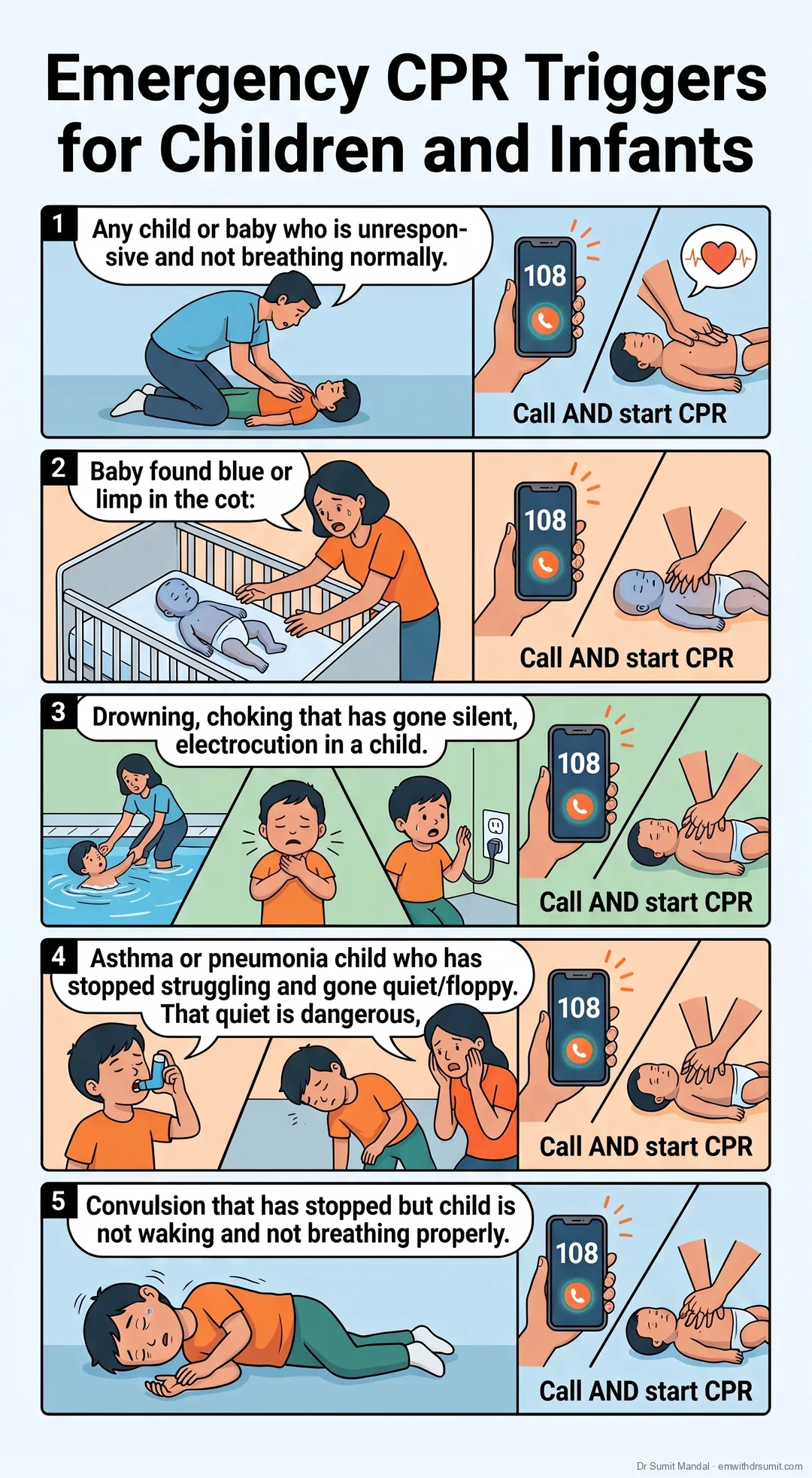
CPR for a child or infant: when the hand position is different
Bachche aur shishu ke liye CPR: jab haath rakhne ka tareeka alag hota hai
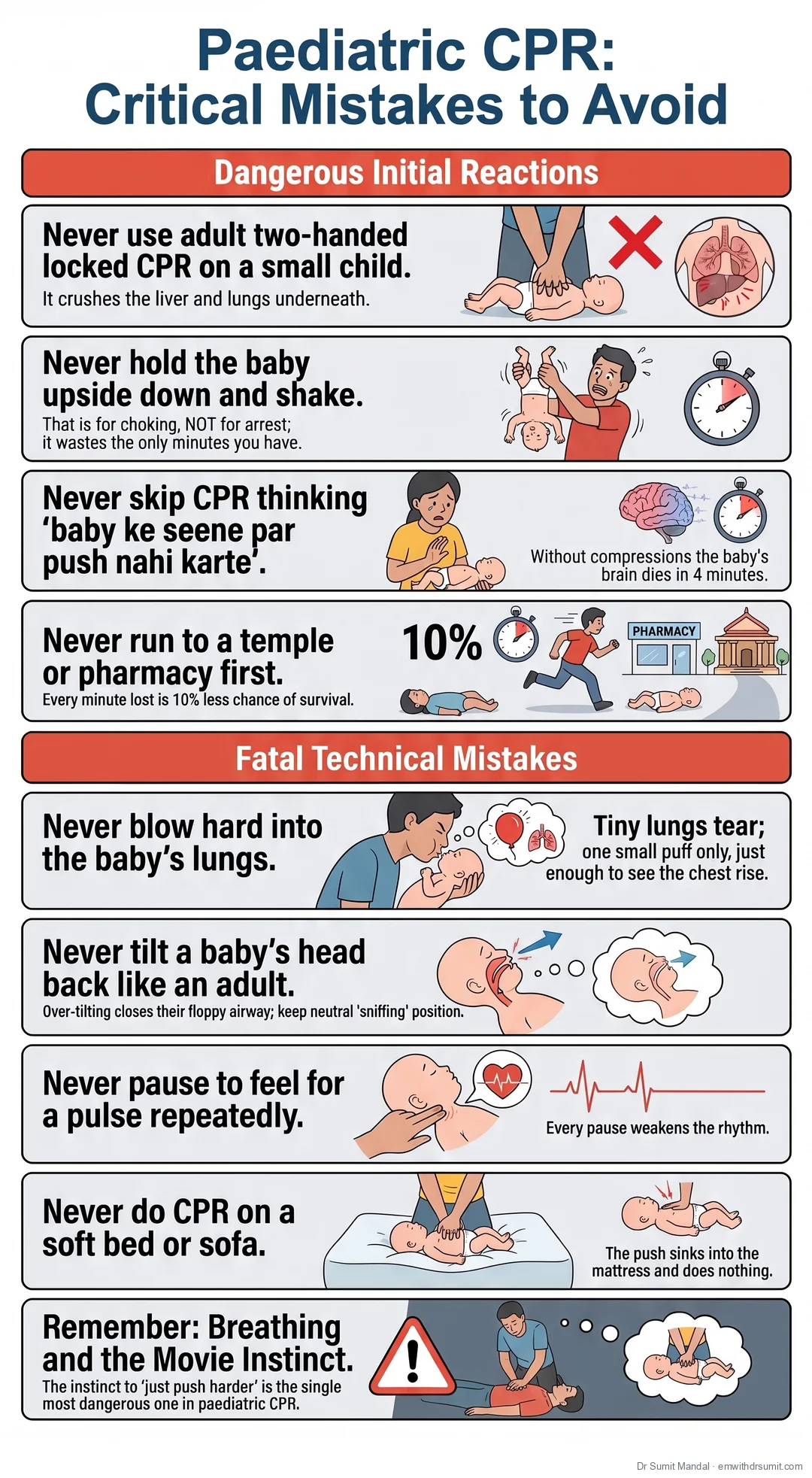
A child's chest is smaller and softer than an adult's. Adult two-handed CPR can crush a small body. Same idea, gentler hands: two thumbs for a baby, one hand for a child, push one-third of the chest deep, 100–120 per minute.
Choking: clearing the airway in adults, children, and infants
Saans mein cheez phasna: adult, bachcha aur shishu mein airway saaf karna
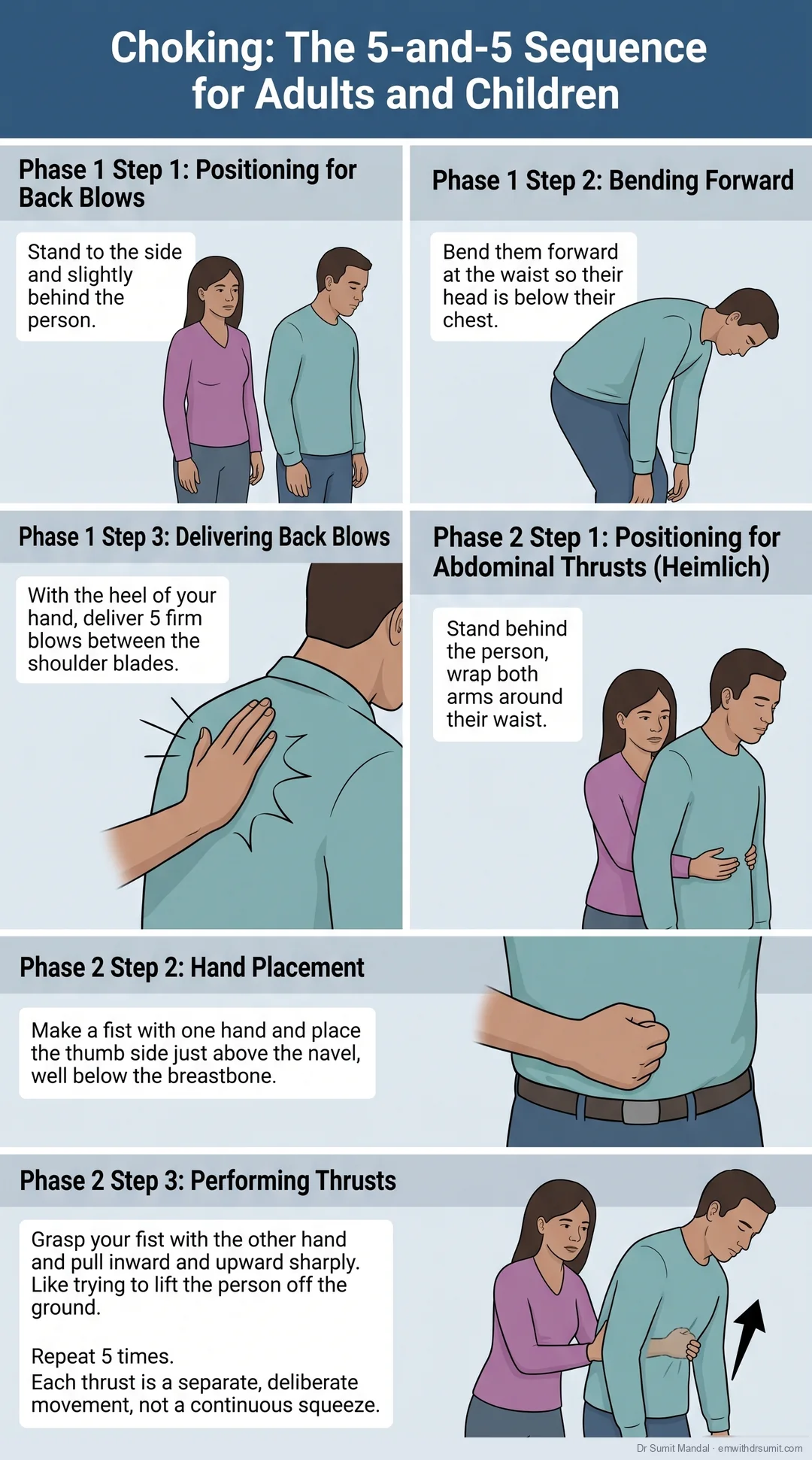
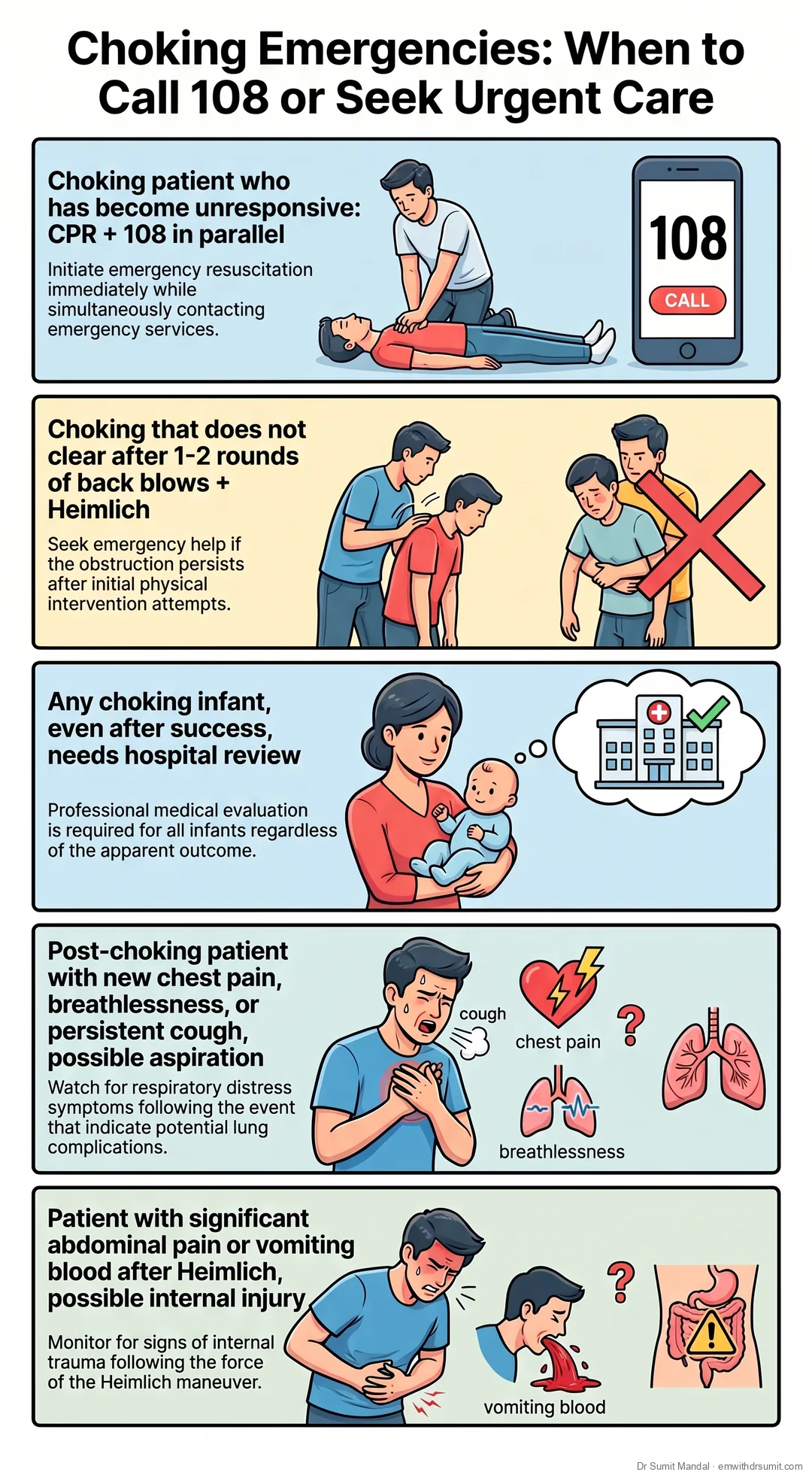
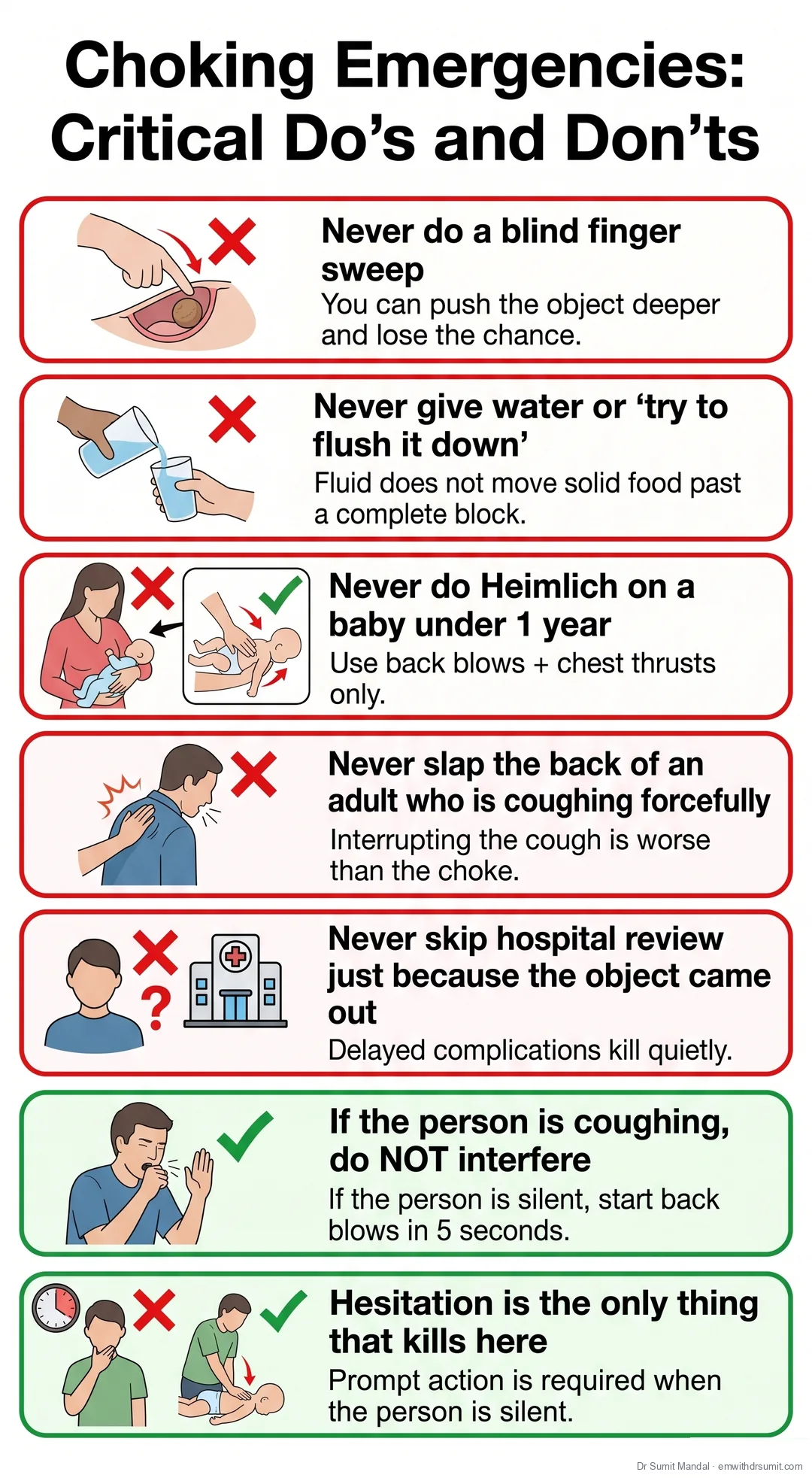
A peanut, a piece of roti, a marble, choking kills in 4 minutes. The right back-blow + Heimlich technique works on the very first try when you don't panic.
Choking infant: back-blows and chest-thrusts, never the finger sweep
Gala atka hua bachcha (1 saal se chhota): peeth par thapki aur seene par dabav, ungli MAT daalo
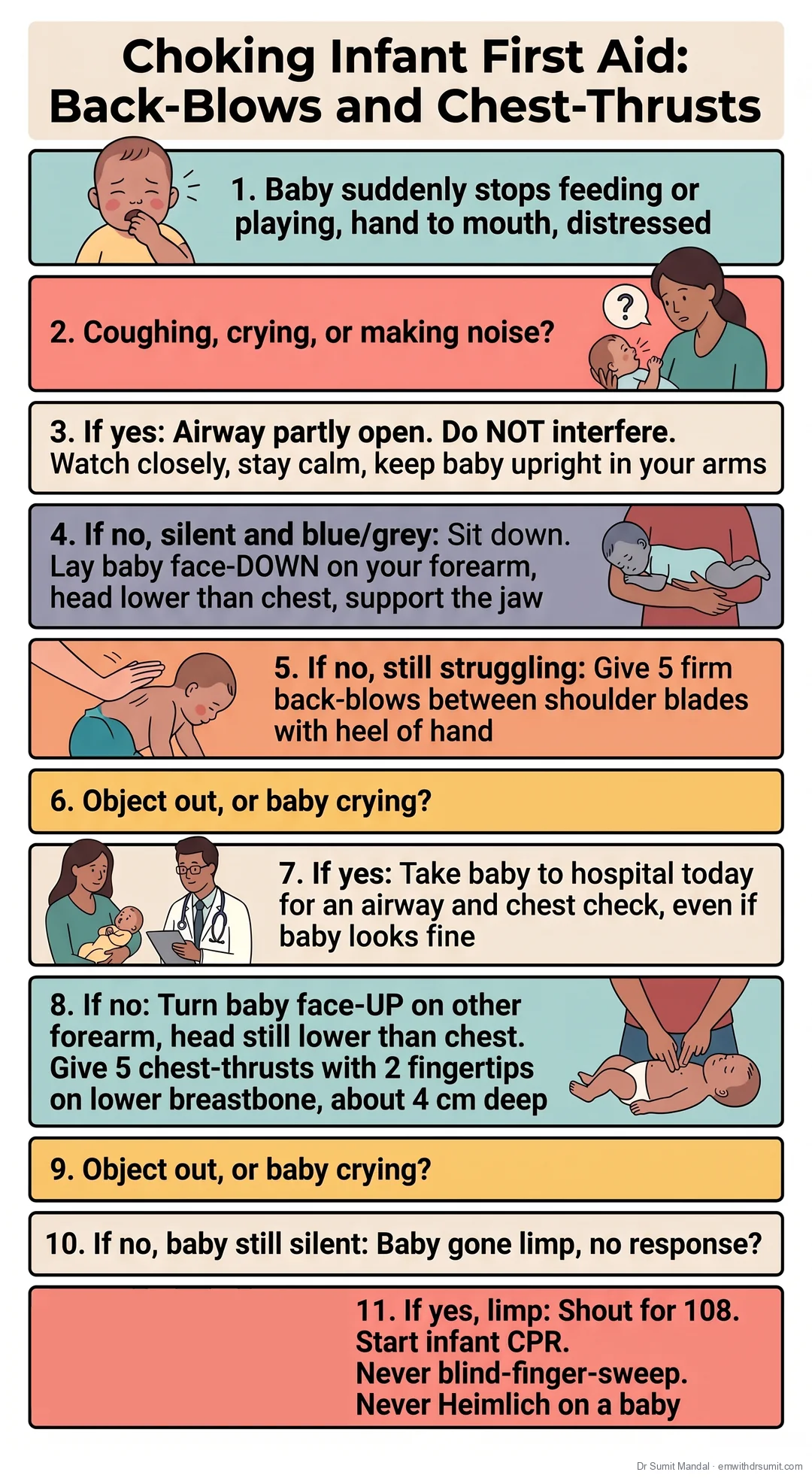
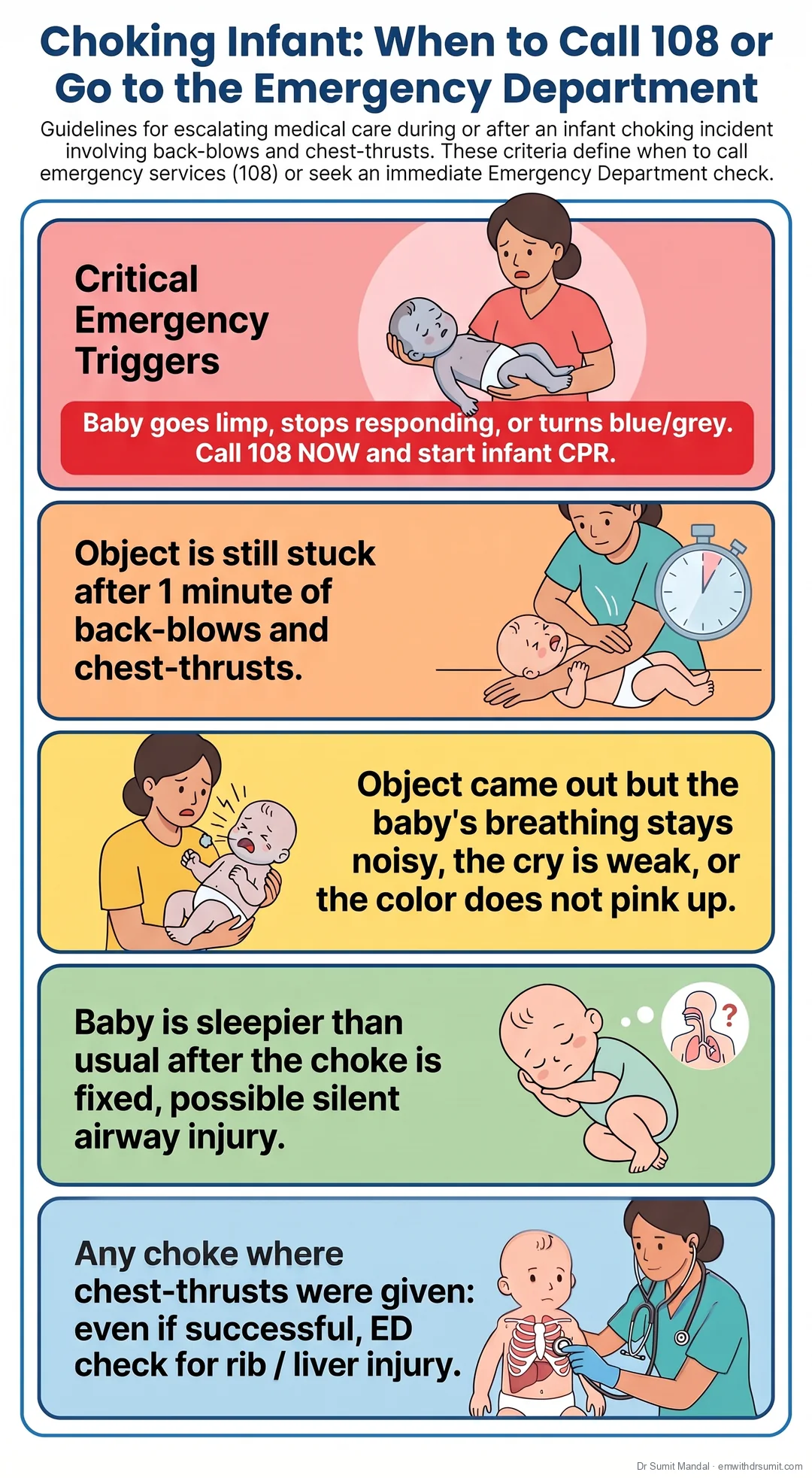
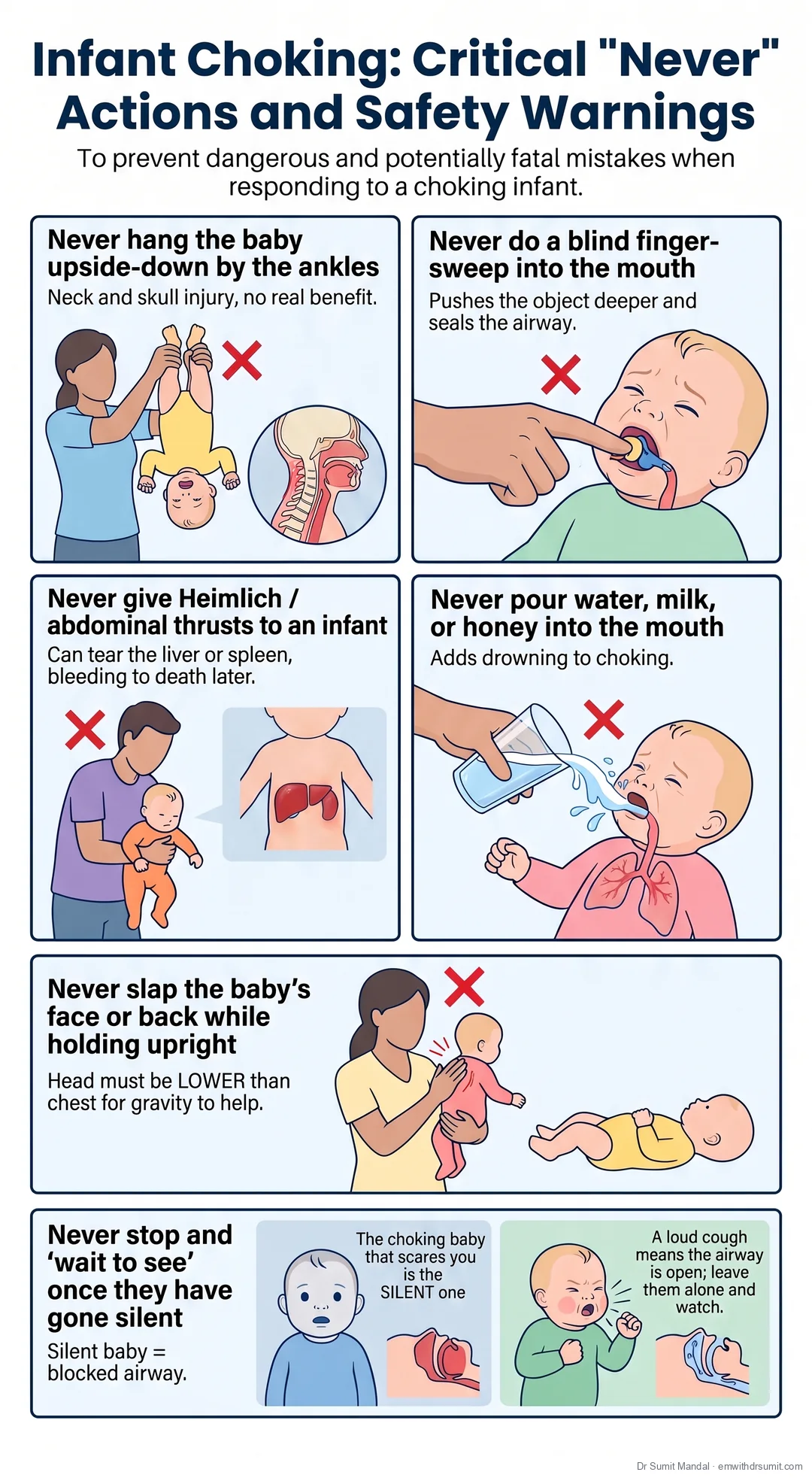
An infant under 1 year who suddenly stops breathing after a bite, a button, or a coin is choking, not 'just gasping'. Five back-blows head-down, five chest-thrusts head-down, repeat. Never the Heimlich, never an upside-down shake, never a blind finger in the mouth.
Severe bleeding: direct pressure, then pressure points, then a tourniquet
Tez khoon behna: pehle seedha dabav, phir pressure point, phir tourniquet
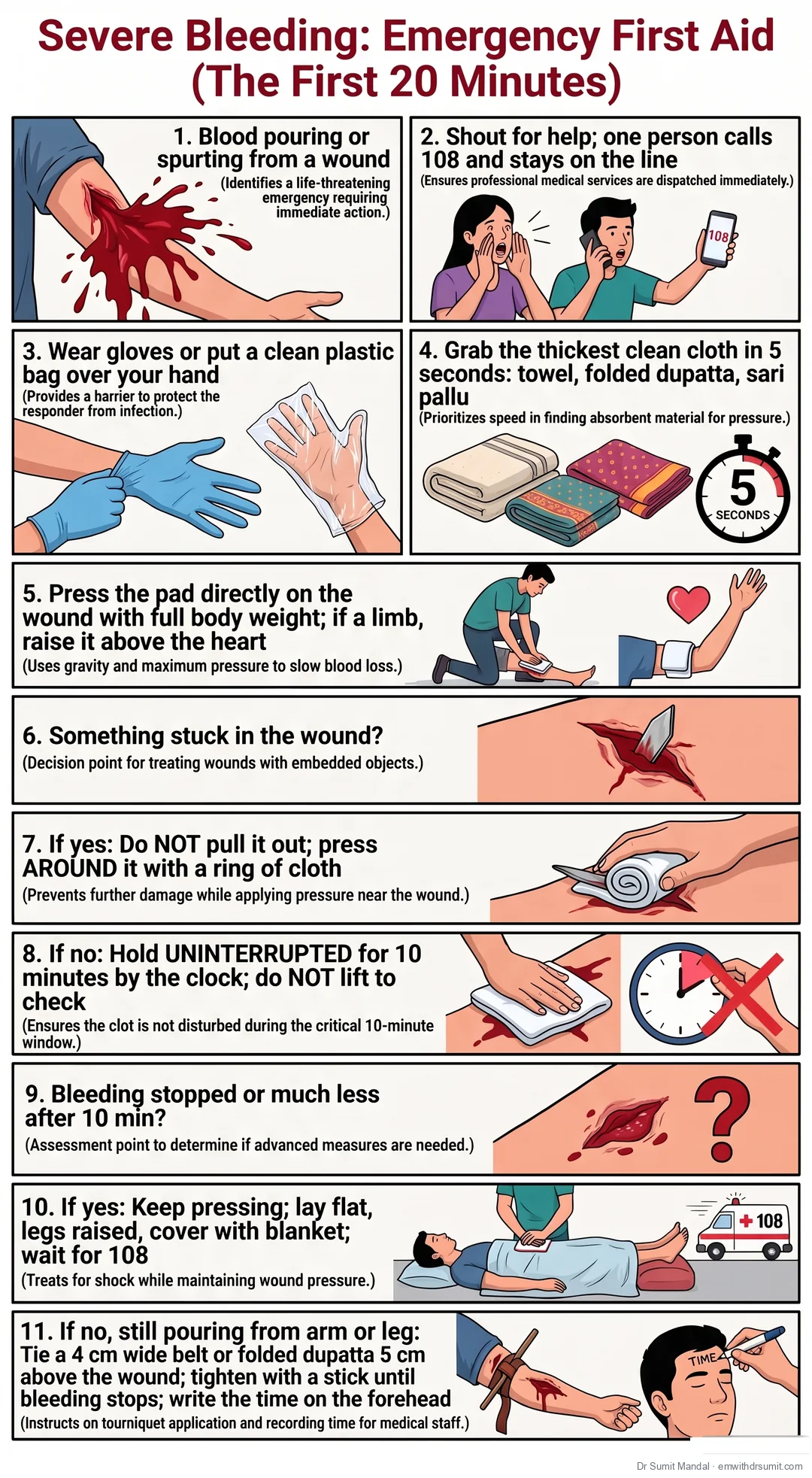
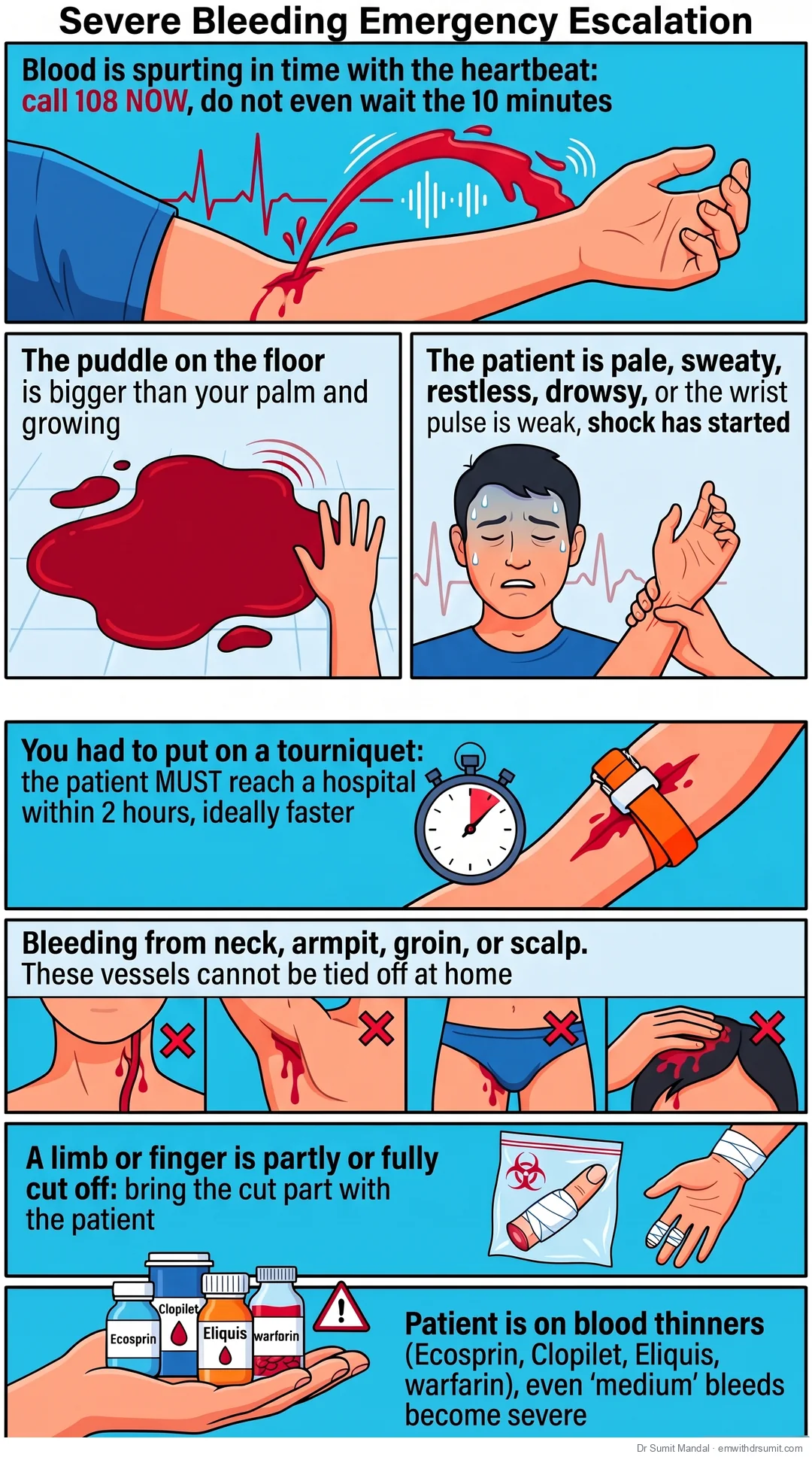
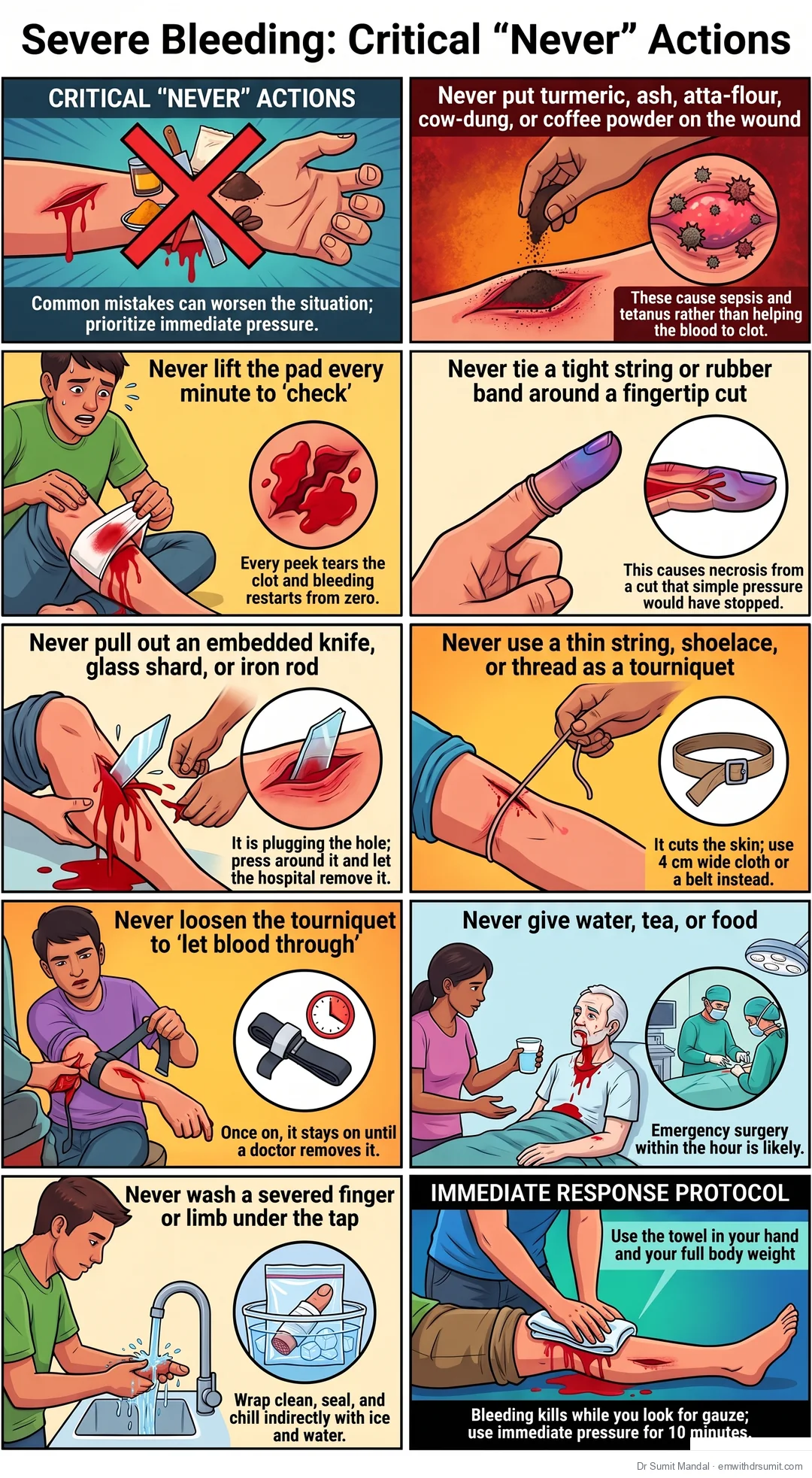
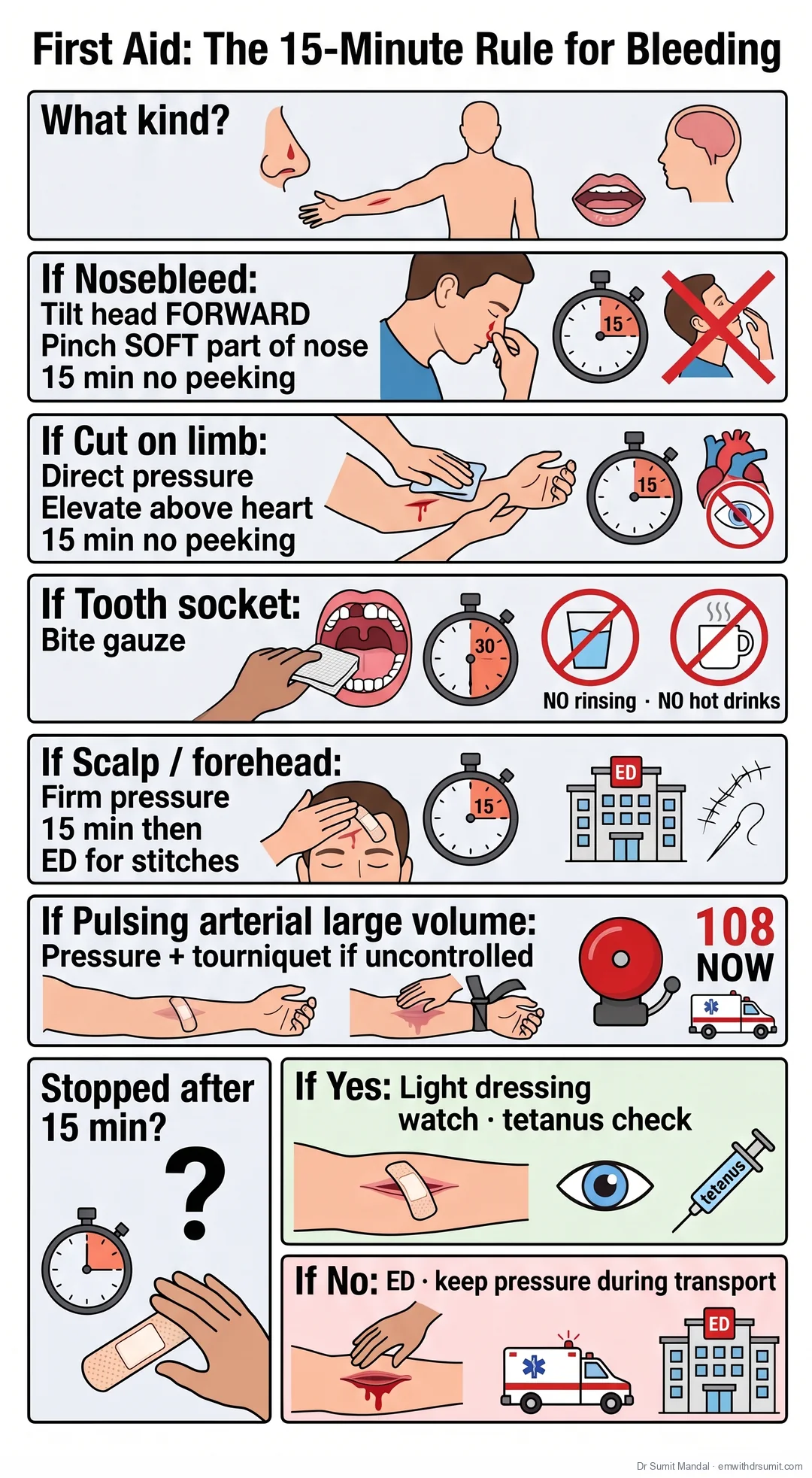
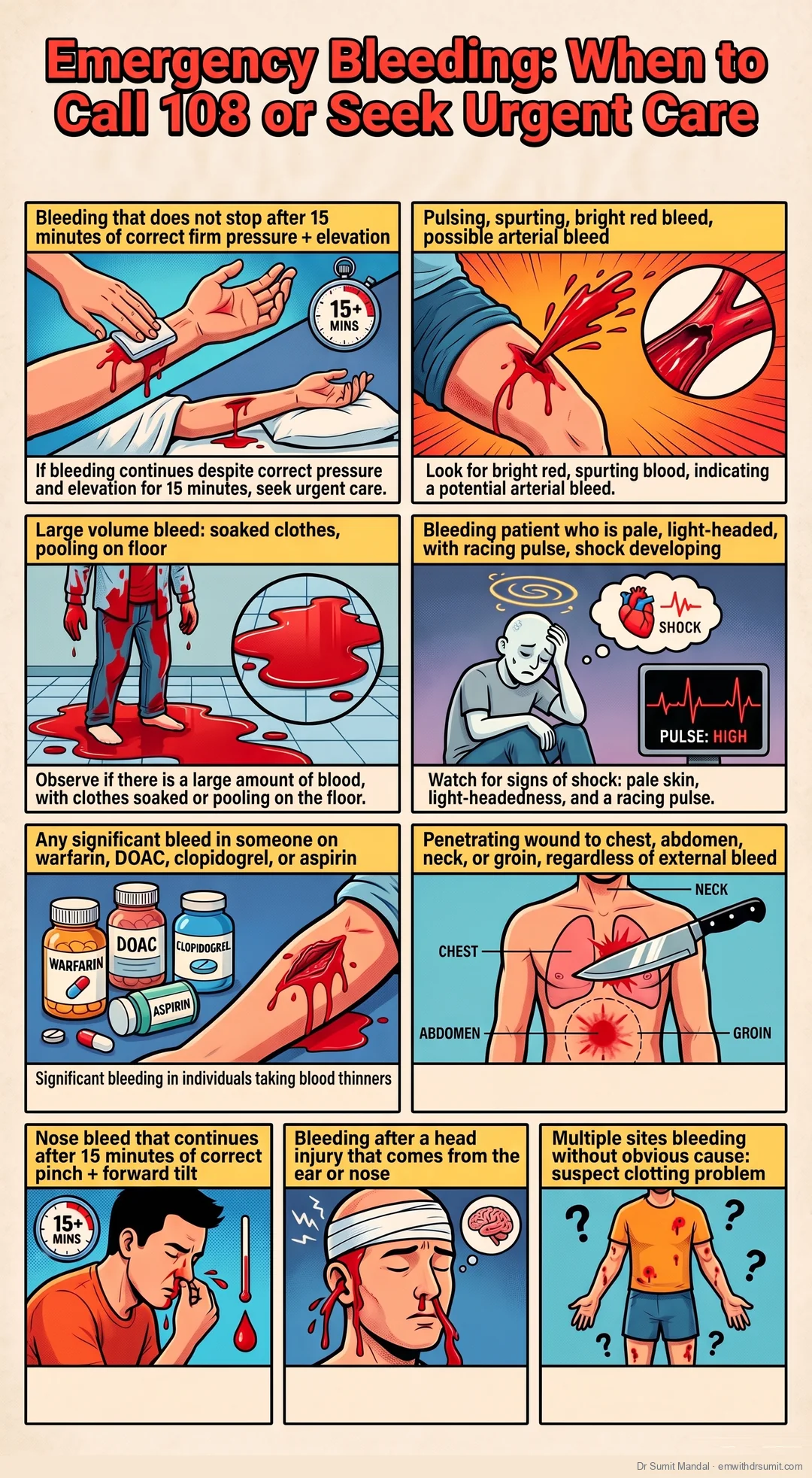
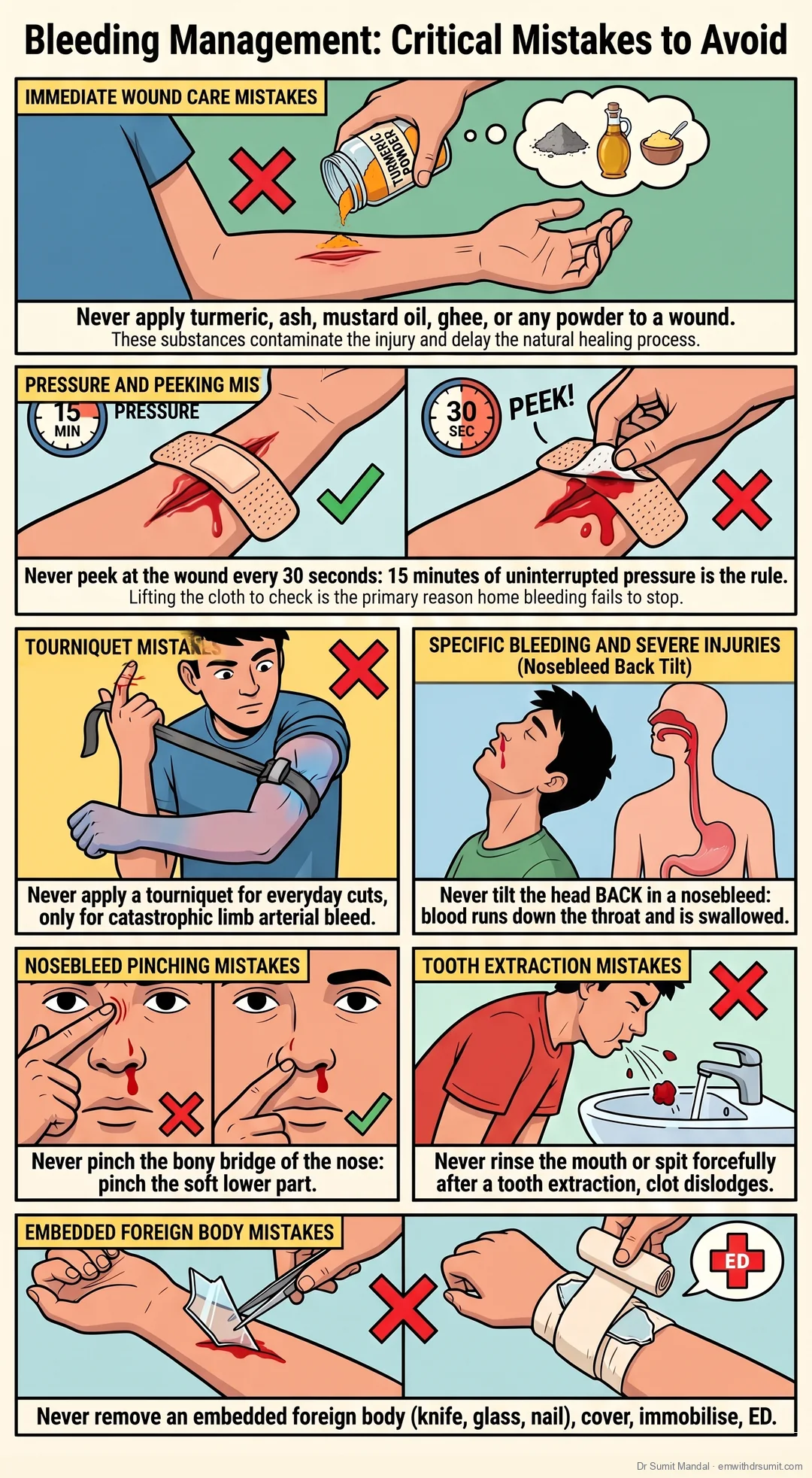
When blood is pouring or spurting from a wound, the family has 10–20 minutes to keep the person alive until 108 arrives. Two hands, one thick cloth, full body weight, and do NOT lift the pad to peek.
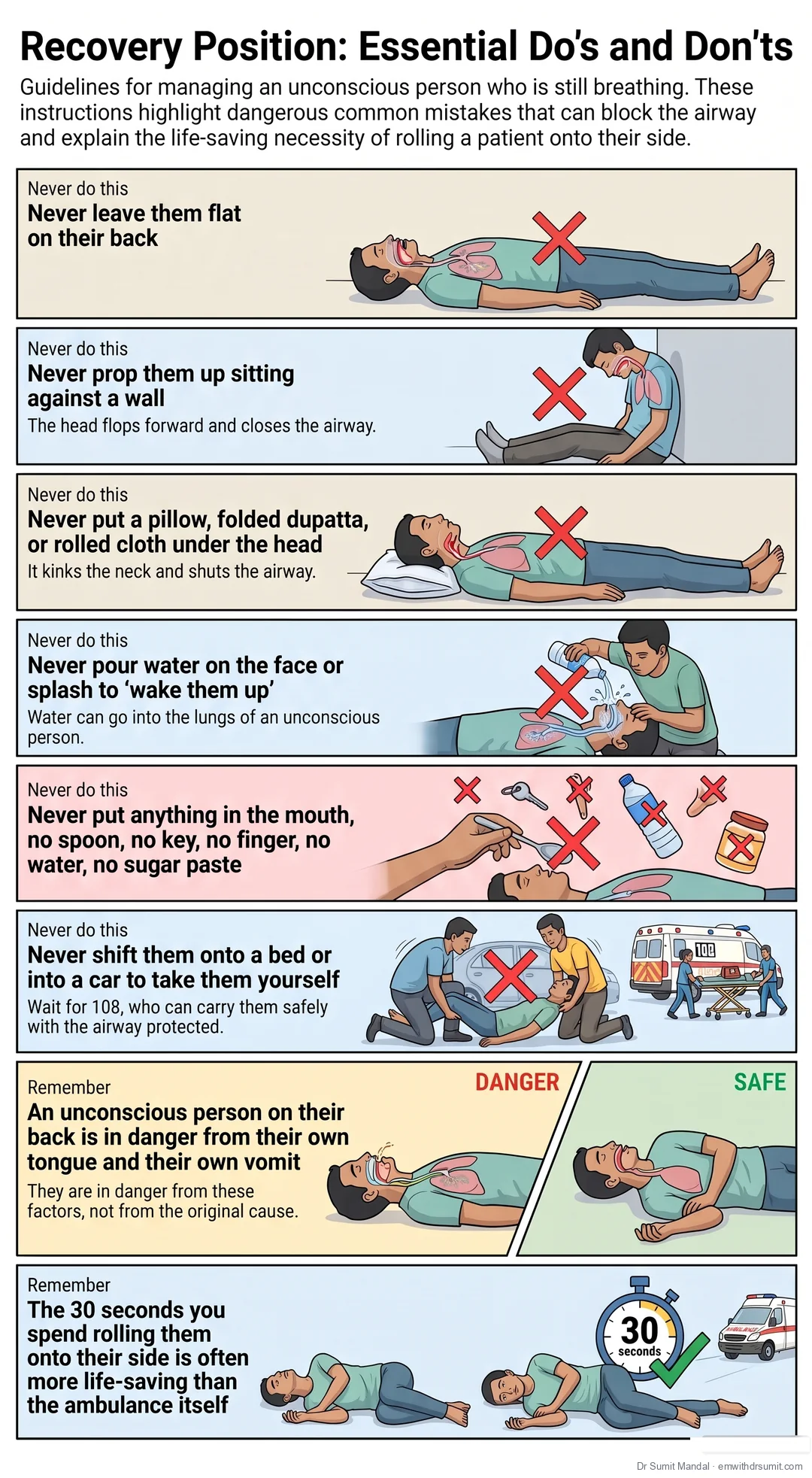
Recovery position: for the unconscious person who IS still breathing
Recovery position: behosh insaan ke liye jo saans le raha hai
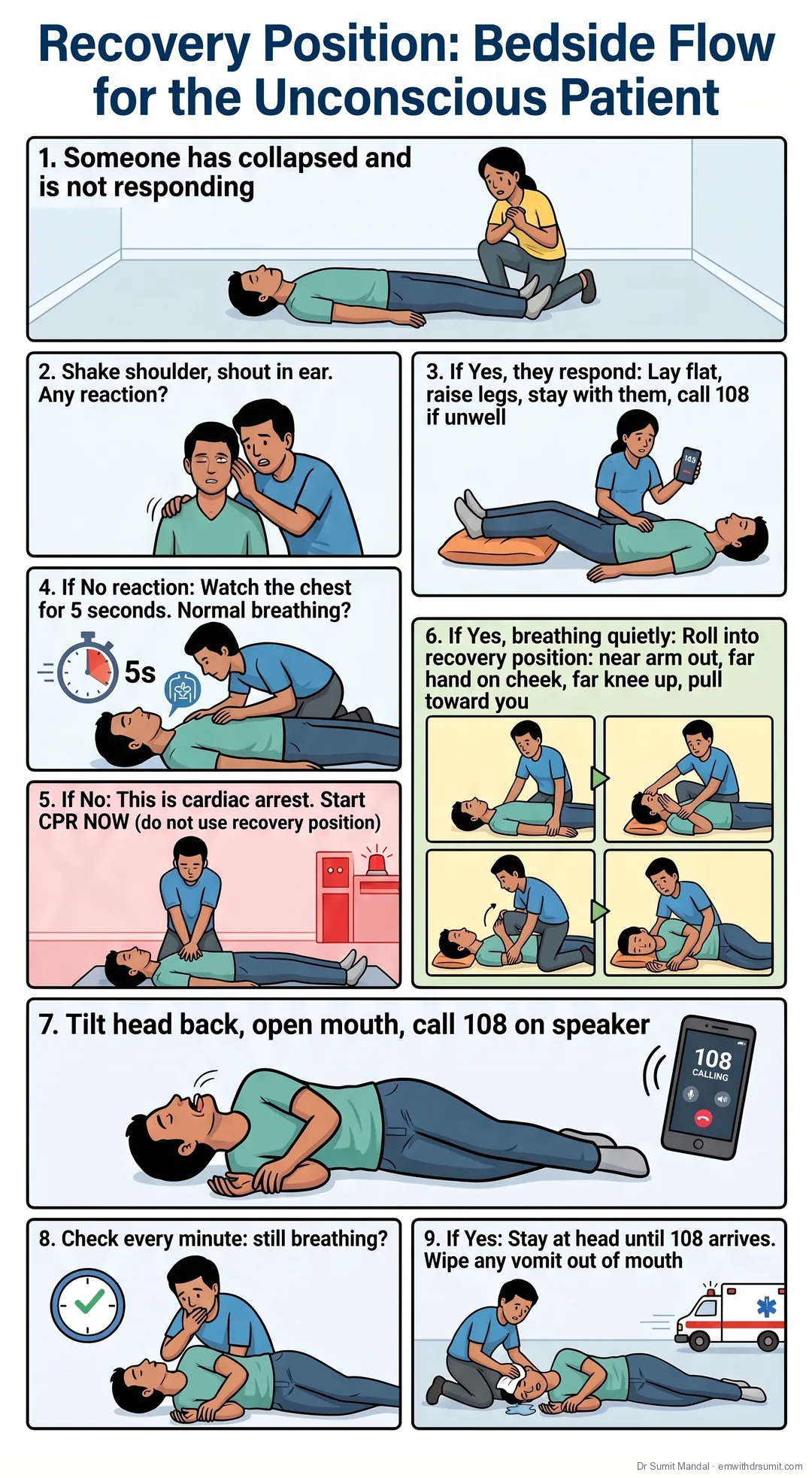
When someone is unconscious but still breathing normally, the single most important thing you can do before 108 arrives is to turn them on their side. On their back, the tongue falls back and any vomit goes into the lungs, both are silent killers.
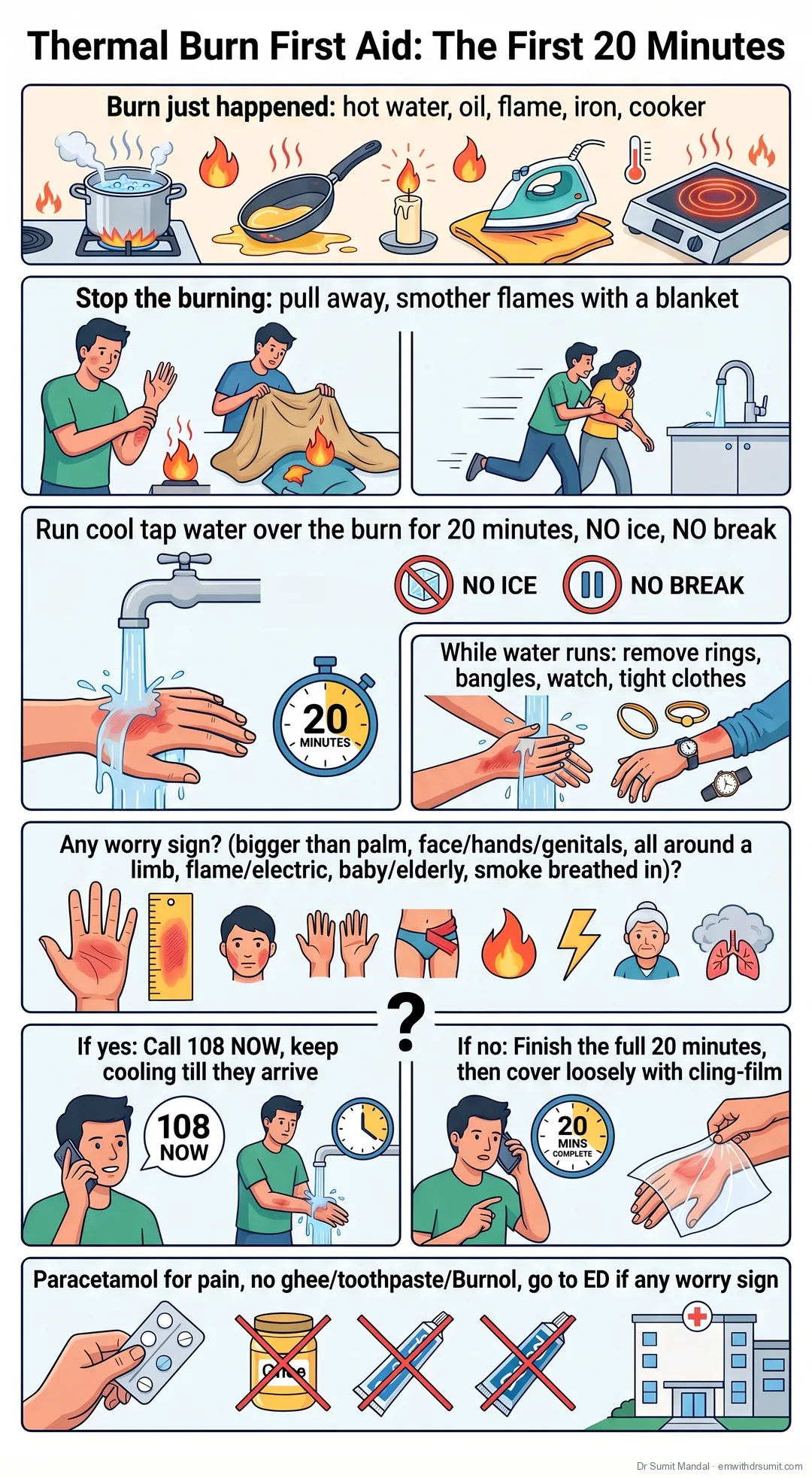
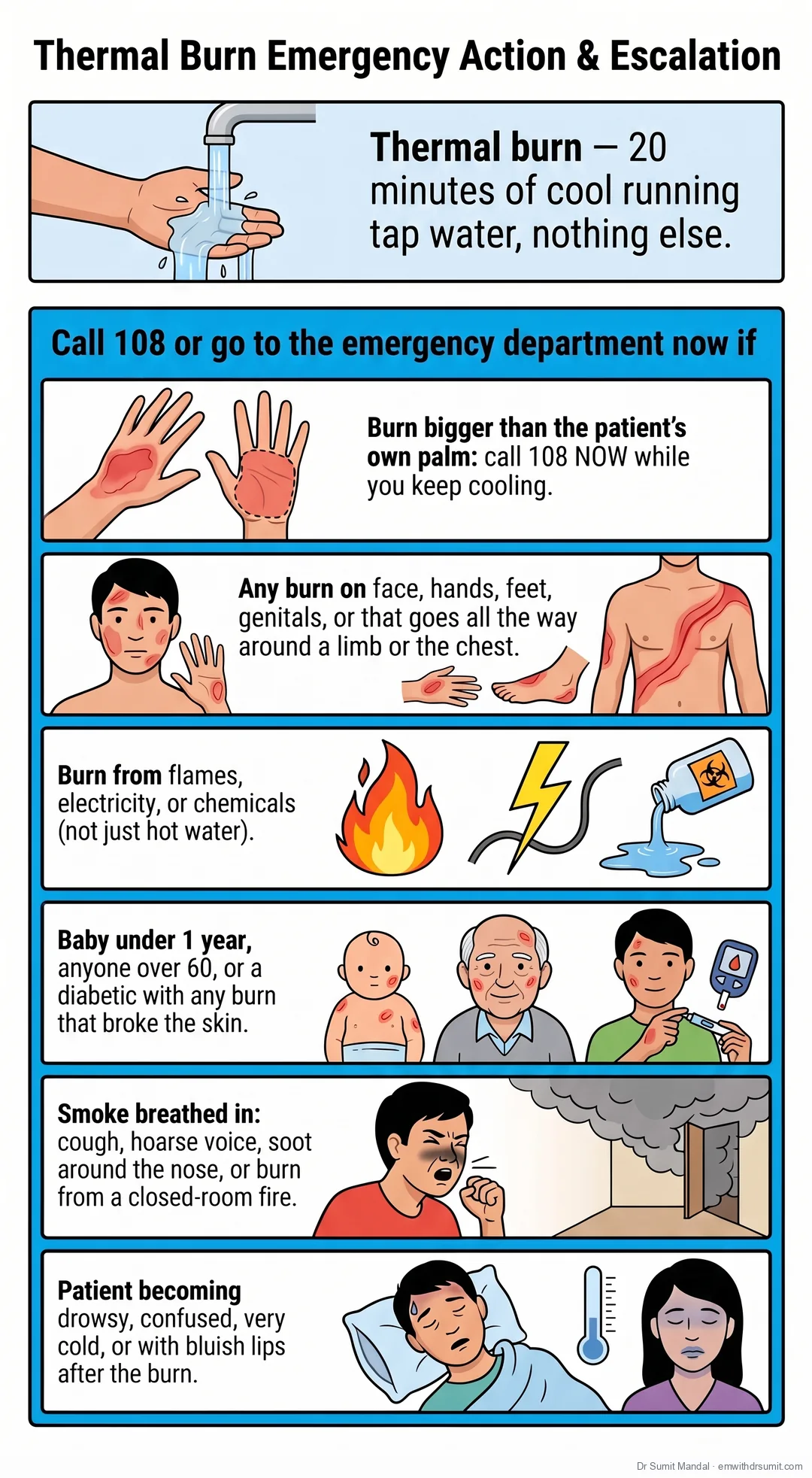
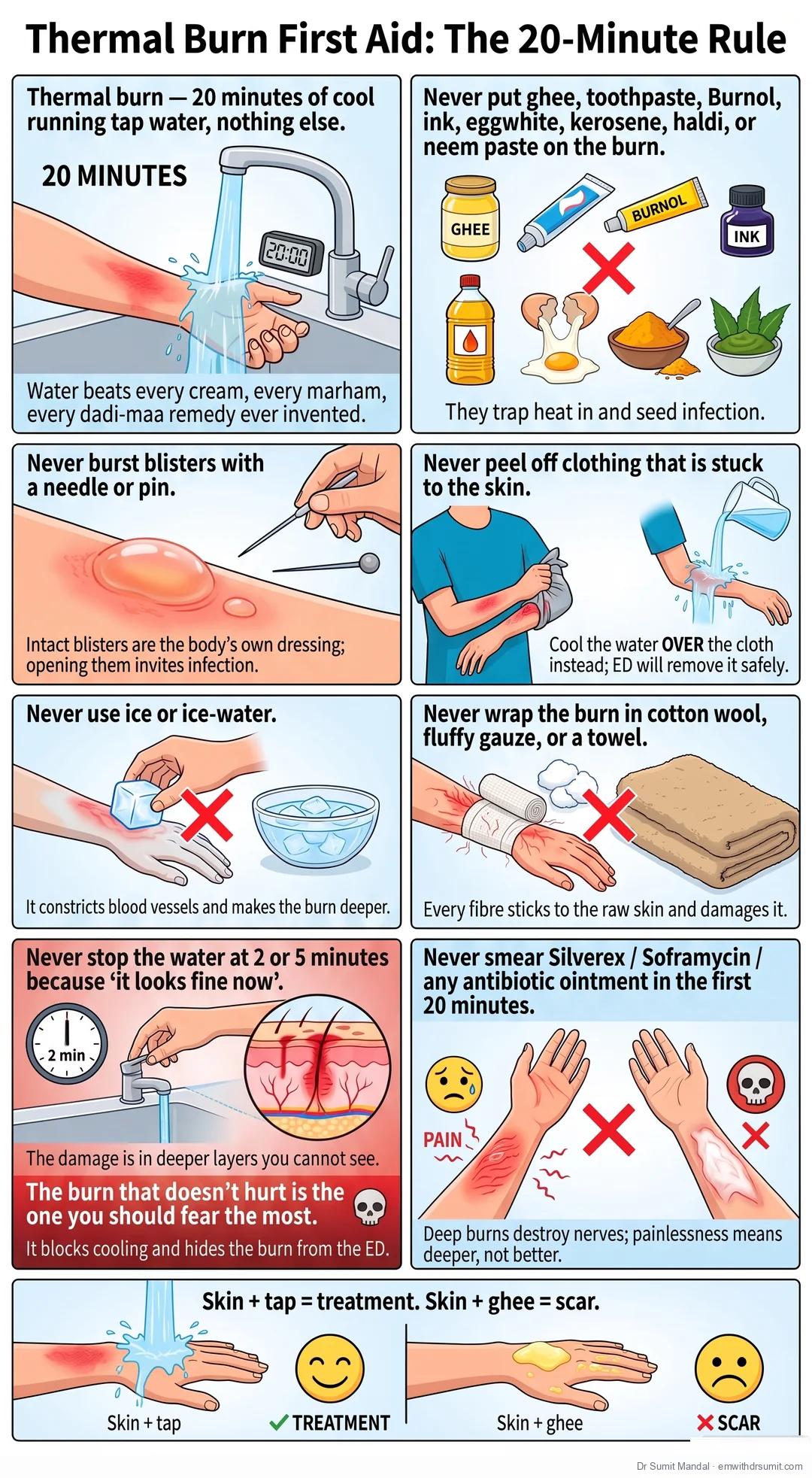
Thermal burn: 20 minutes of cool running tap water, nothing else
Jalna: 20 minute thande nal ke paani ke neeche, aur kuch nahi
The first 20 minutes after a scald or flame burn decide how deep the wound becomes. Cool running tap water for an unbroken 20 minutes is the only treatment that changes the outcome. Ghee, toothpaste, ice, and Burnol all make it worse.
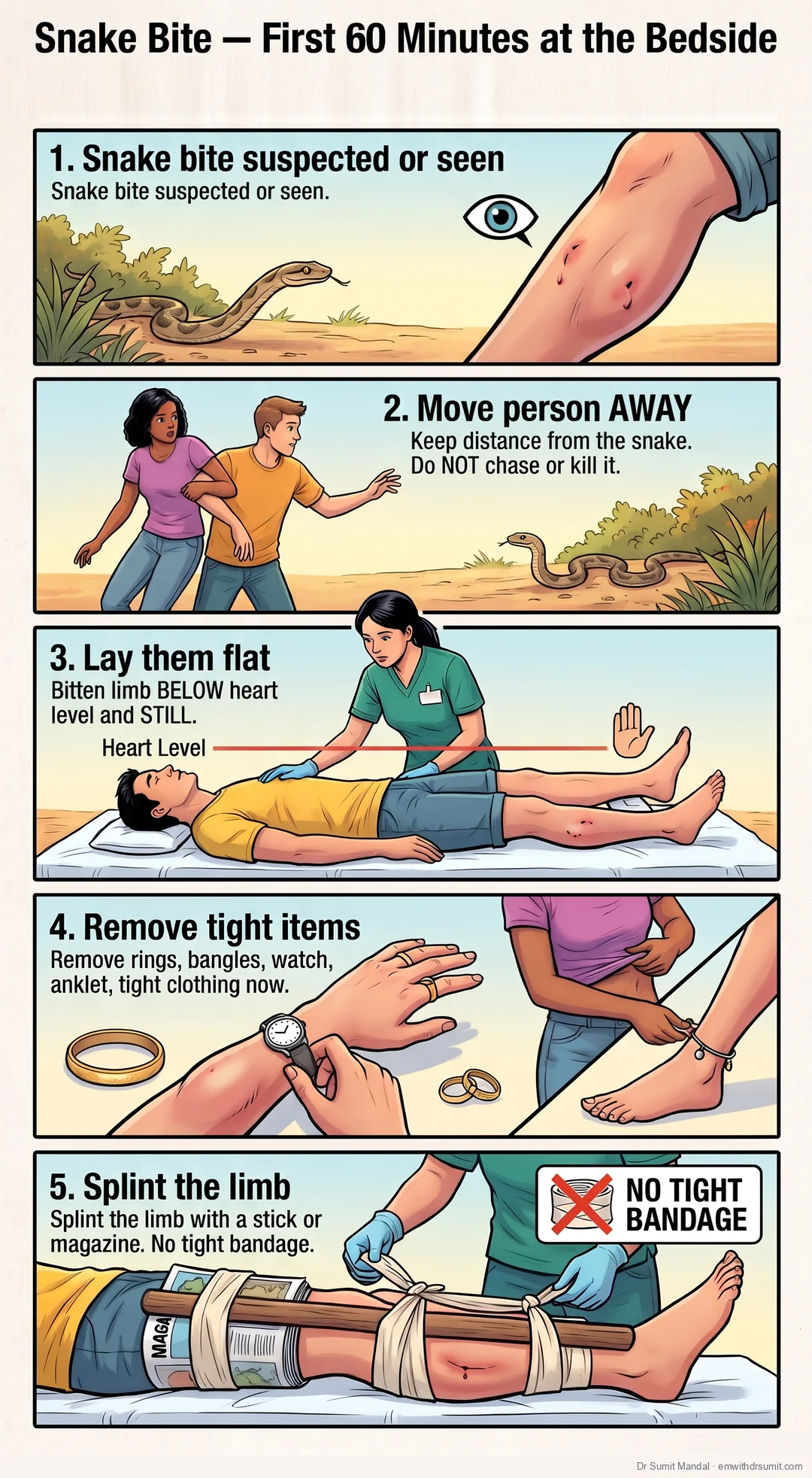
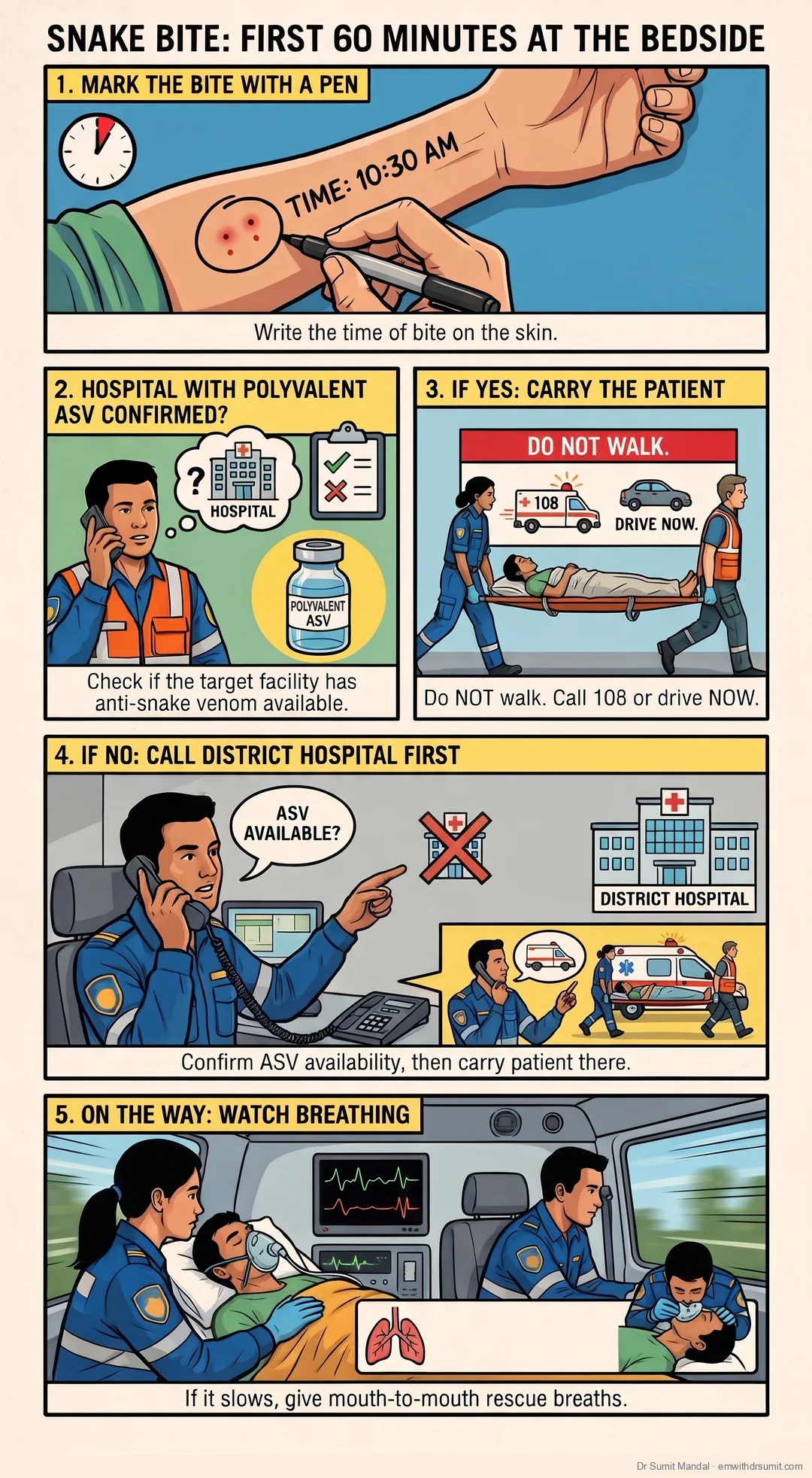
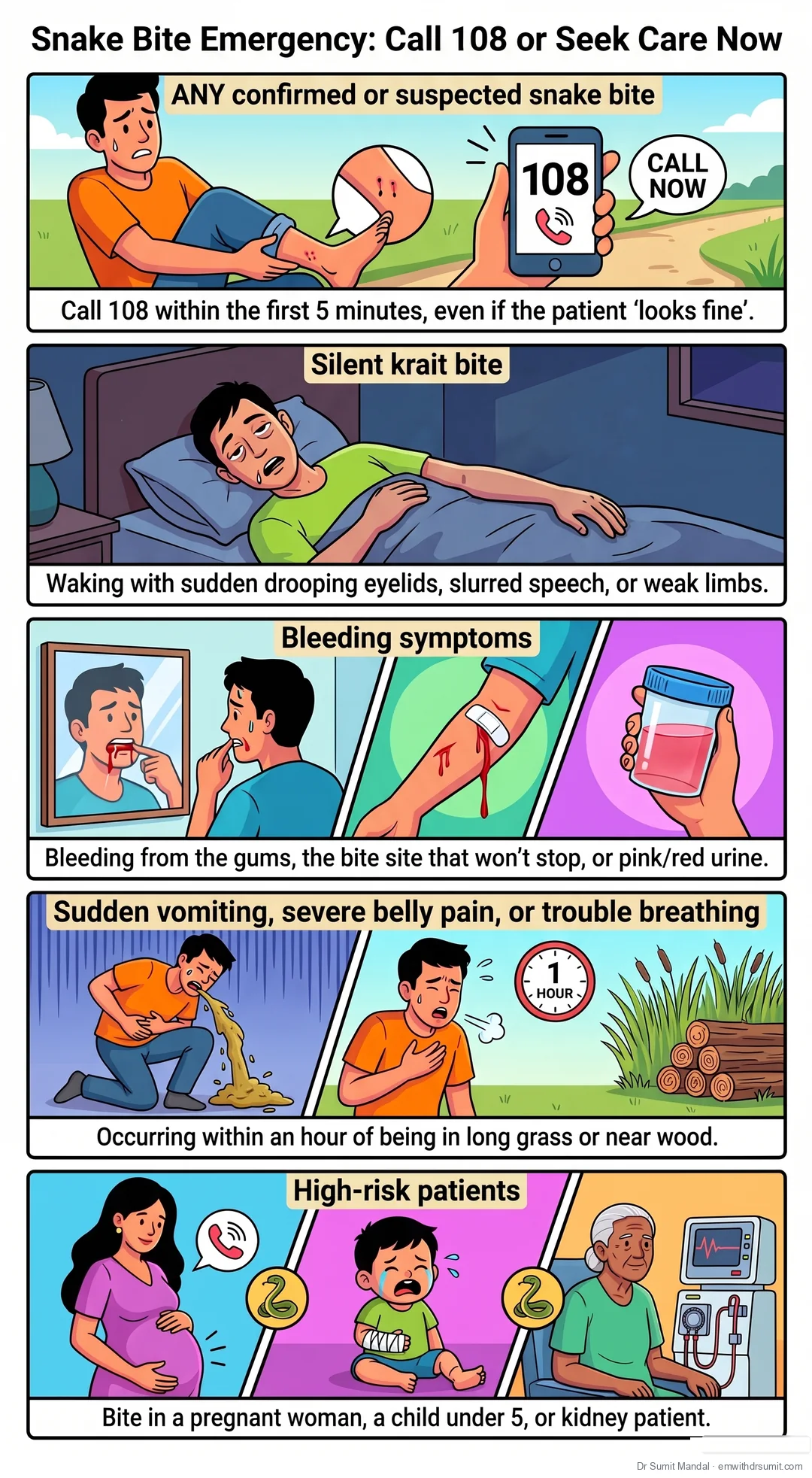
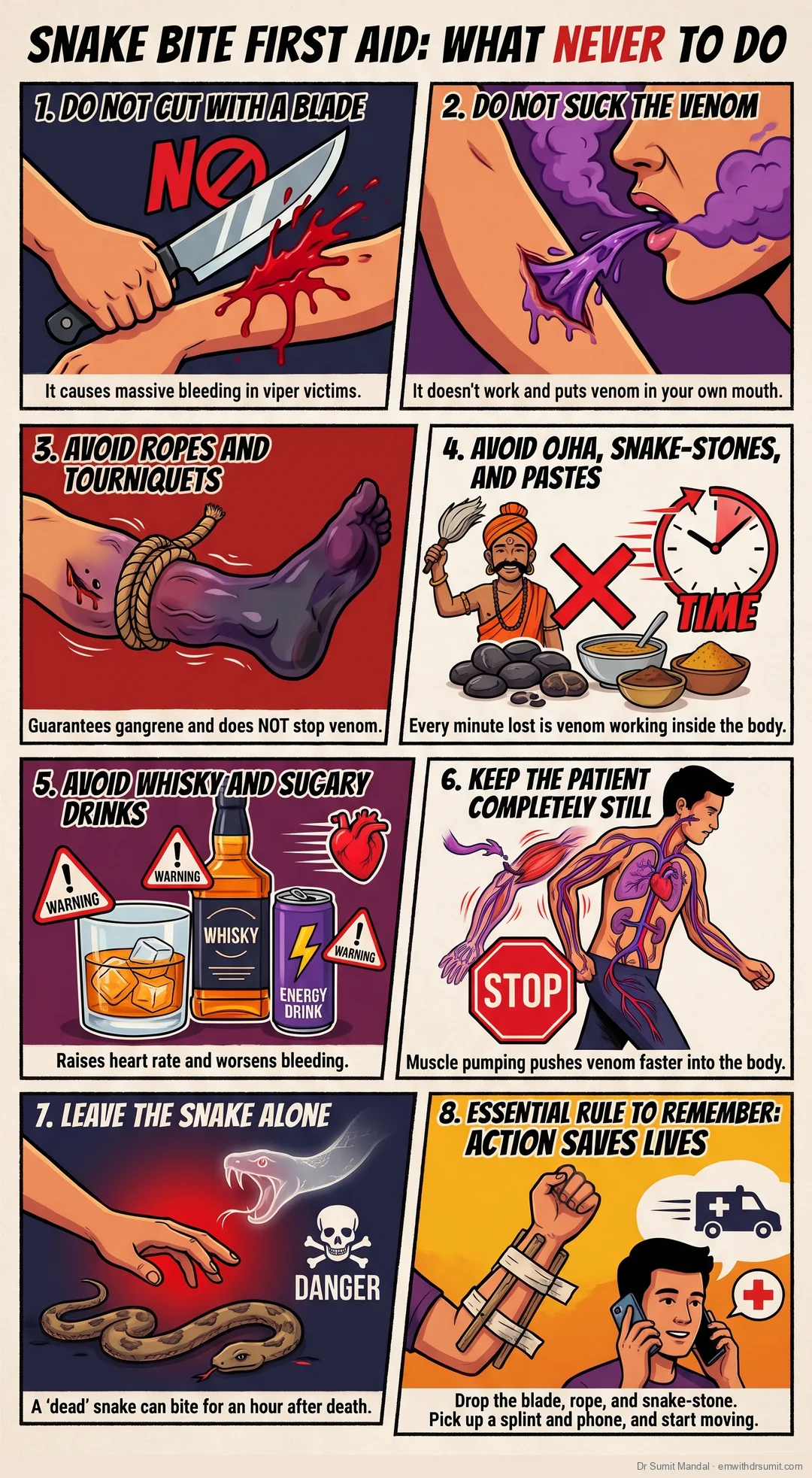
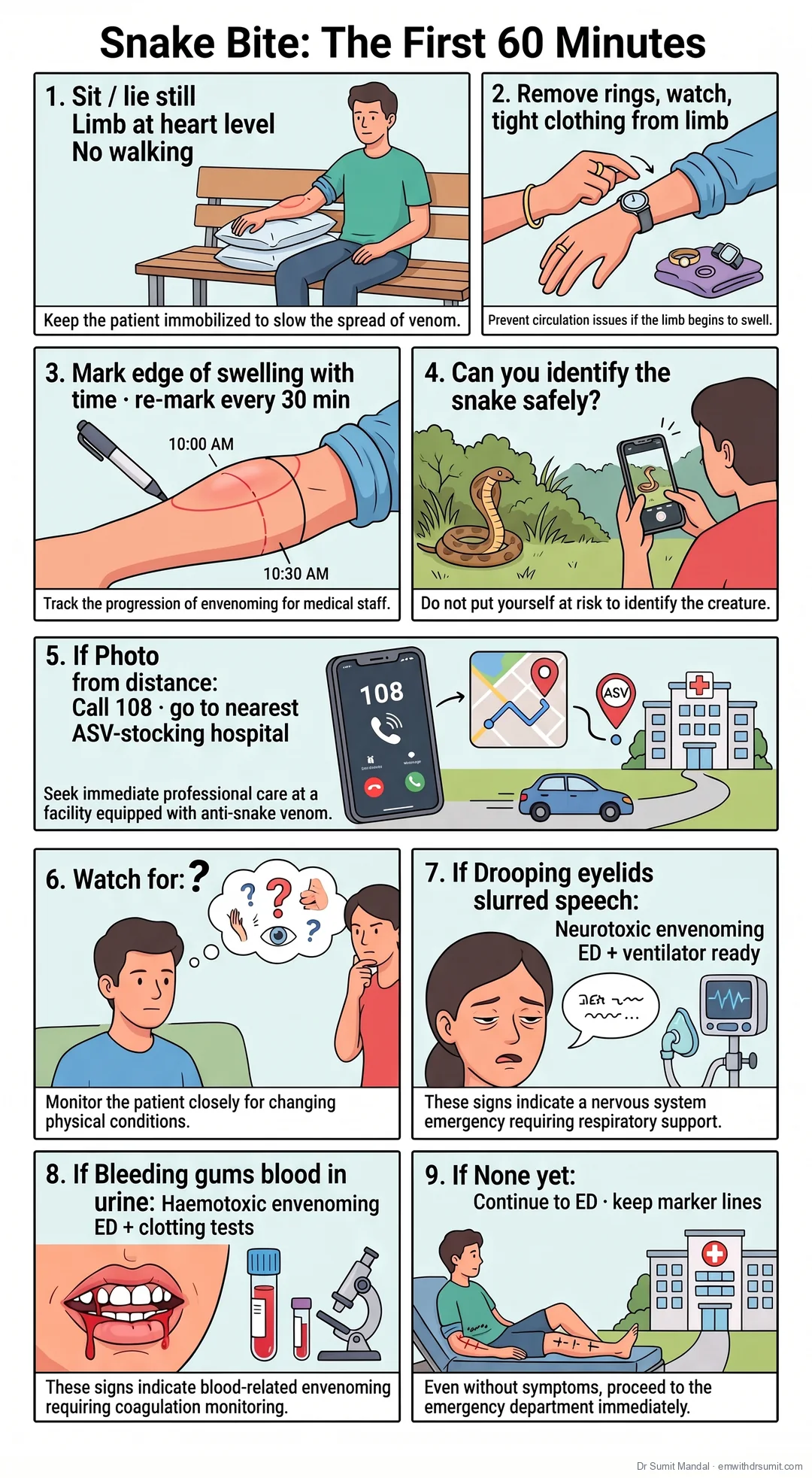
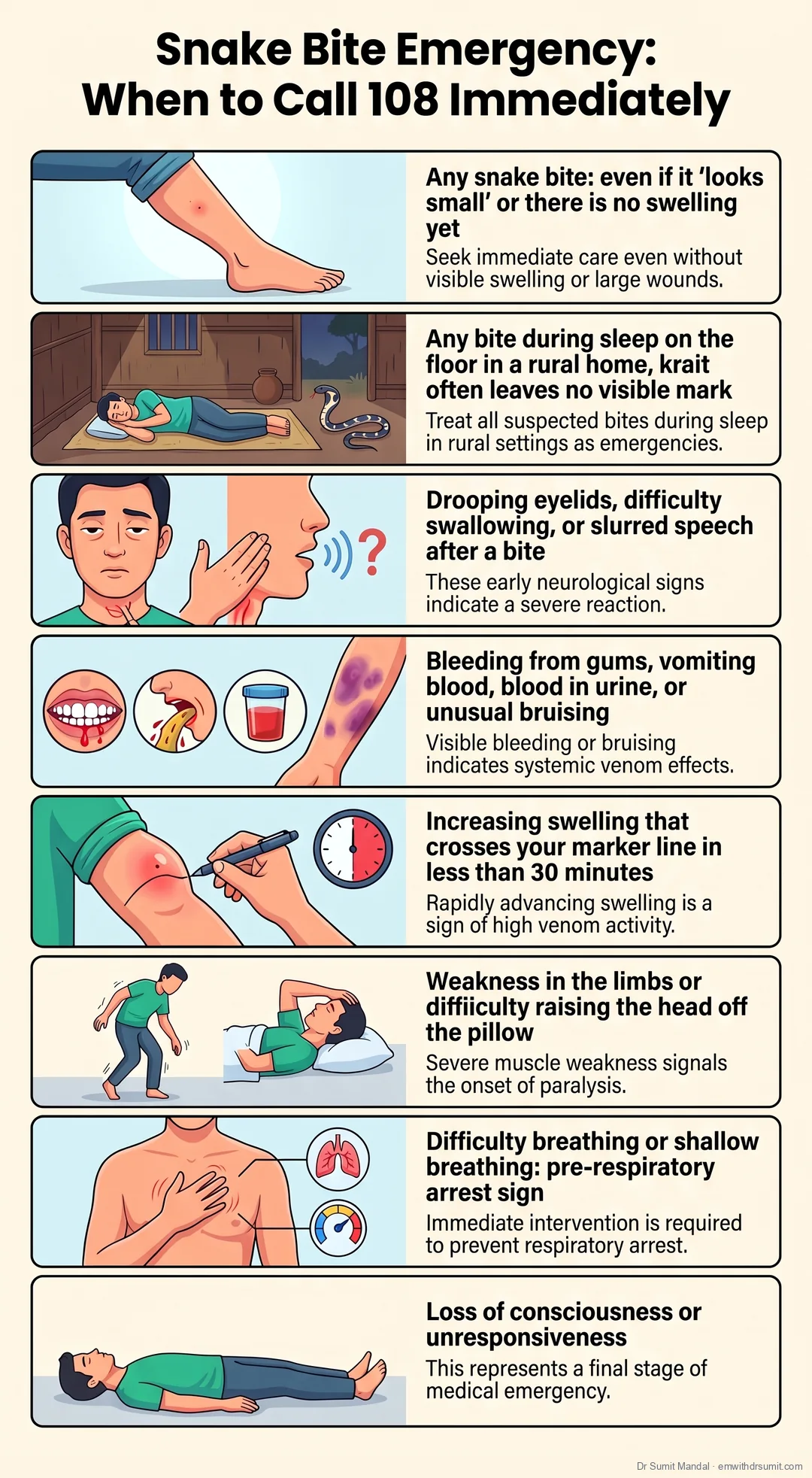
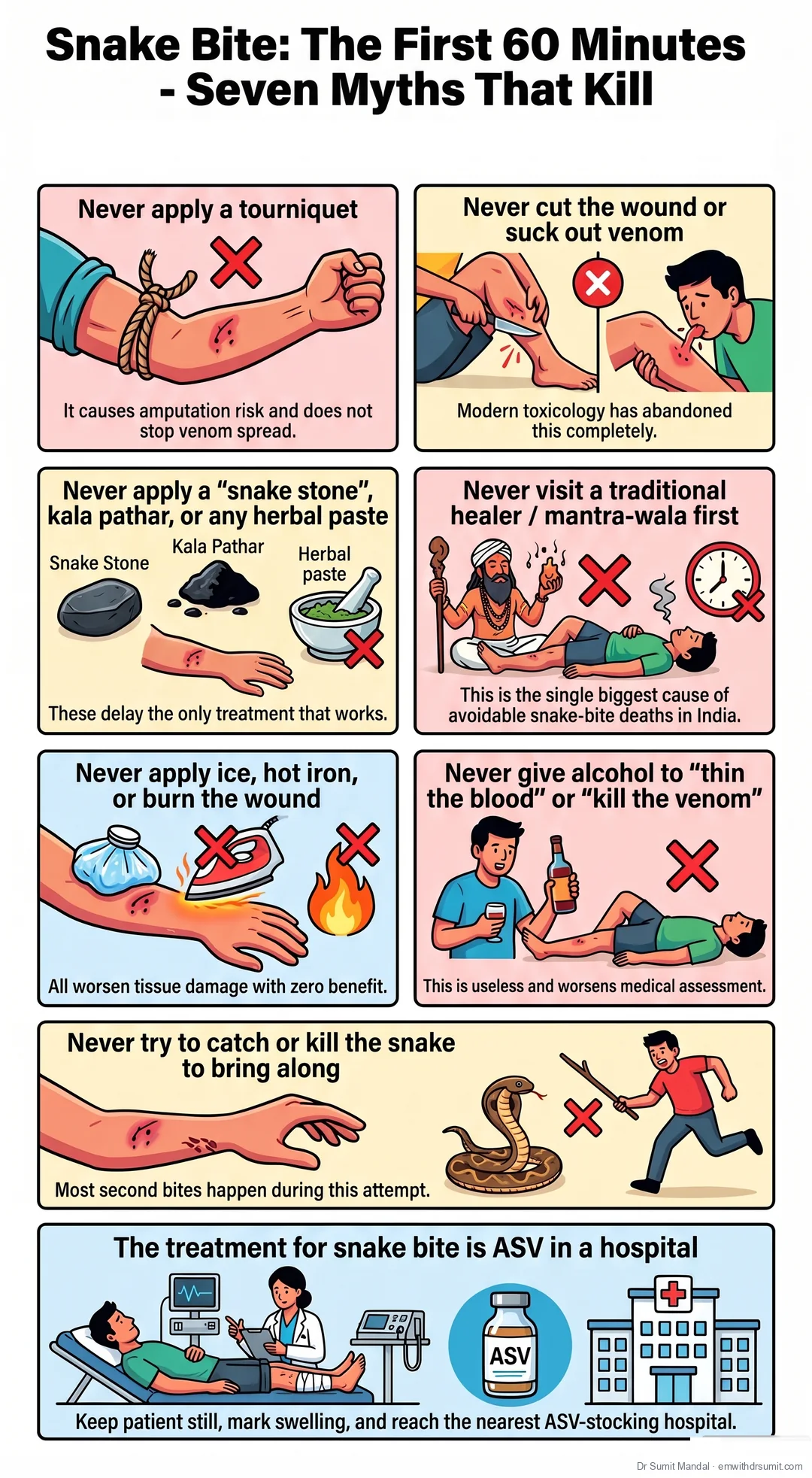
Snake bite: keep the limb still, and the folk remedies that kill
Saanp ka katna: angg sthir rakho, aur woh ghareloo nuskhe jo jaan le lete hain
India loses around 58,000 lives to snake bite every year, and most of those deaths happen between the bite and the hospital, not in the hospital. The first 60 minutes are about ONE idea: keep the limb absolutely still, do nothing 'clever' to the wound, and reach a place that stocks polyvalent ASV.
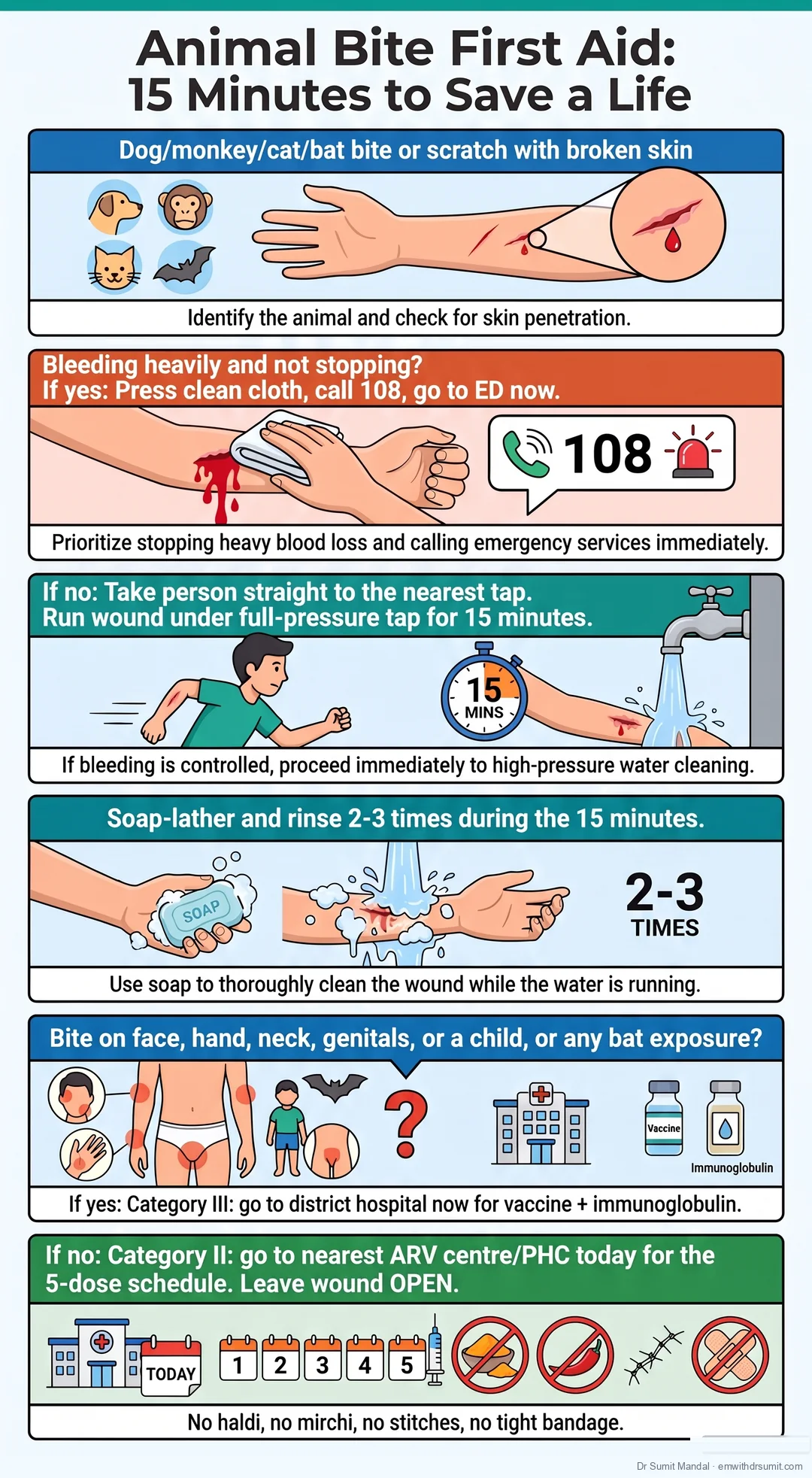
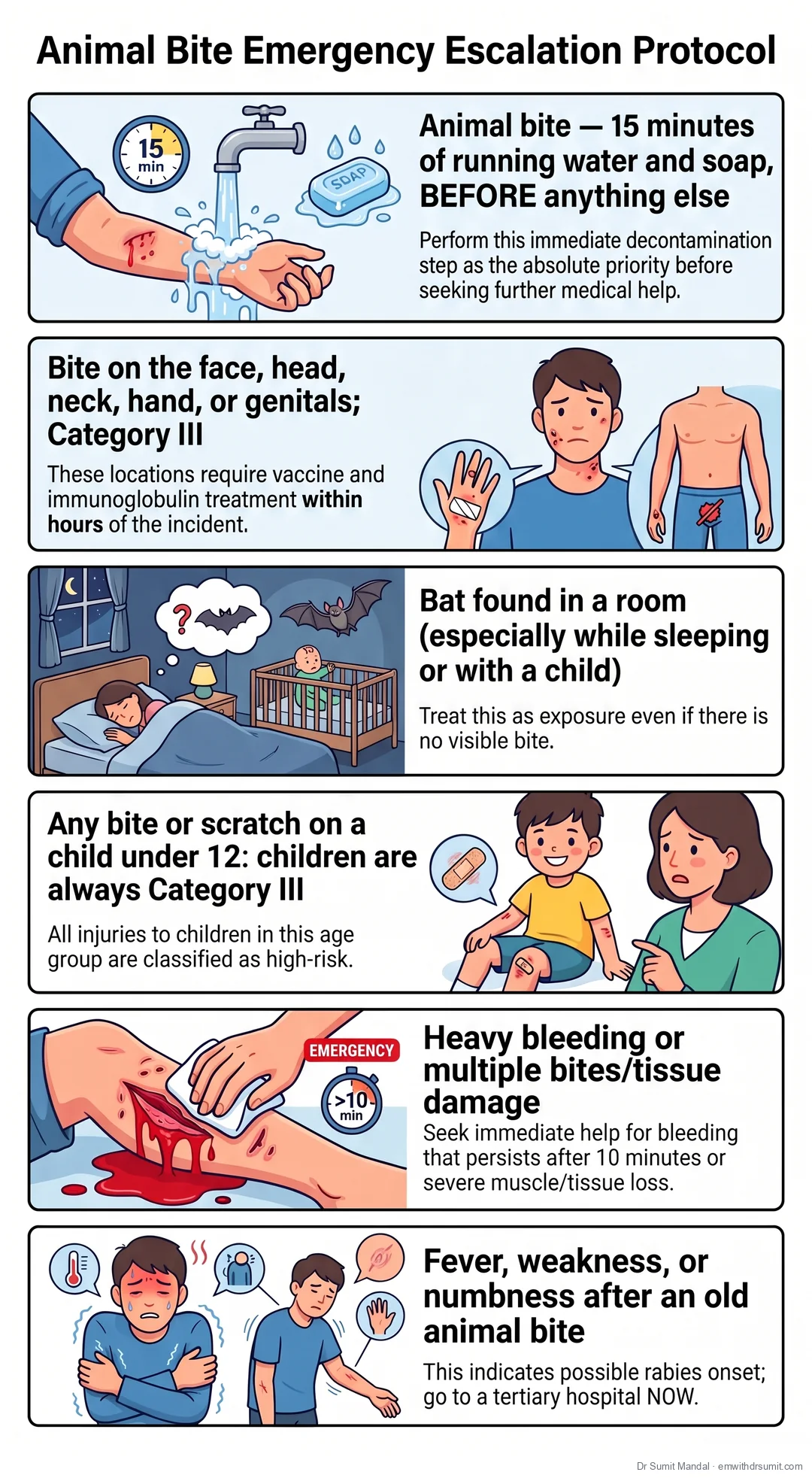
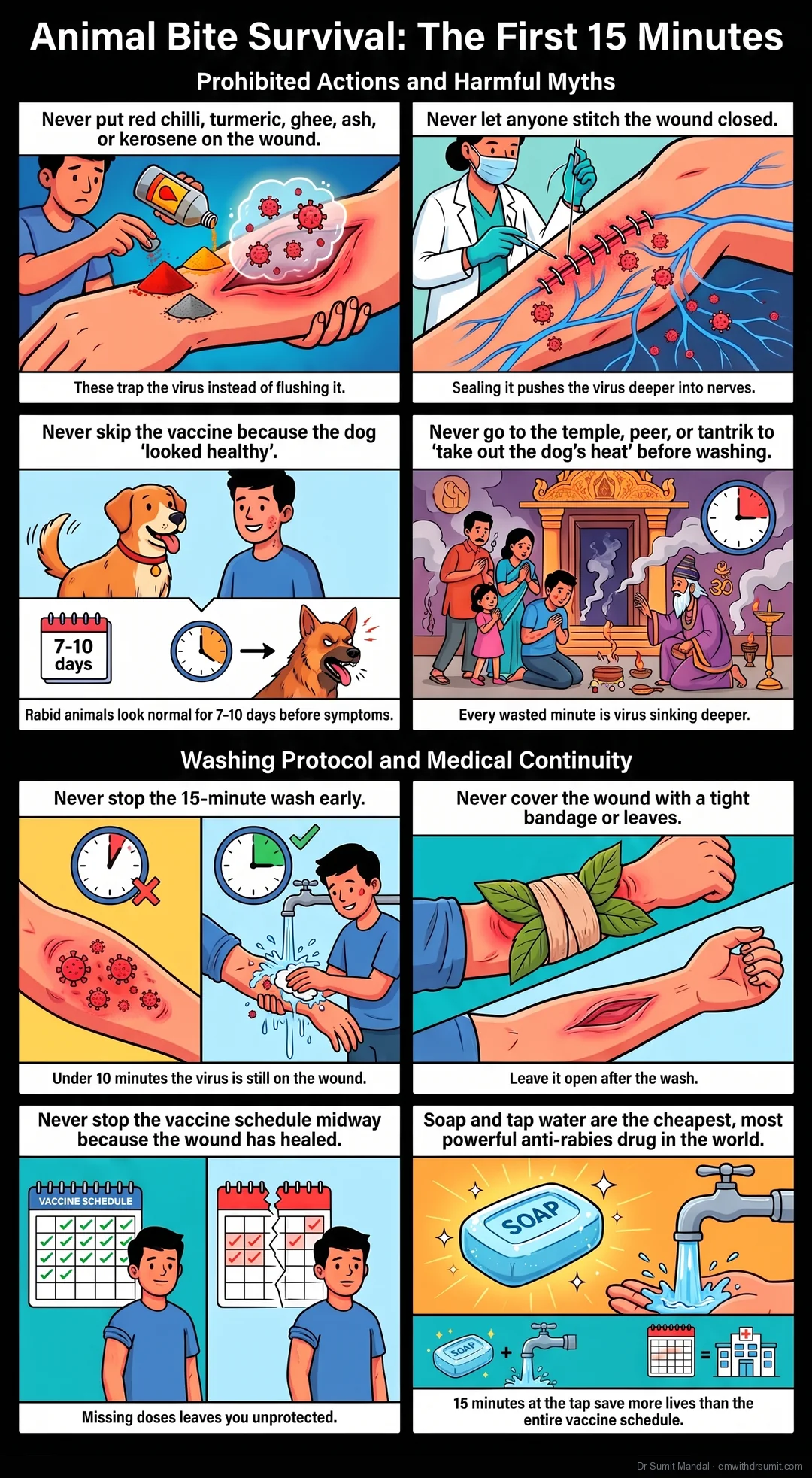
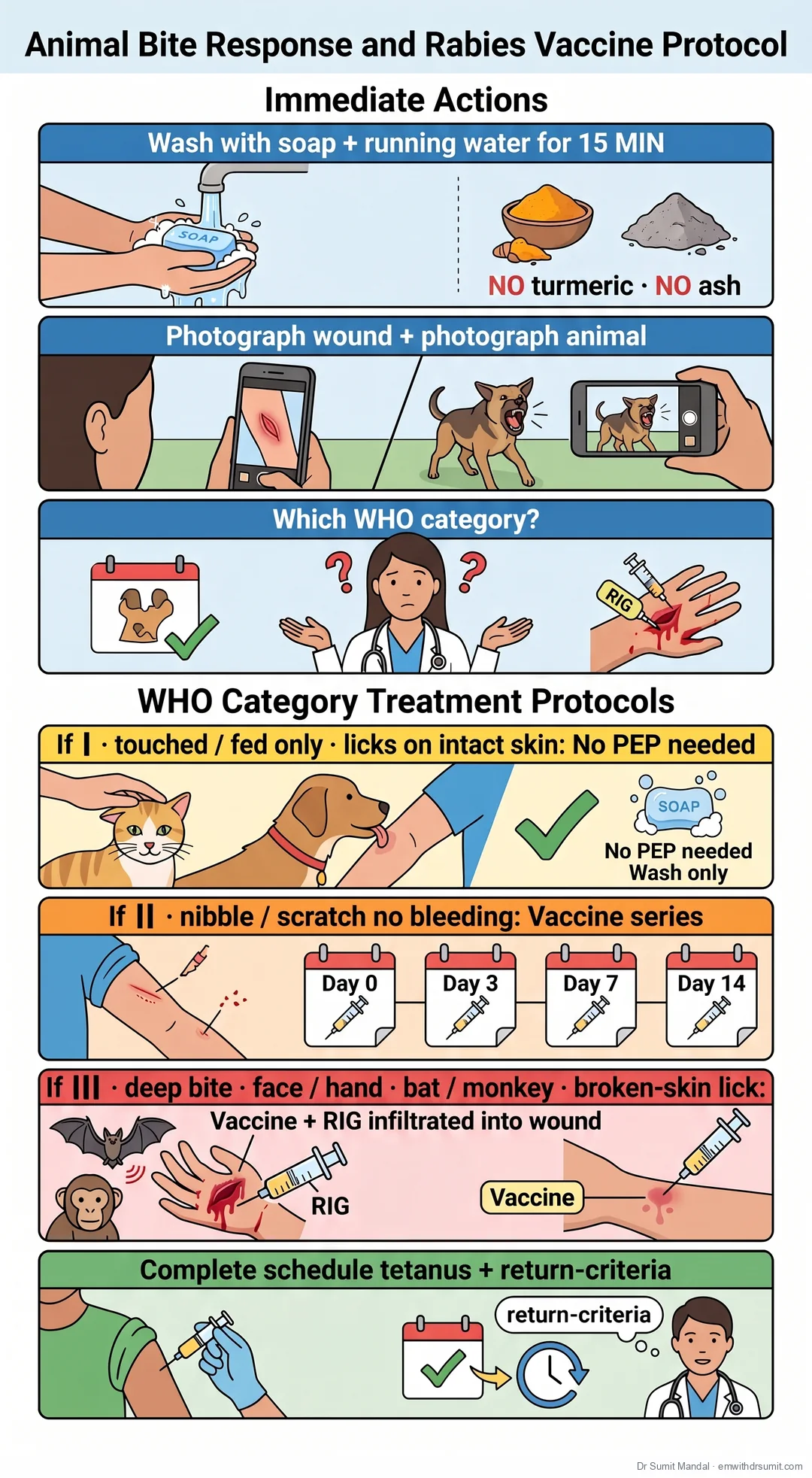
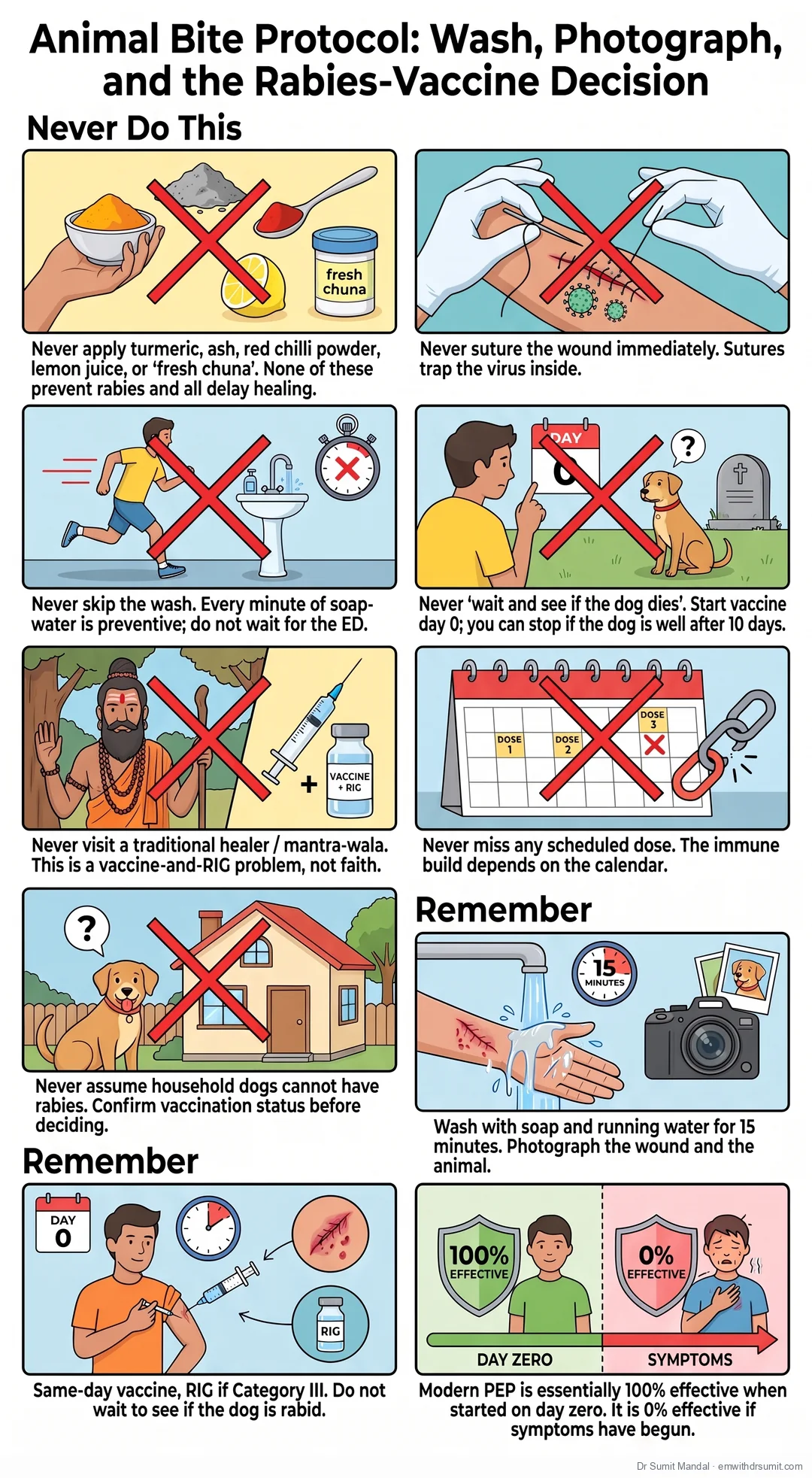
Animal bite: 15 minutes of running water and soap, BEFORE anything else
Janwar ka katna: sabse pehle 15 minute behte paani aur saabun se dhoyein
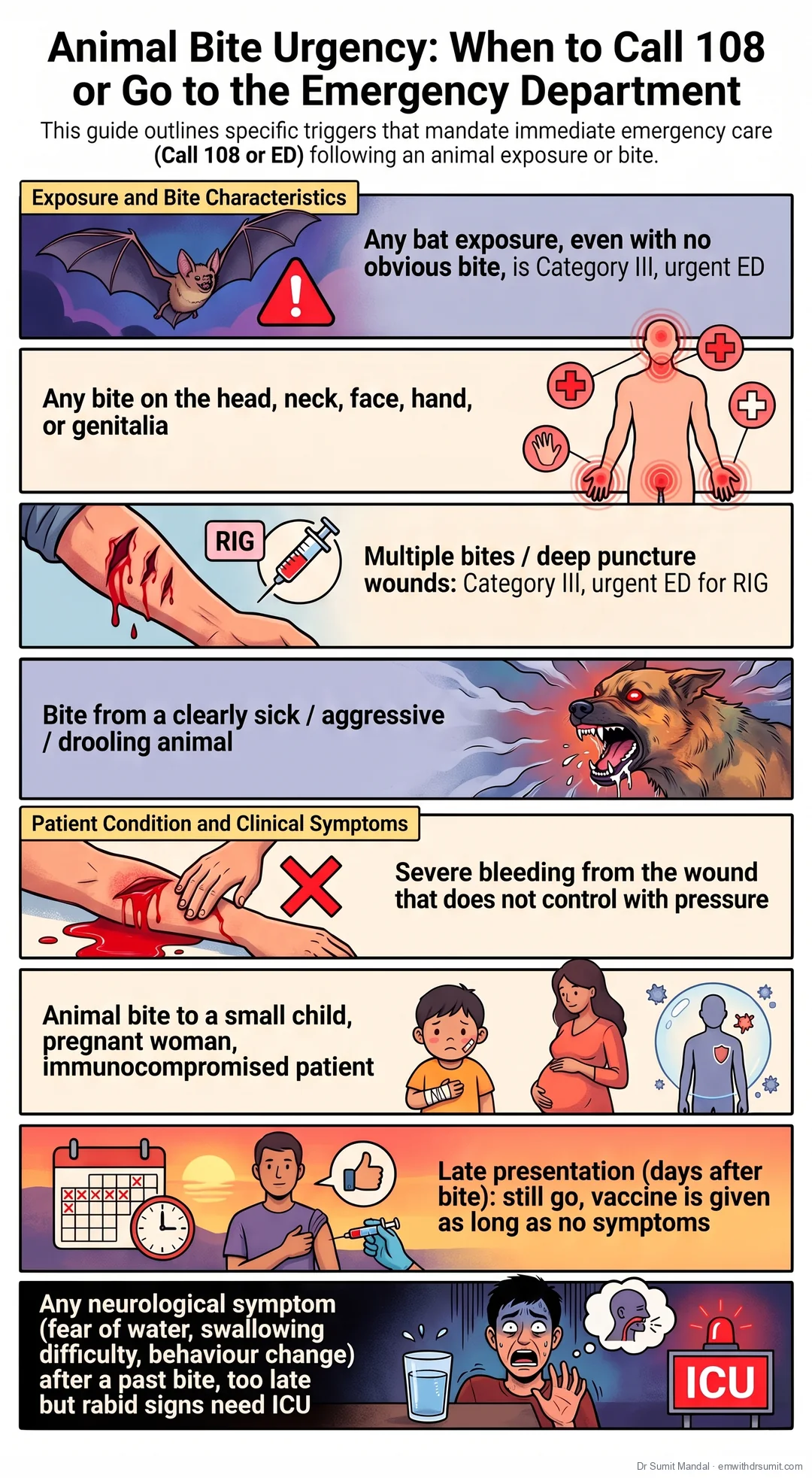
Dog, monkey, cat, or bat bite with broken skin: 15 minutes under a running tap with soap cuts rabies virus on the wound by about 90%. Do this first, temple, home remedies, and even the hospital come AFTER the wash.
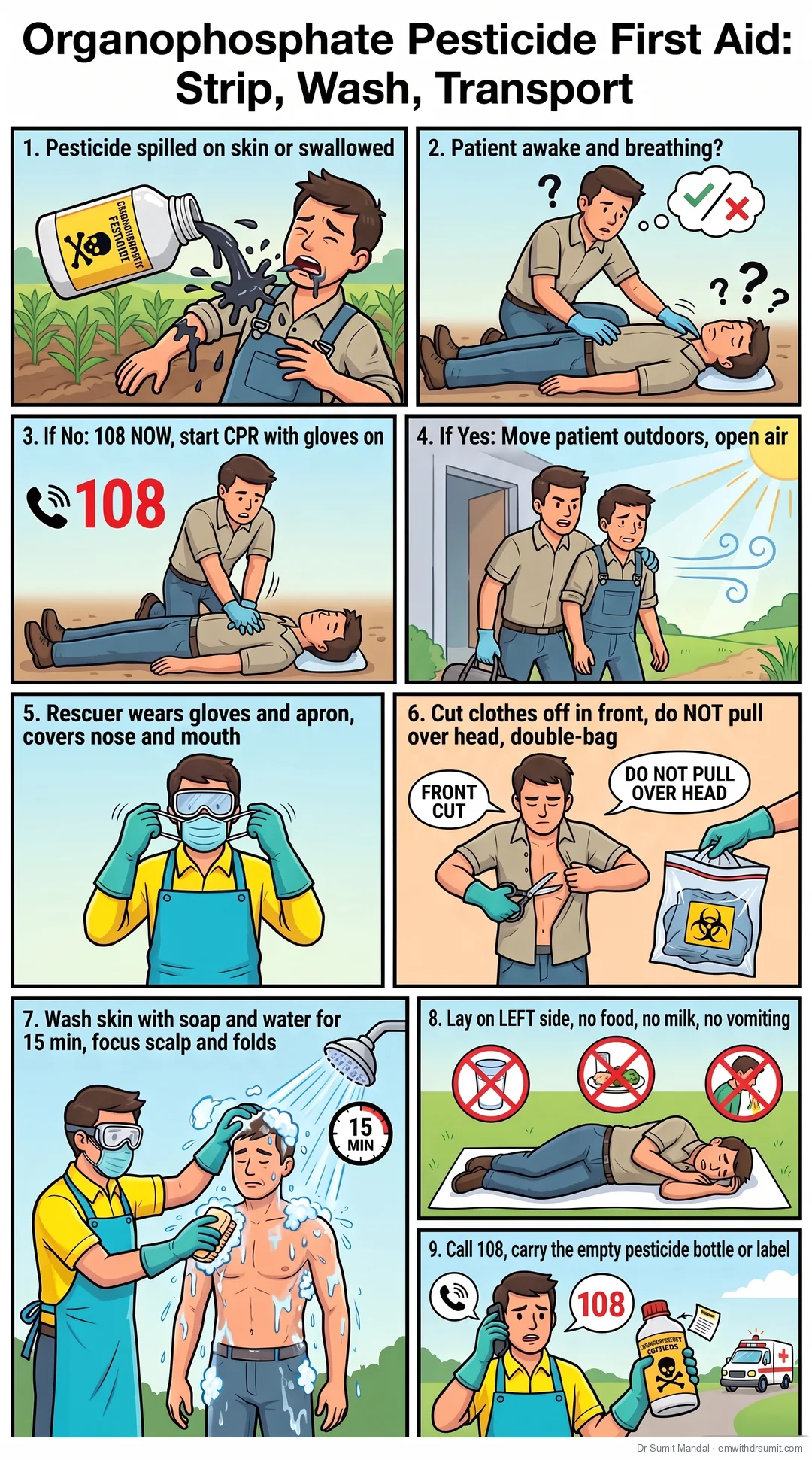
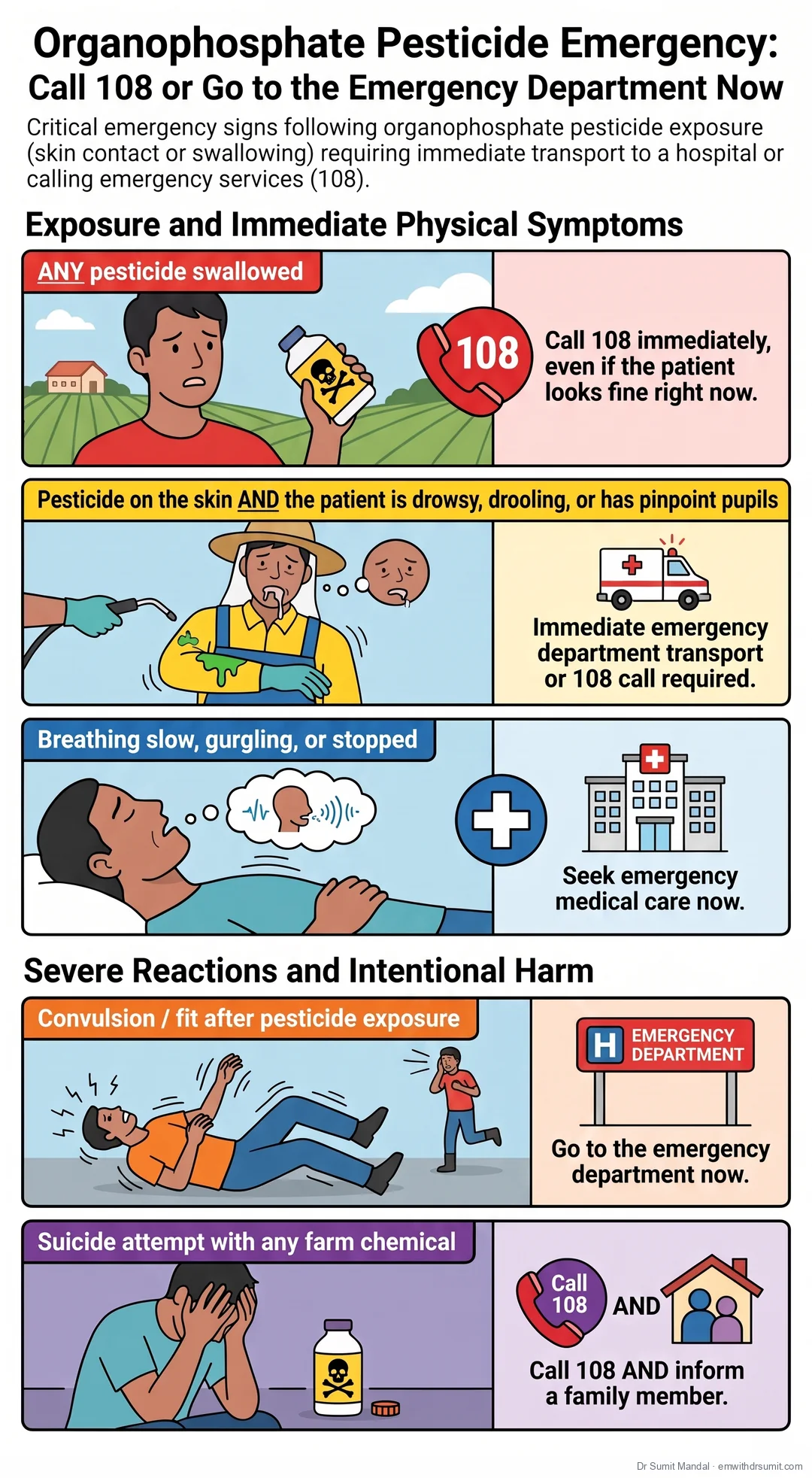
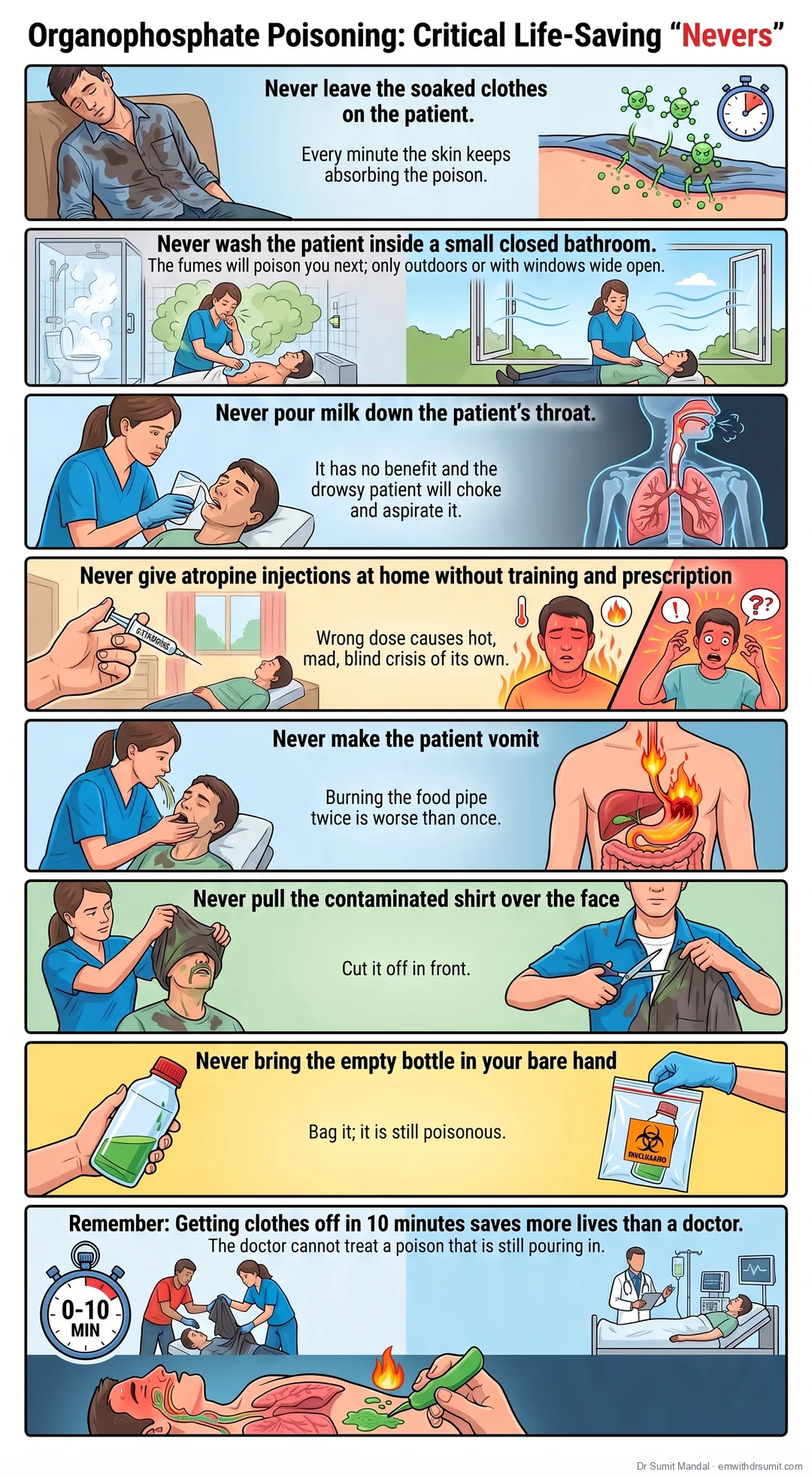
Organophosphate pesticide on the skin or swallowed: strip, wash, transport
Keetnashak (Folidol, Nuvan, Rogor) twacha par ya pee liya: kapde utaaro, dhoo do, le jaao
OP pesticide (Folidol, Nuvan, Rogor, Sumithion) on the skin keeps poisoning the patient through the skin every minute the soaked clothes stay on. Your first job is not the hospital. It is to get the clothes off, wash the skin, and not poison yourself in the process.
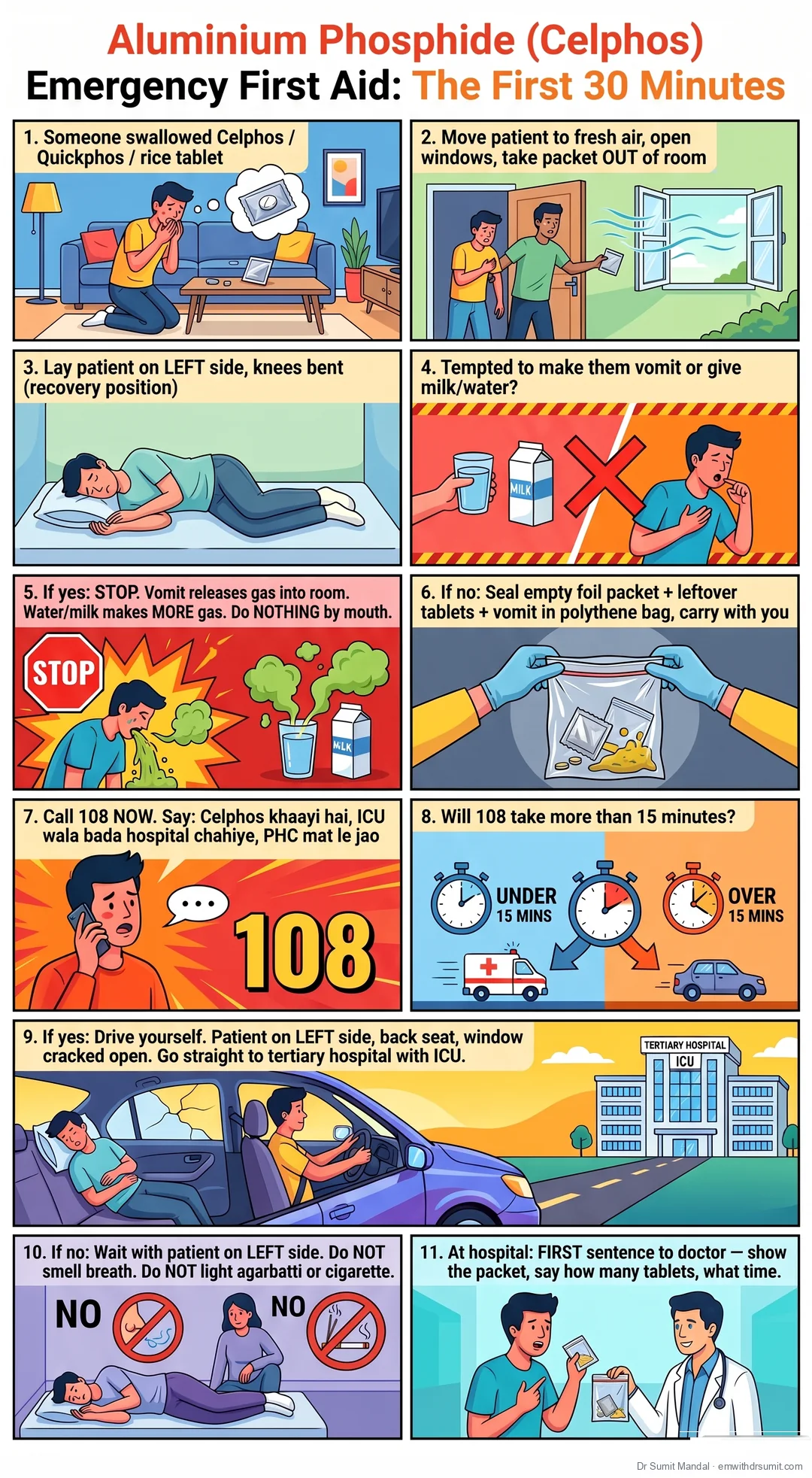
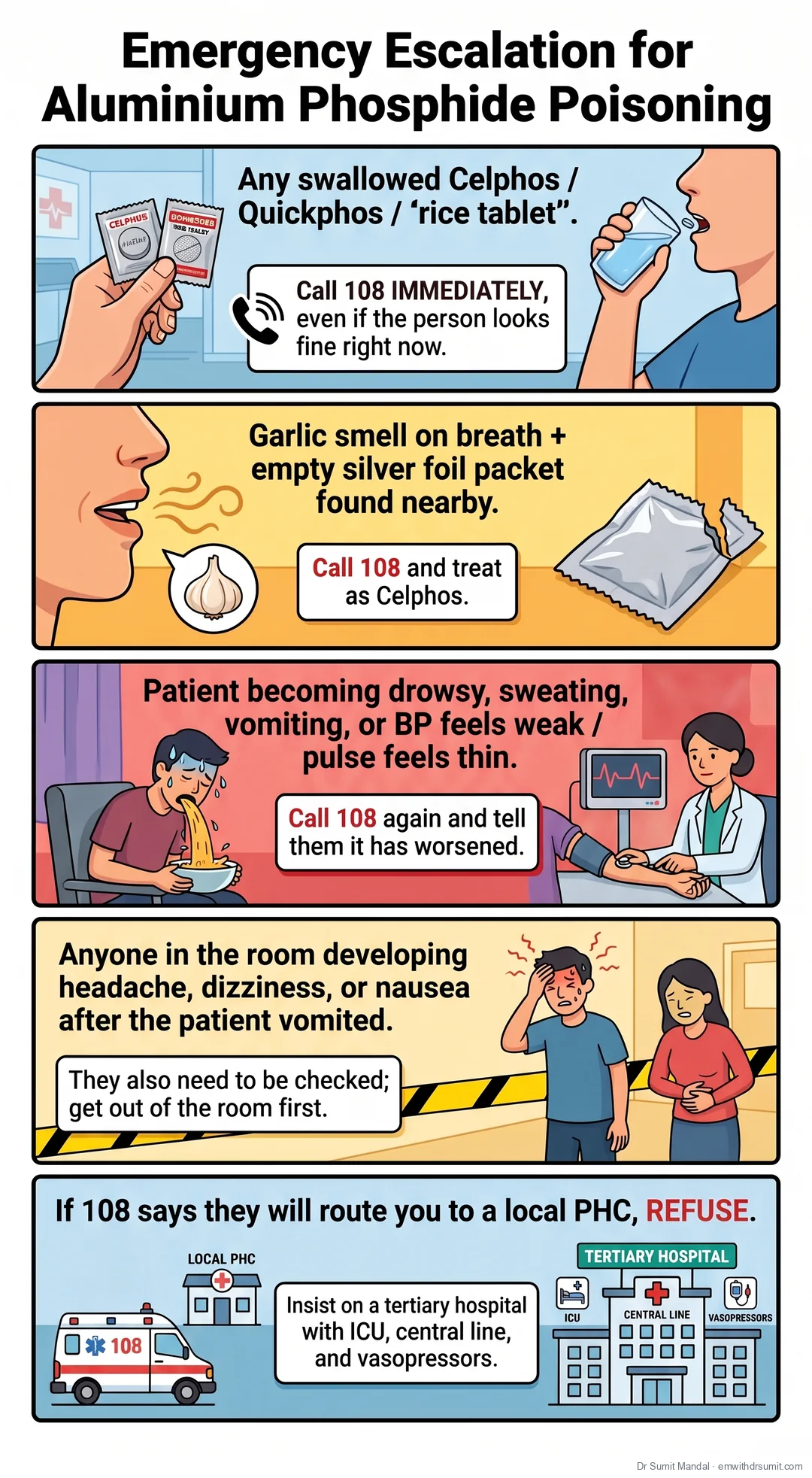
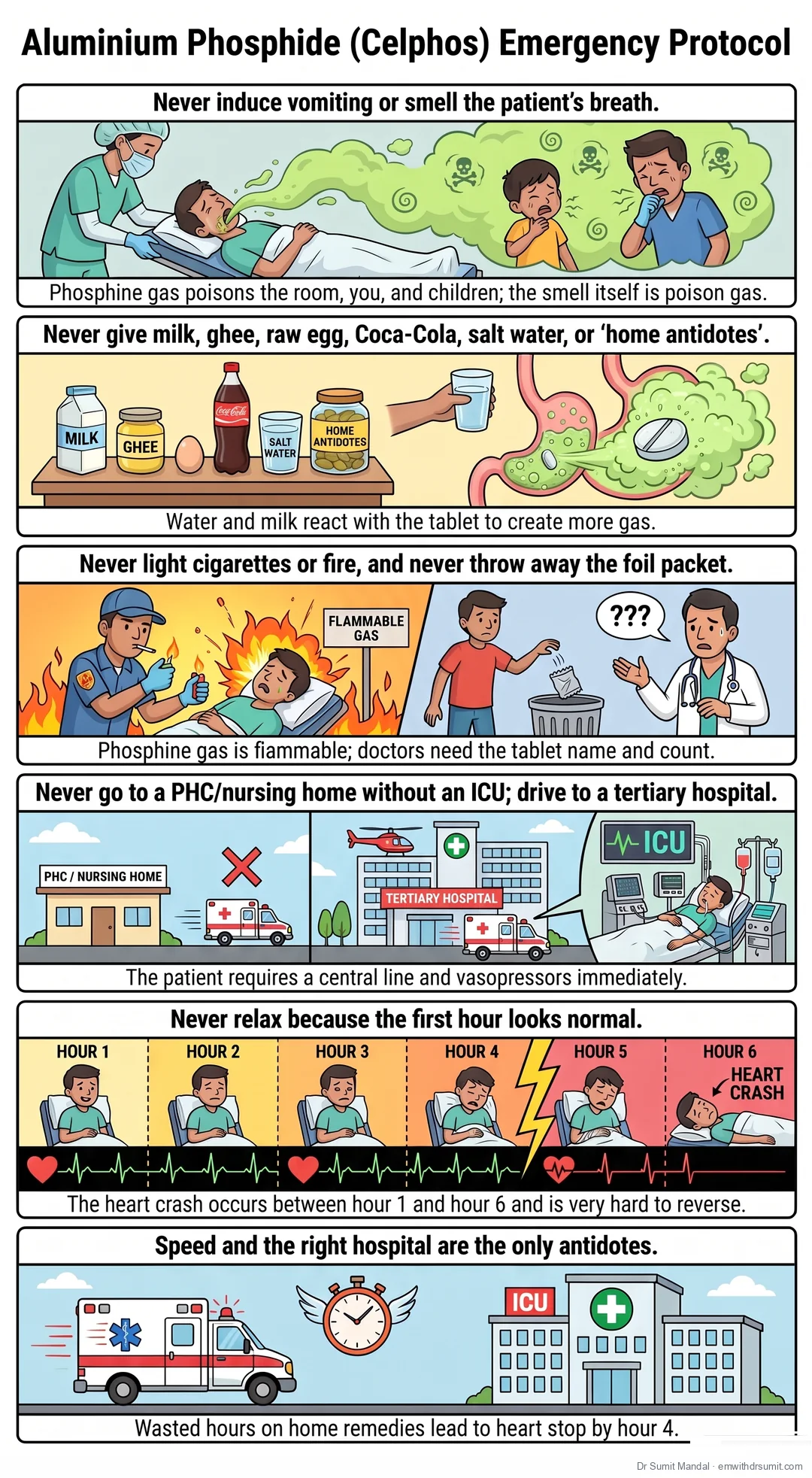
Aluminium phosphide (Celphos / rice tablet): do NOT induce vomiting, transport fast
Aluminium phosphide (Celphos / chawal ki goli): ulti MAT karwao, seedha bade hospital le jao
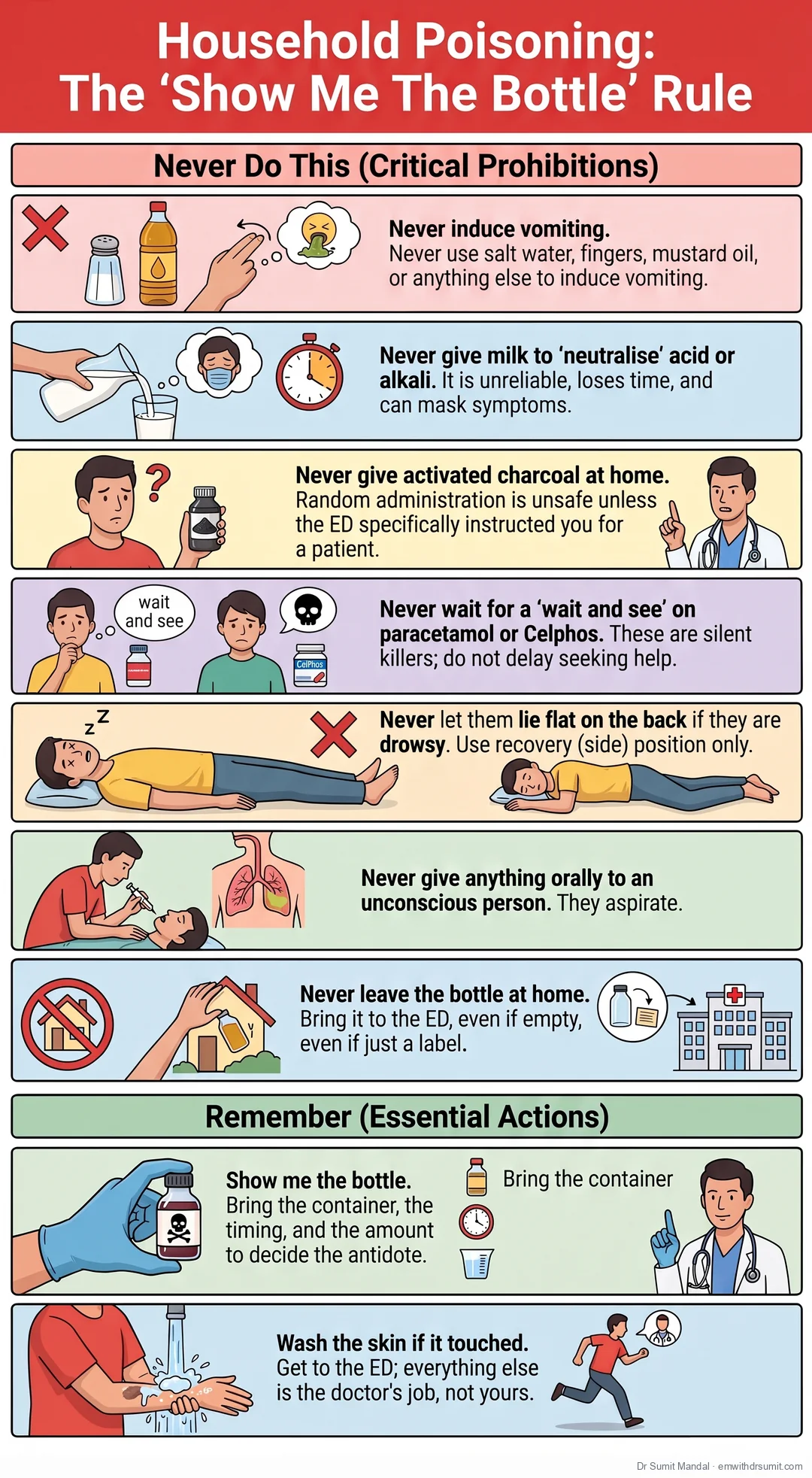
Celphos / Quickphos / 'rice tablet' is a grain-store fumigant that kills 6 or 7 out of every 10 people who swallow it. There is no antidote. Whether the person lives depends almost entirely on what you do in the first 30 minutes: no vomiting, no milk, left side, sealed packet, straight to a tertiary ICU.
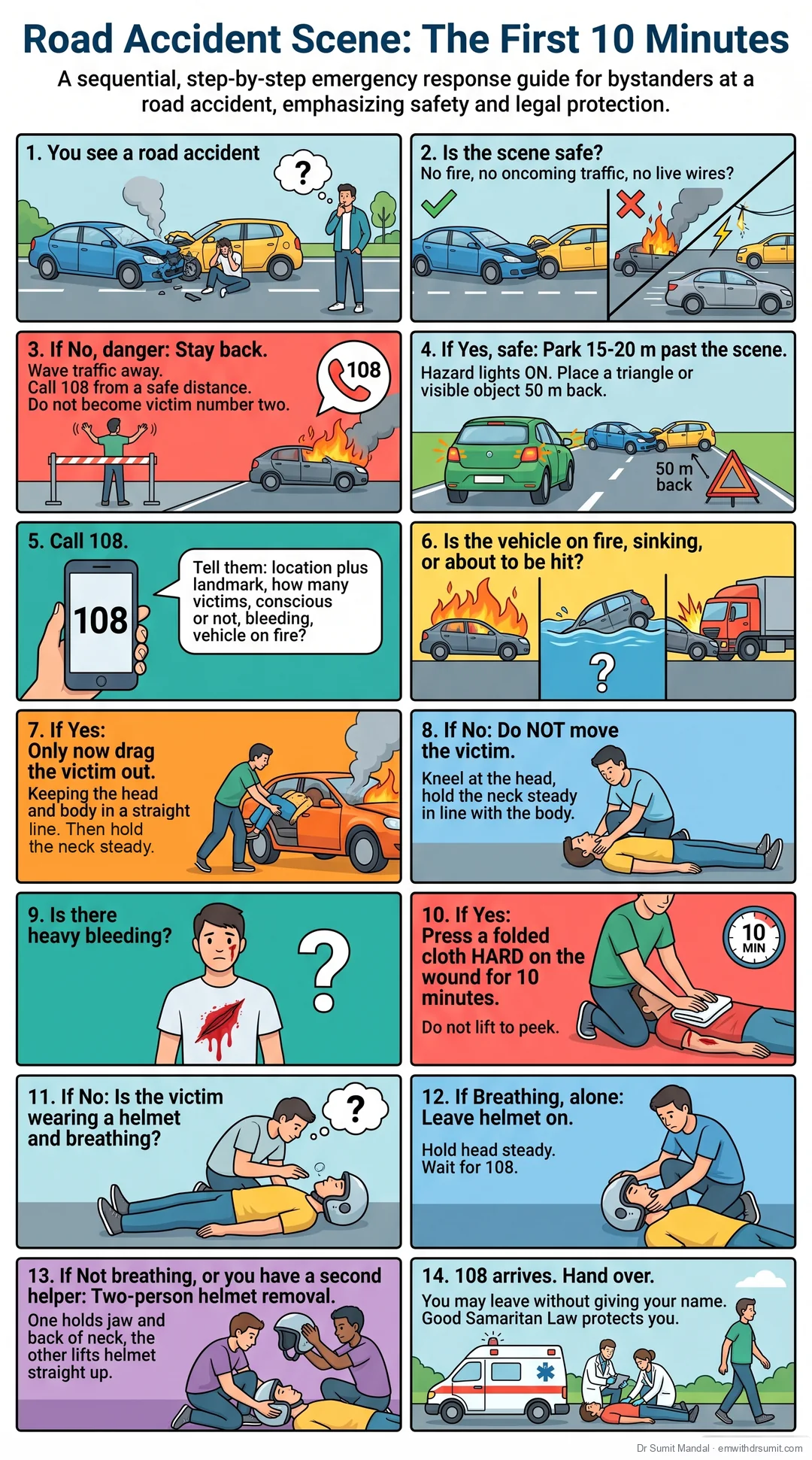
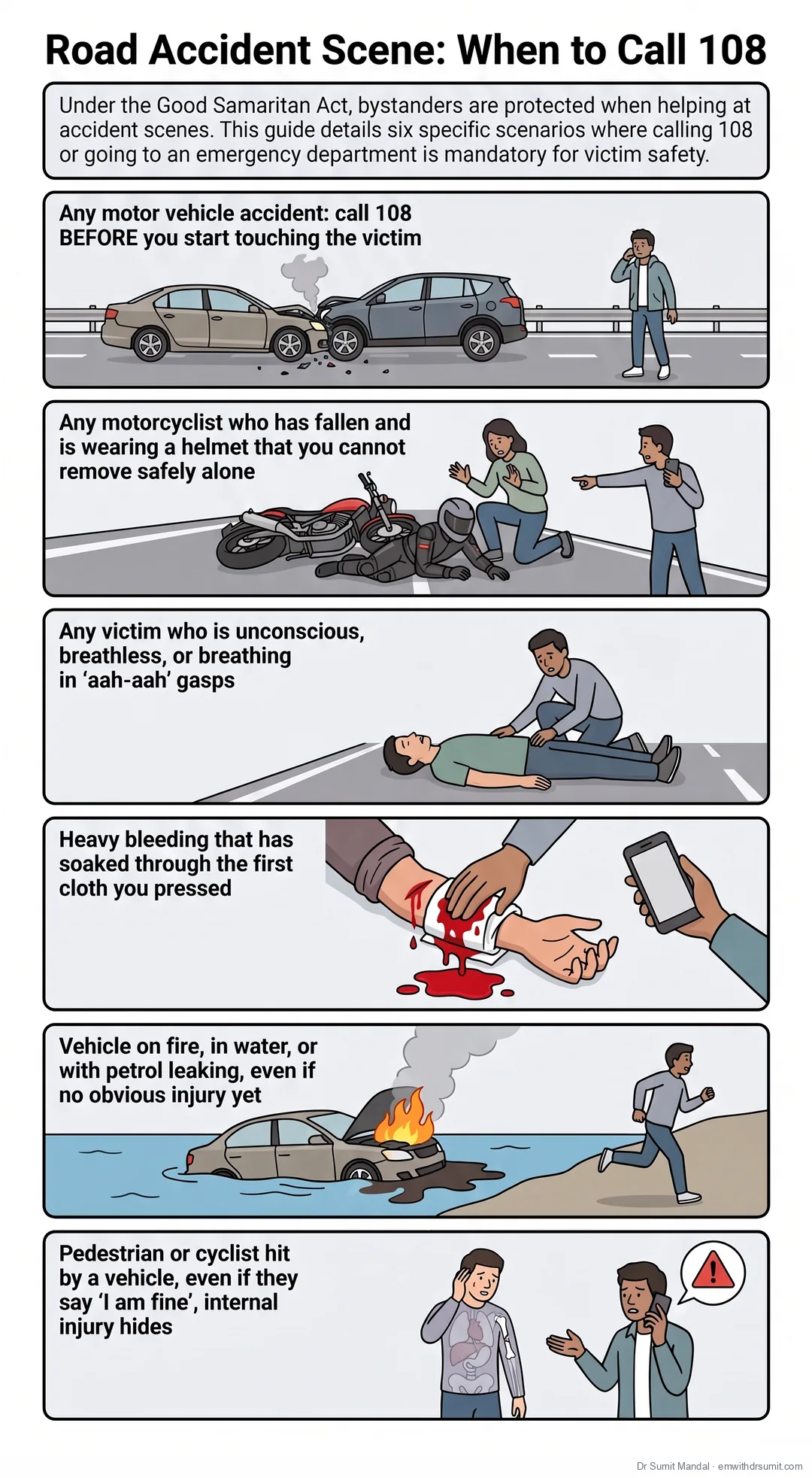
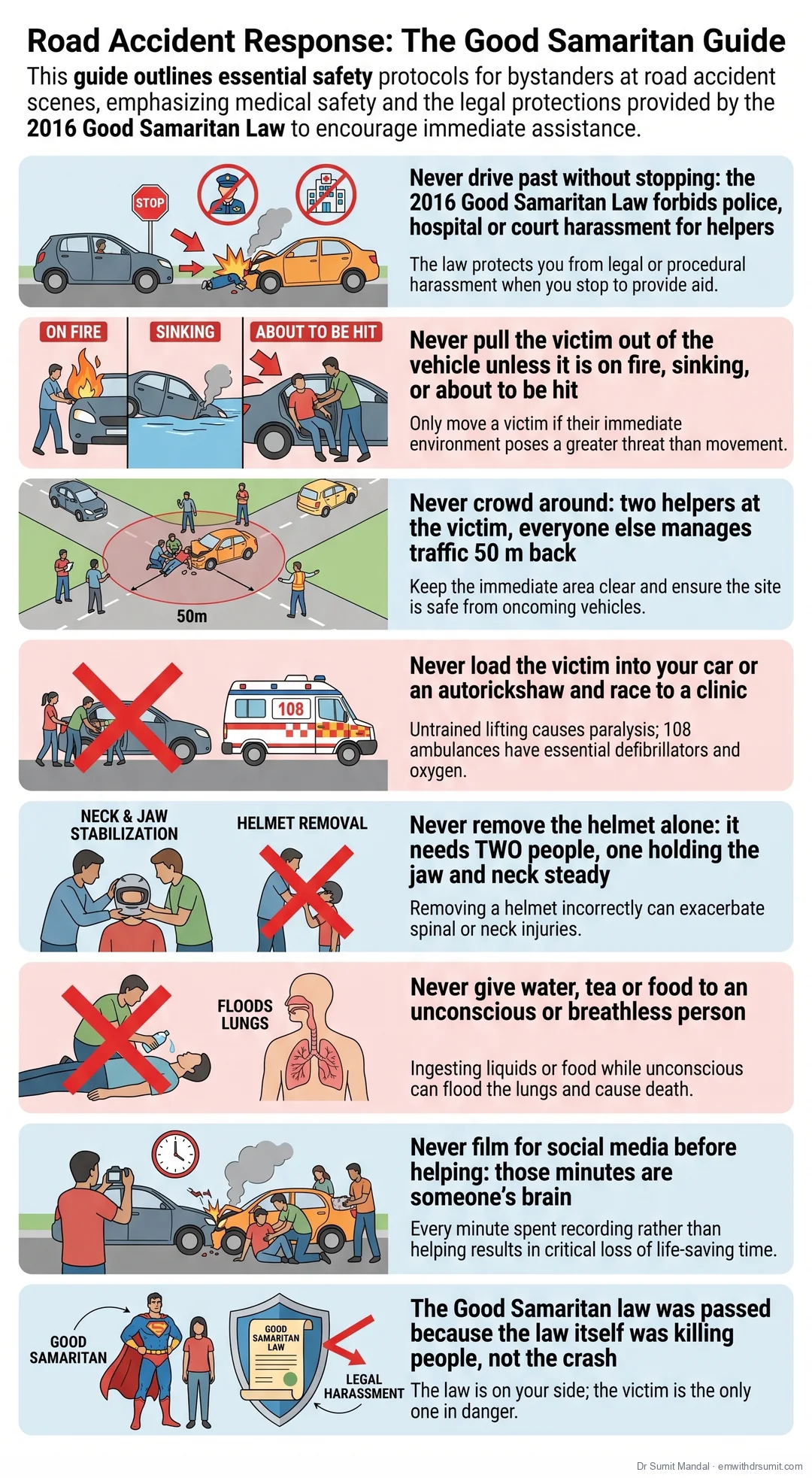
Road accident scene: Good Samaritan Act protects you; here is what to do
Sadak haadsa: Good Samaritan kanoon aapko bachata hai; kya karna hai
If you are the first person at a road accident, you can save a life without going to the police station. The 2016 Good Samaritan Law protects you from harassment, detention, and court appearances. Your job in the first 10 minutes is scene safety, calling 108 correctly, and not making the injury worse.
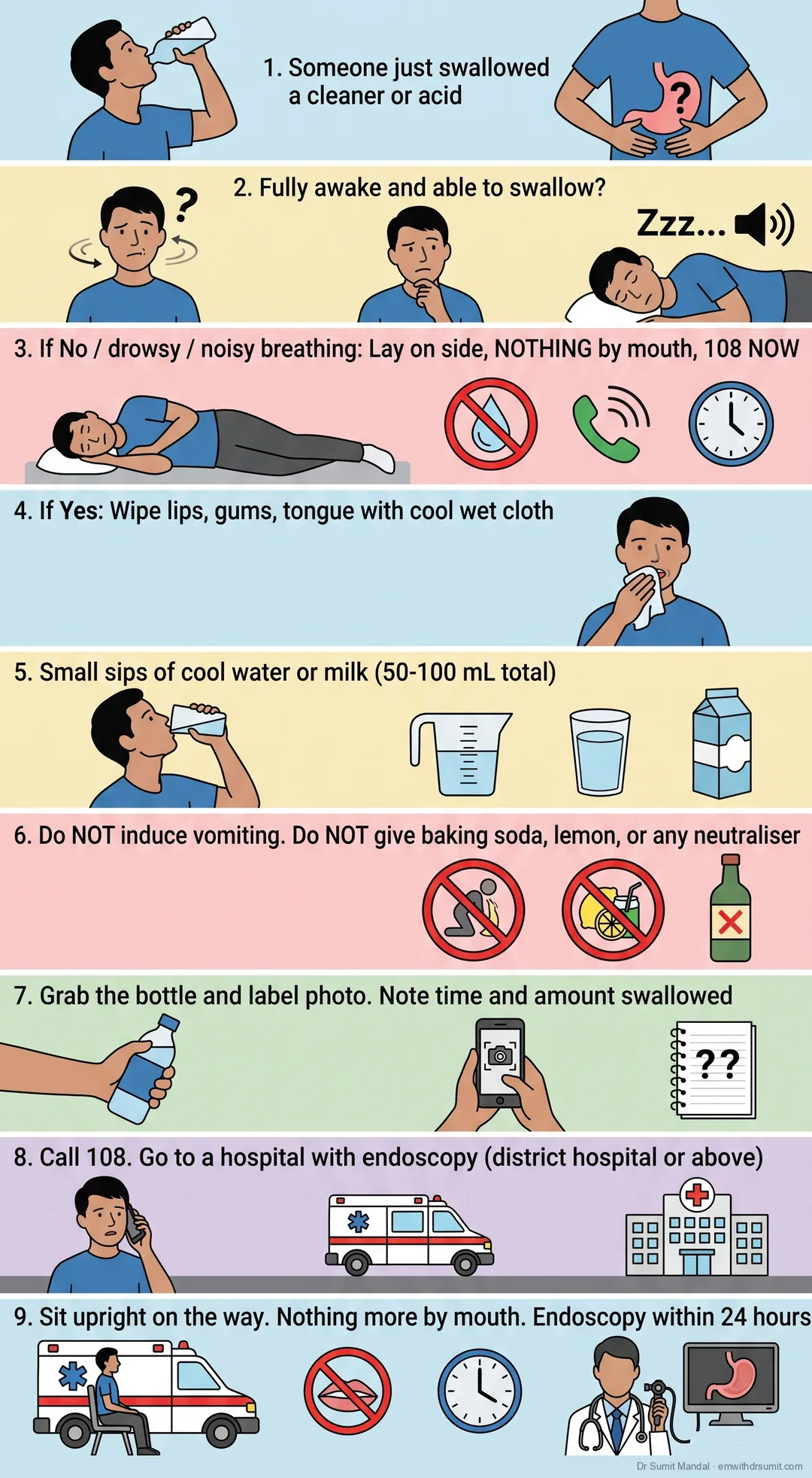
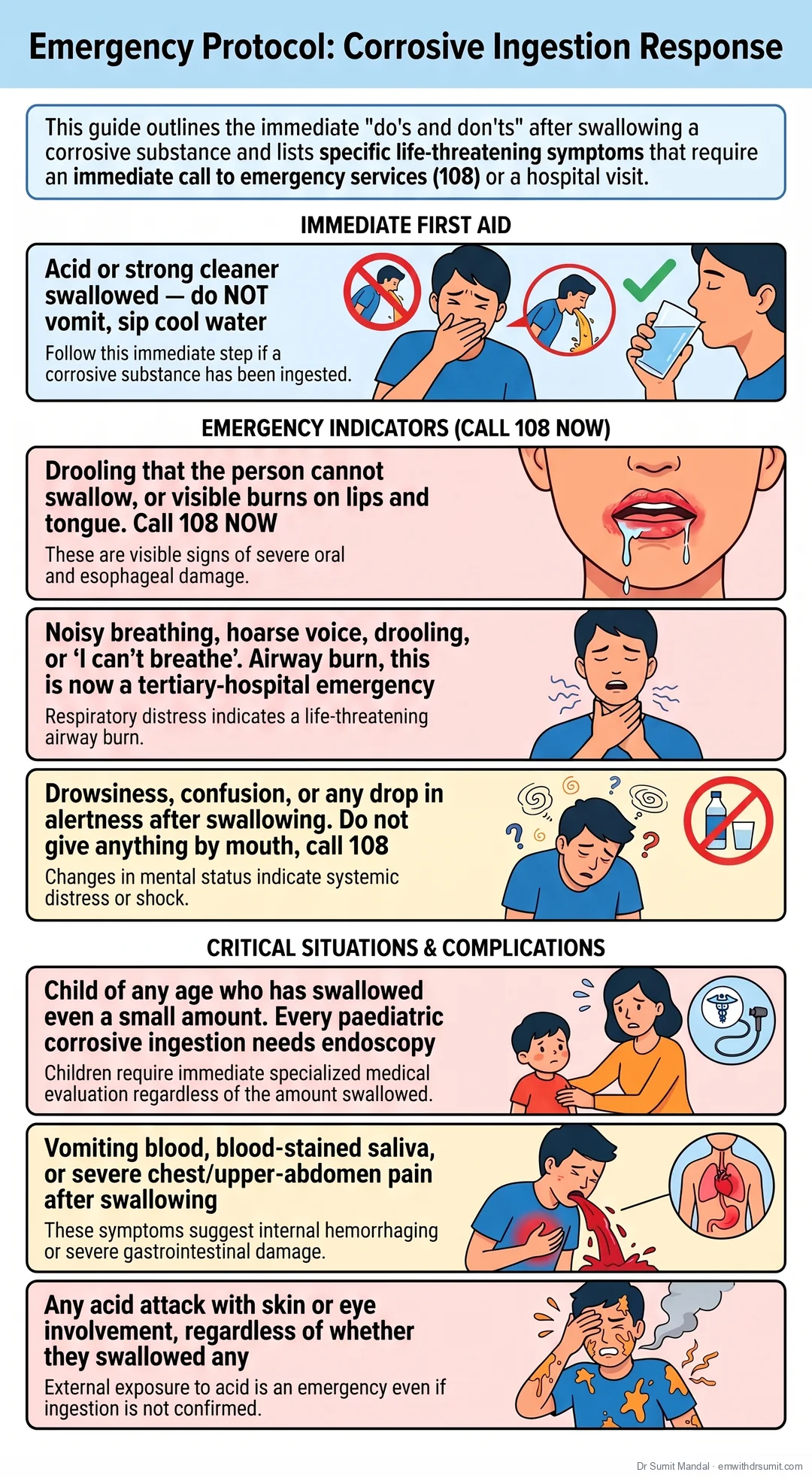
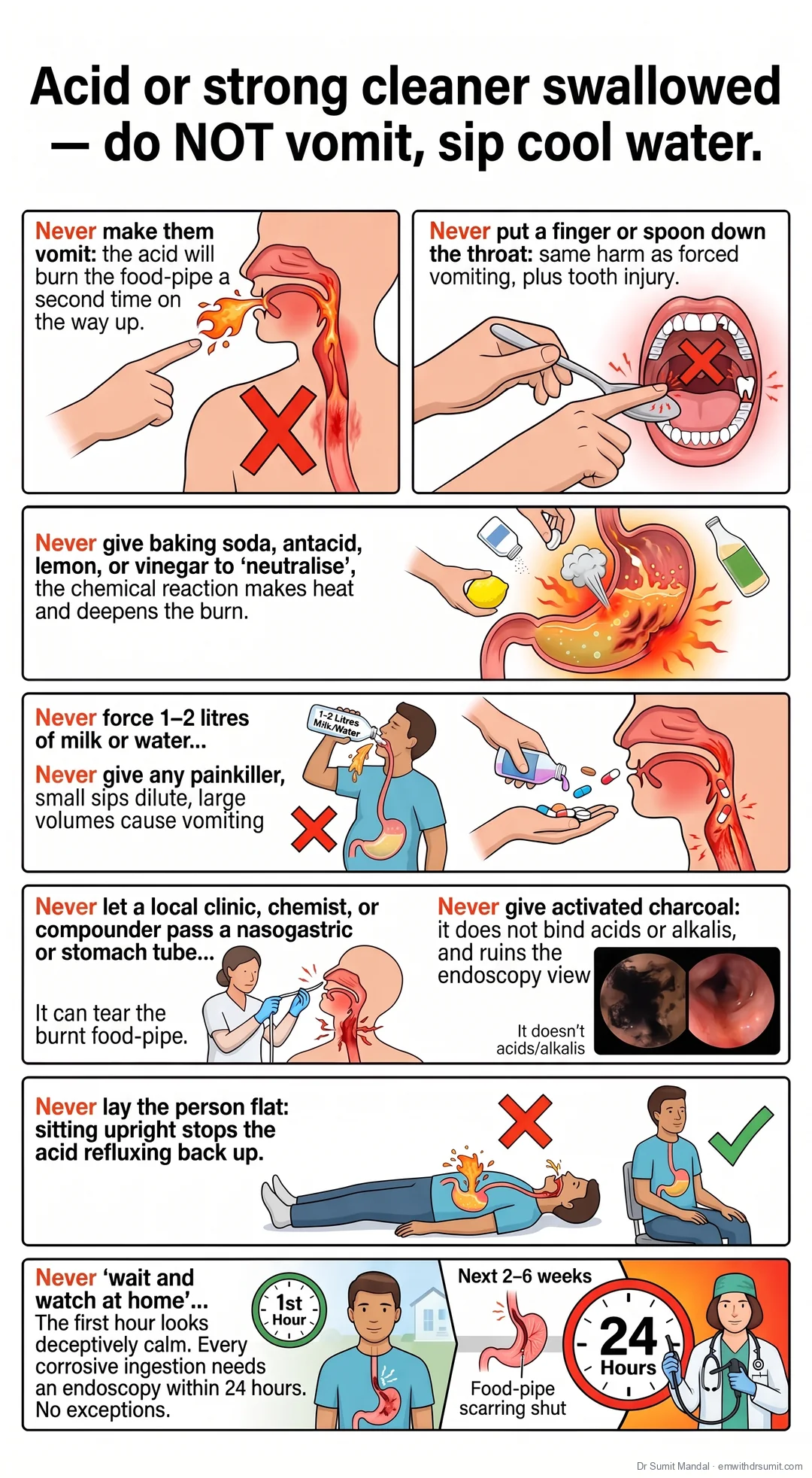
Acid or strong cleaner swallowed: do NOT vomit, sip cool water
Tezaab ya strong cleaner pee liya: ulti MAT karwao, thanda paani sip karo
Harpic, drain cleaner, toilet acid, battery fluid, the wrong instinct is to make the person vomit or 'neutralise' it with baking soda. Both make the burn worse. Wipe the mouth, give small sips of cool water or milk, grab the bottle, and rush to a hospital with an endoscopy unit.
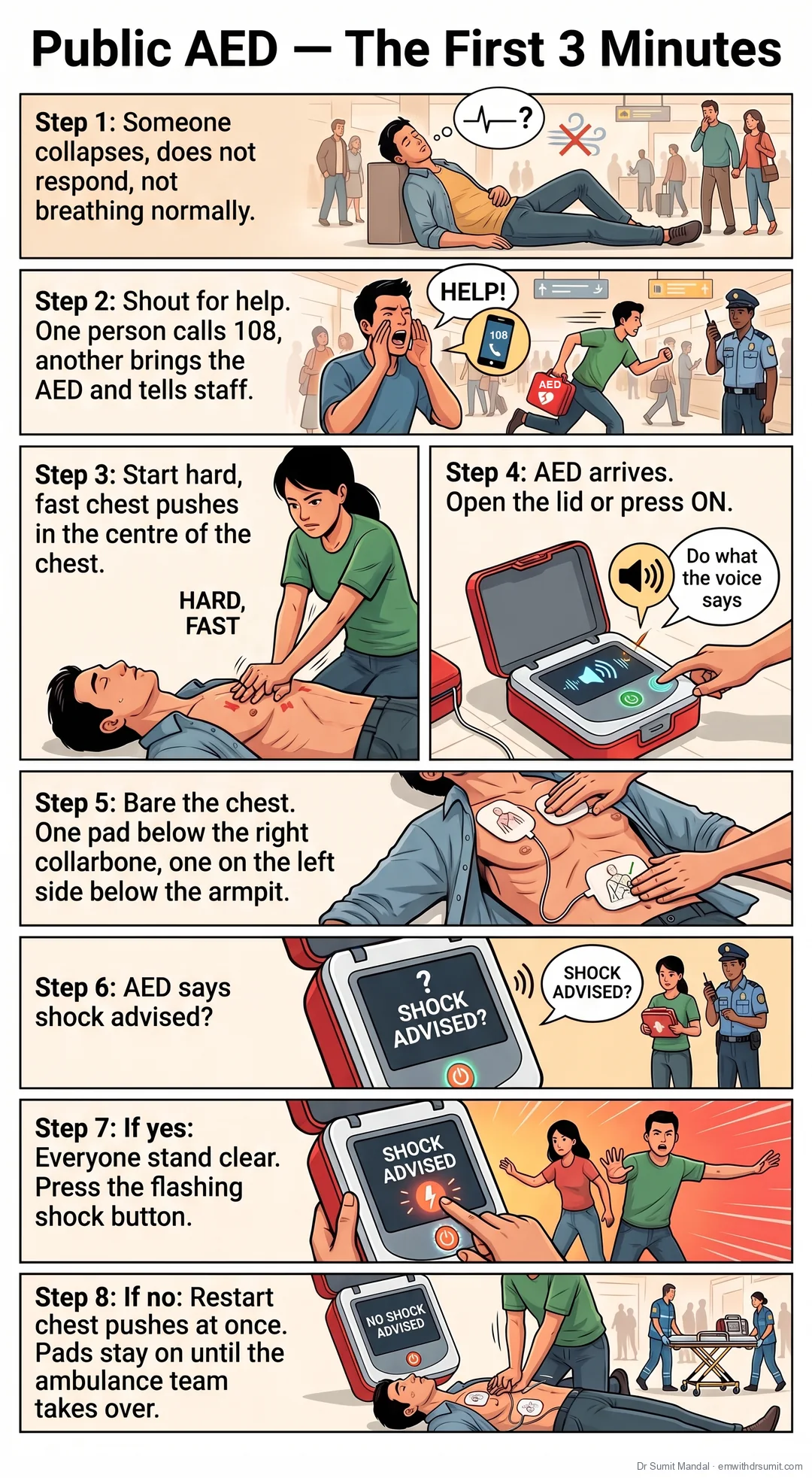
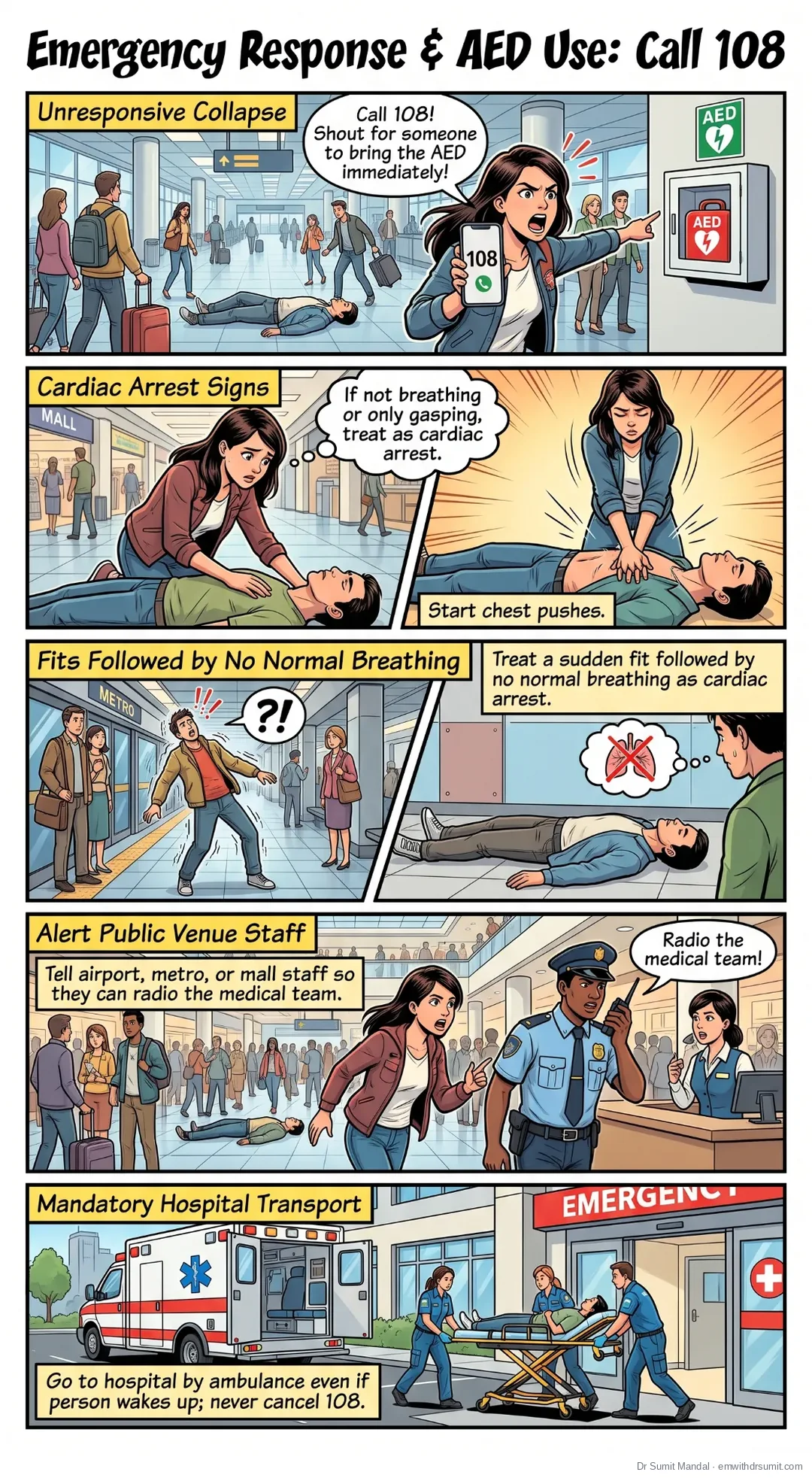
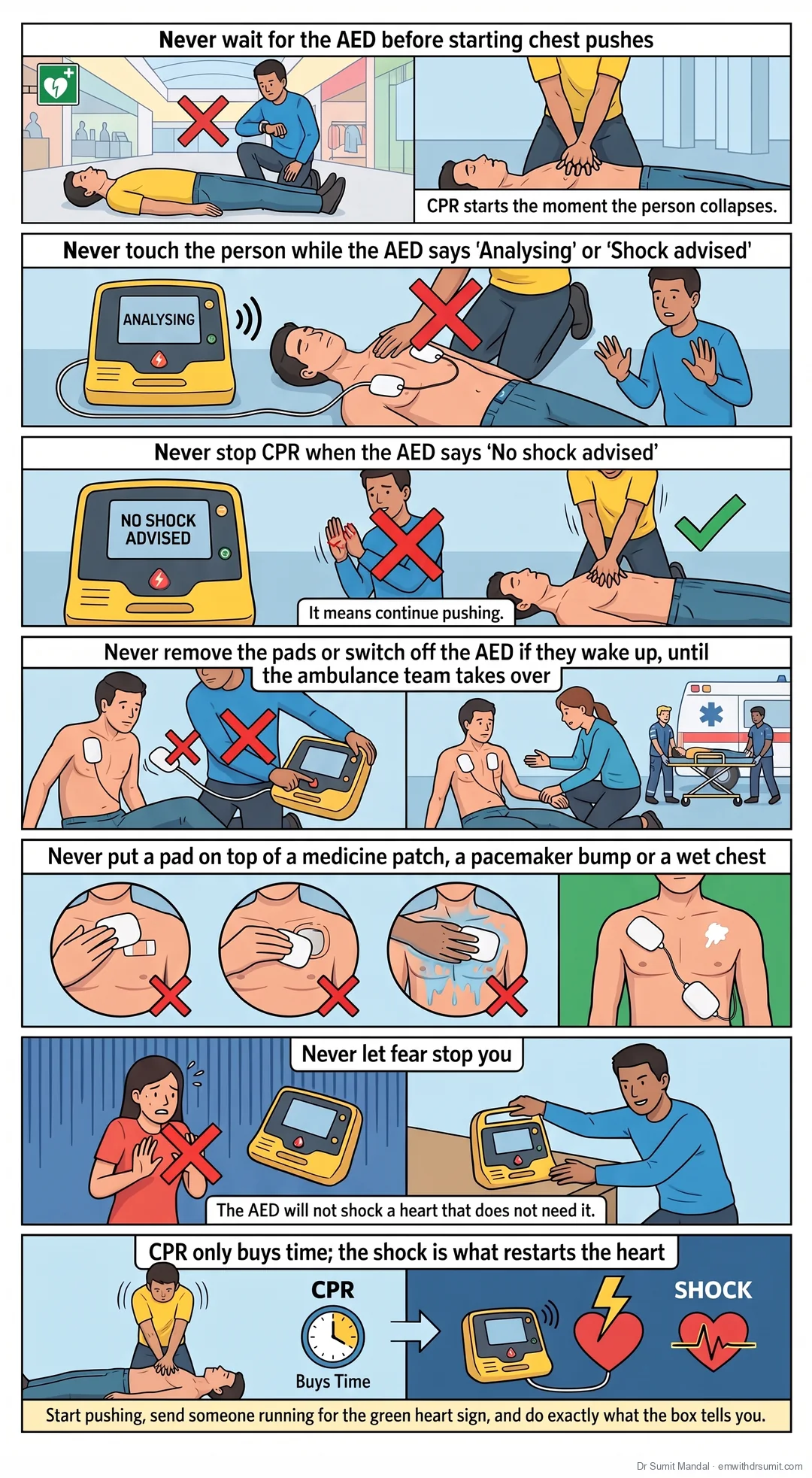
AED at the airport, metro or mall: the green box that restarts a heart
Airport, metro ya mall mein AED: hara dabba jo dil ko dobara chalu karta hai
CPR keeps the brain alive, but only an electric shock restarts a heart that is quivering. Public AEDs at airports, metro stations and malls are built for strangers to use: open the lid, stick two pads, and do exactly what the voice tells you.
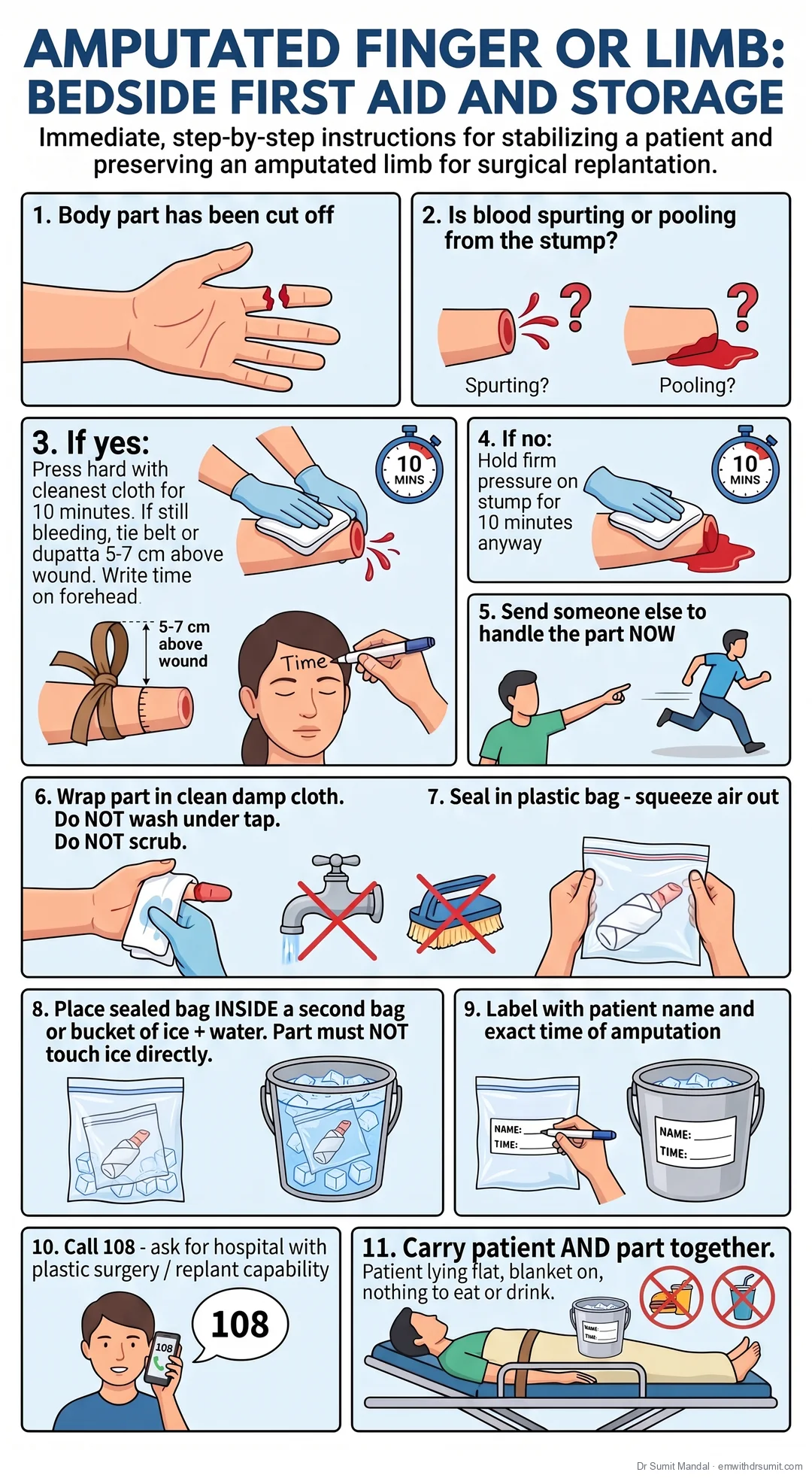
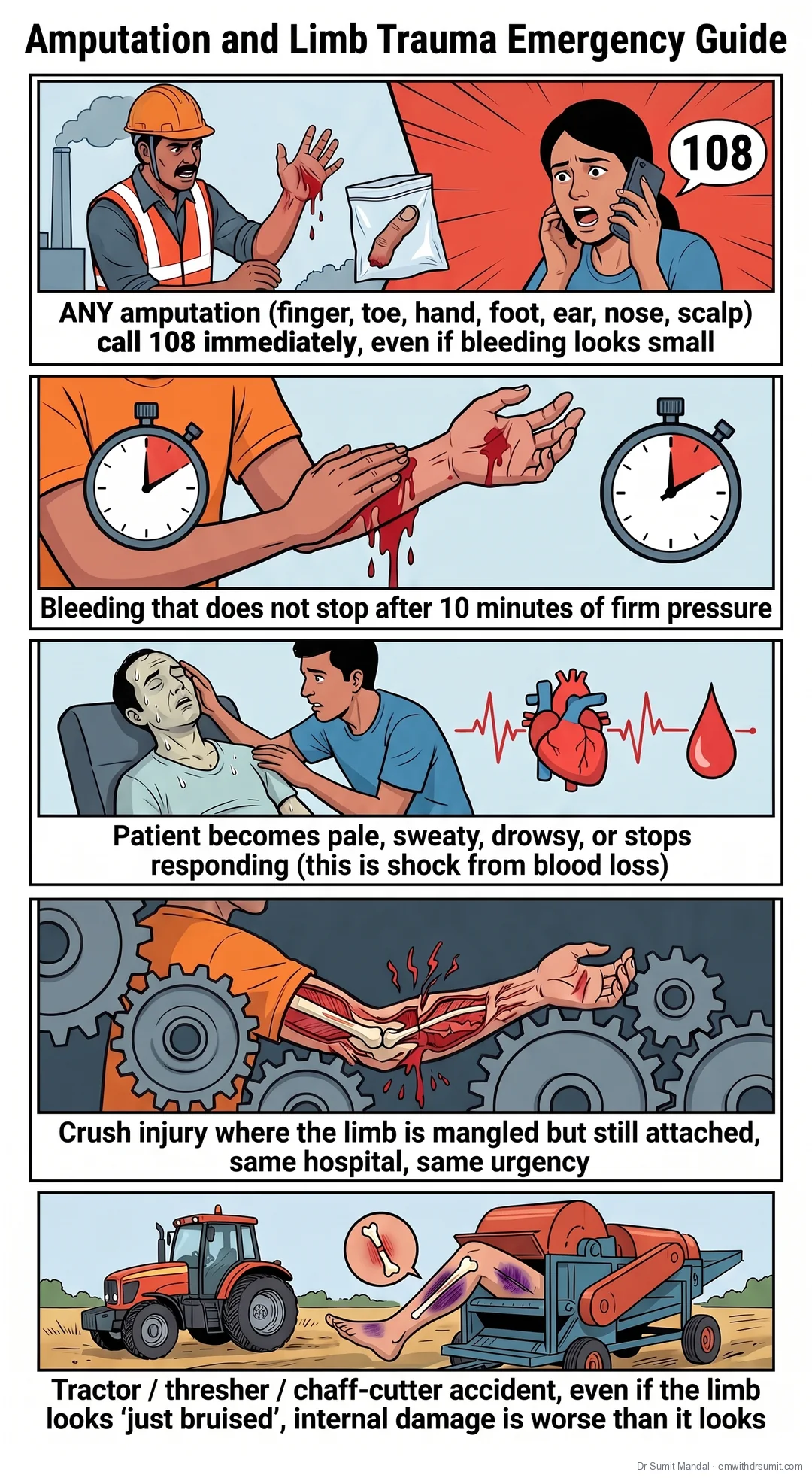
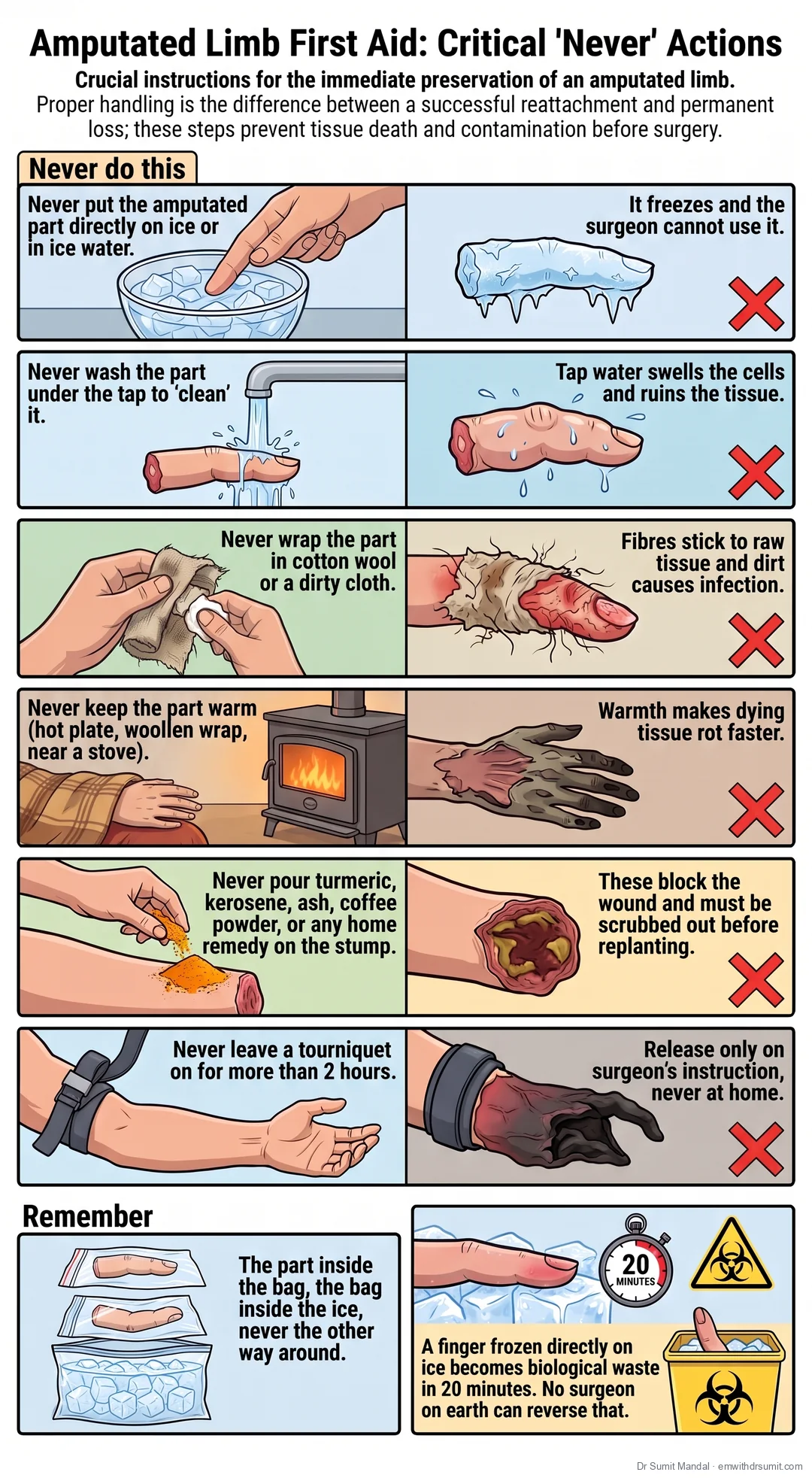
Amputated finger or limb: how to store it for the surgeon
Kata hua ungli ya haath-paer: surgeon ke liye kaise sambhaal kar le jaayein
If a finger, hand, or limb is cut off in an accident, the surgeon can often sew it back. But only if you preserve it correctly in the first hour. The part goes in a dry sealed bag, and THAT bag goes into iced water, never the part directly on ice.
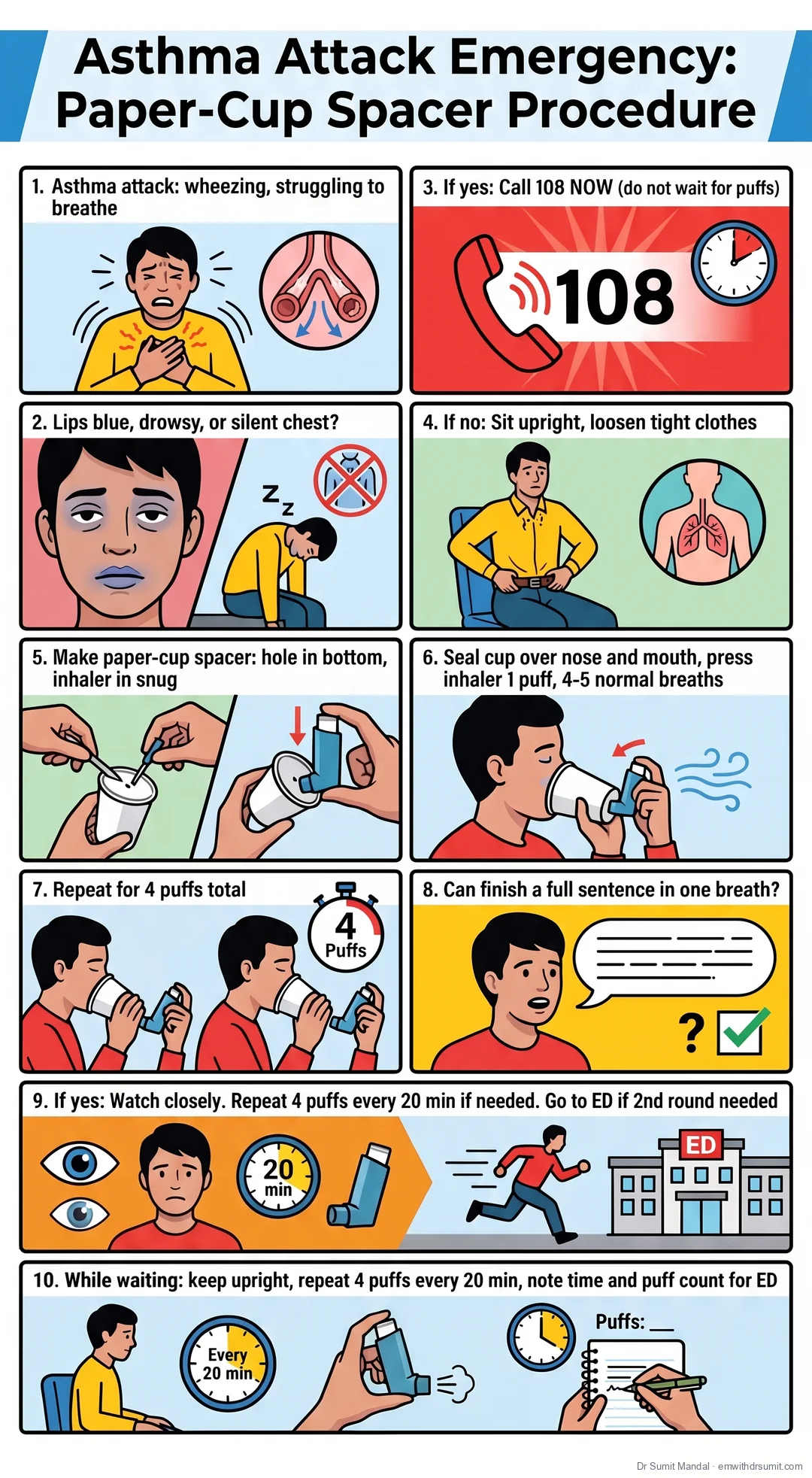
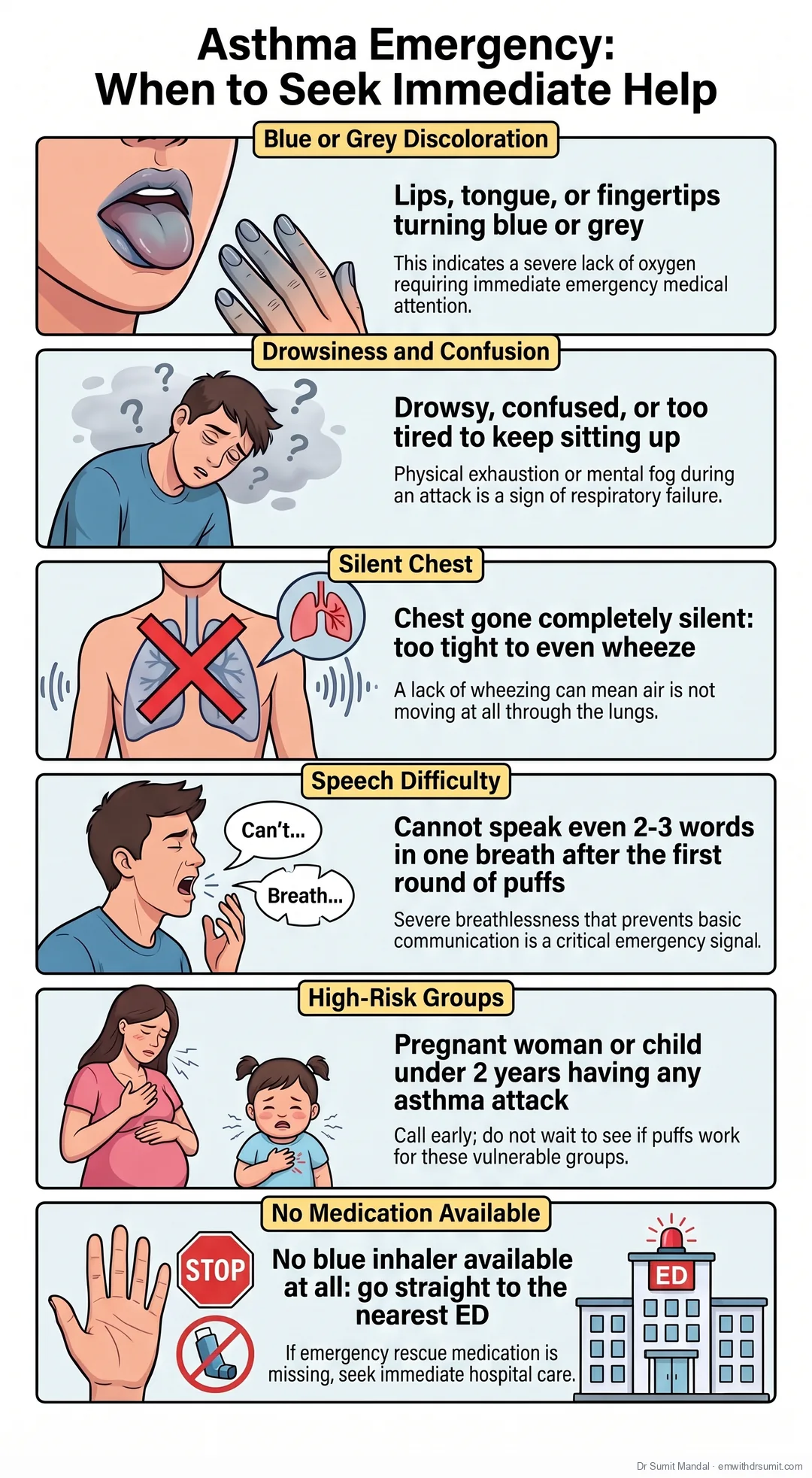
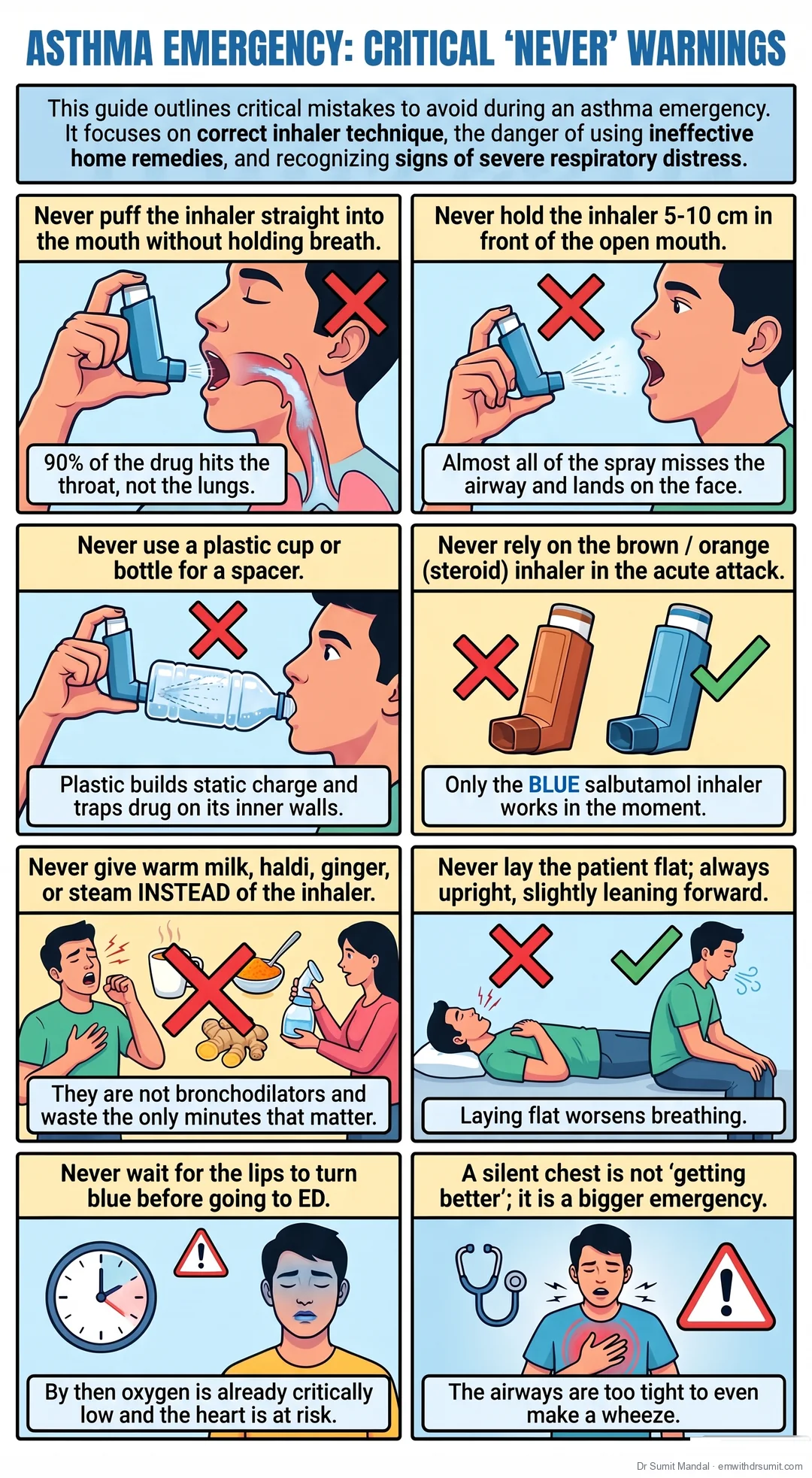
Asthma inhaler with a paper-cup spacer: when you don't have a real spacer
Asthma inhaler aur paper-cup spacer: jab asli spacer ghar mein nahi hai
Inhaler puffed straight into the mouth delivers barely 10% of the drug to the lungs, the rest hits the throat and is swallowed. A clean disposable paper cup, used as a spacer, jumps that to 40% and can break an asthma attack at home while you wait for or travel to the ED.
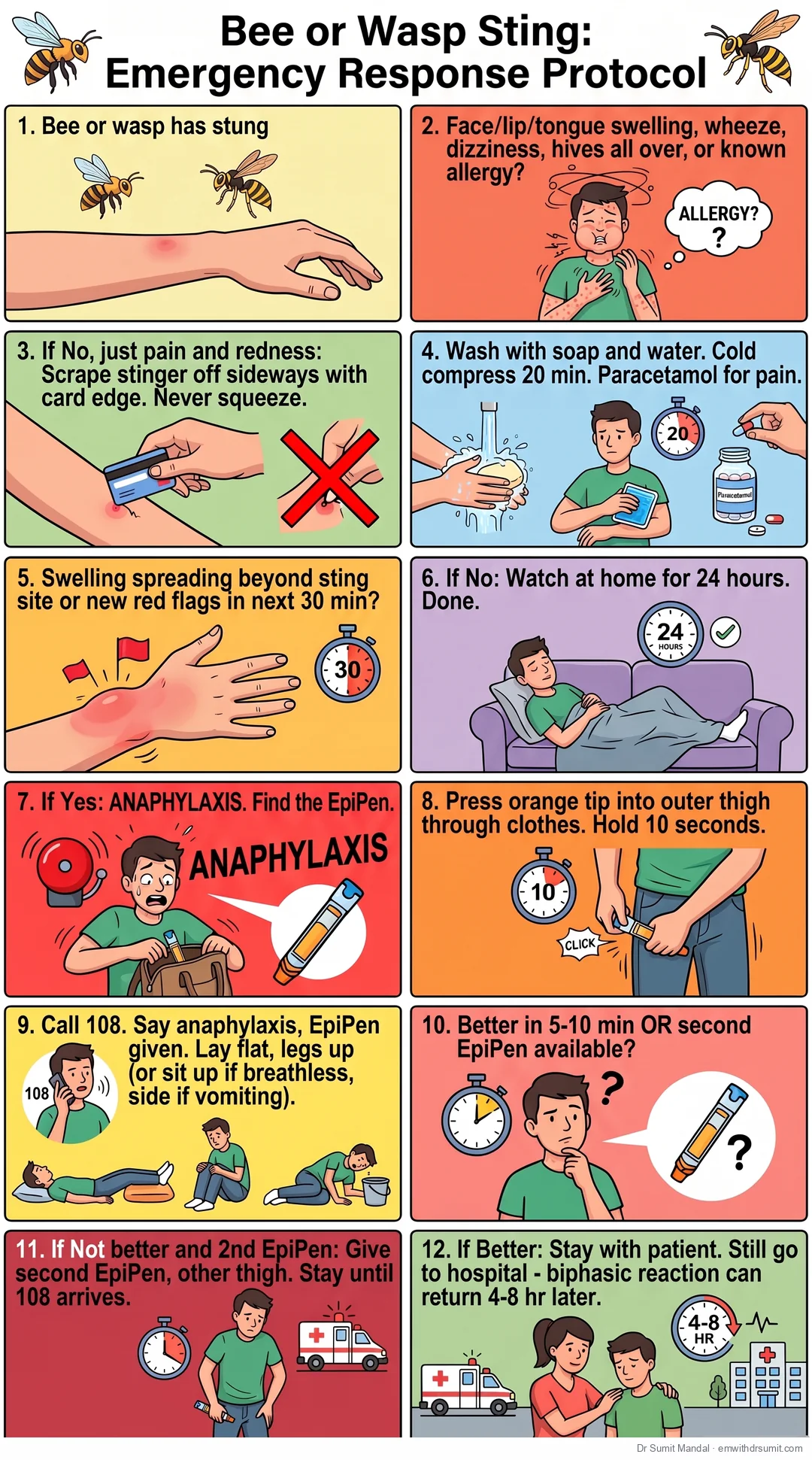
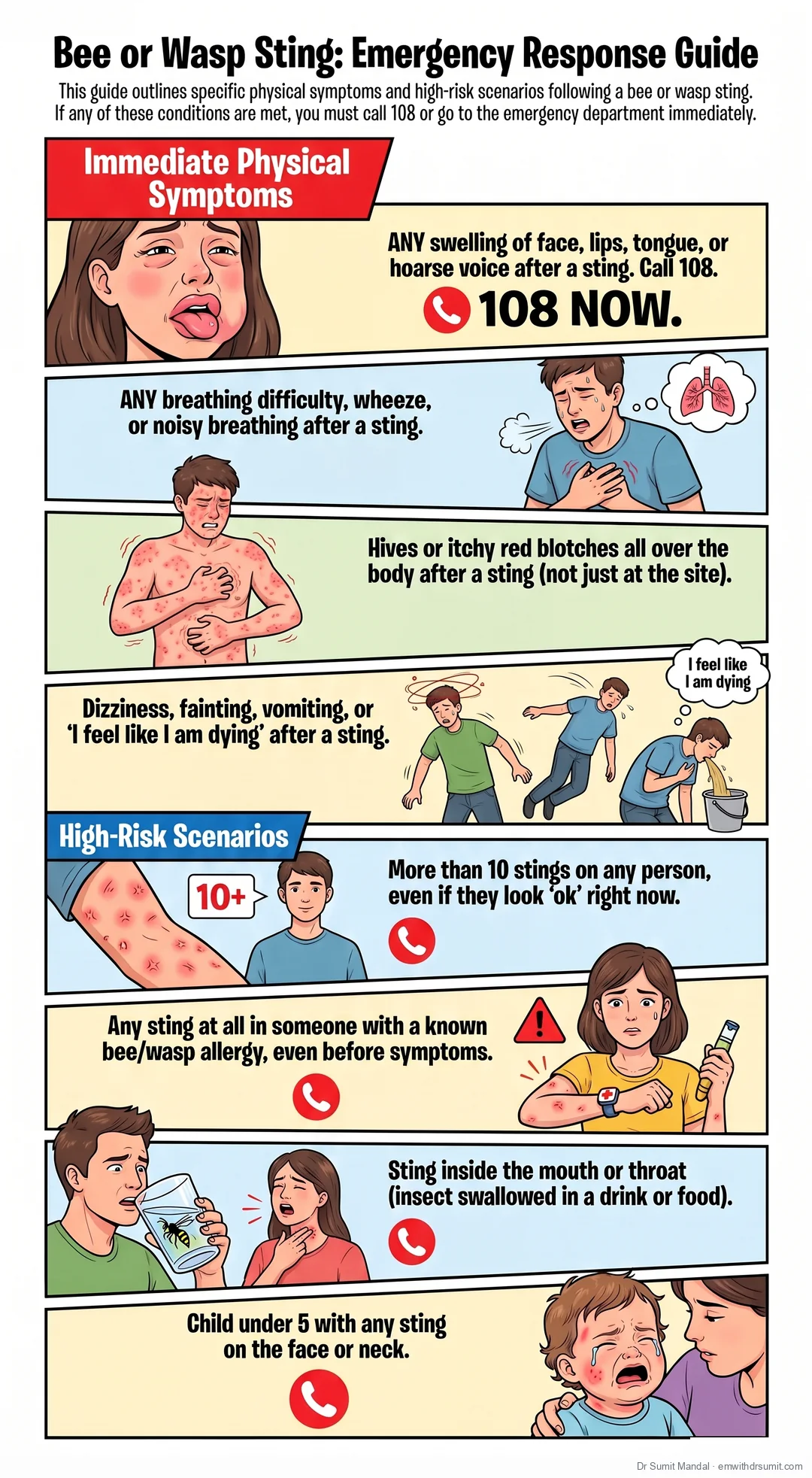
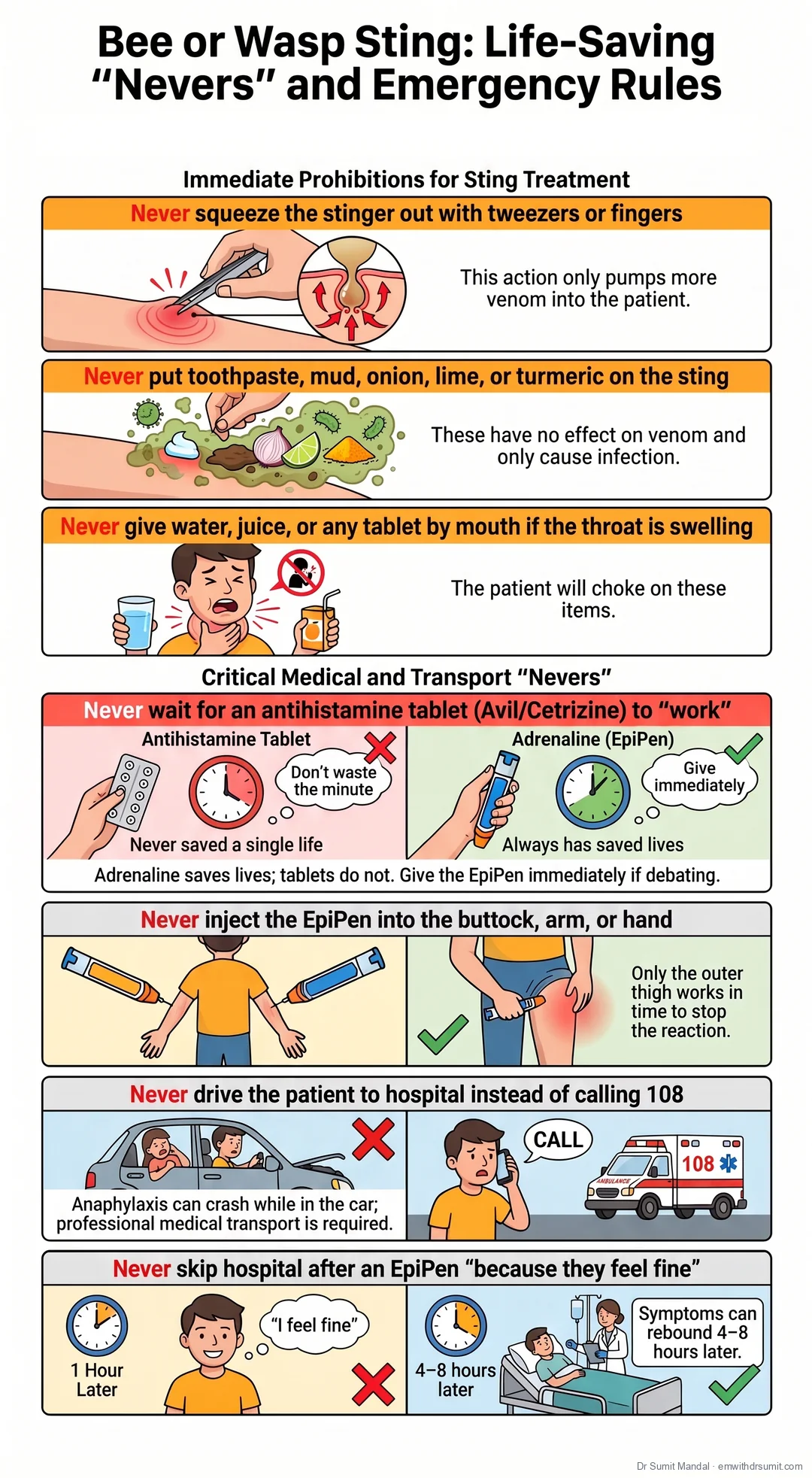
Bee or wasp sting: when to use the EpiPen and how to remove the stinger
Madhumakkhi ya bhirr ka dank: EpiPen kab lagana hai aur dank kaise nikalna hai
Most stings are just painful and red: local care at home is enough. But face swelling, breathlessness, or a known allergy is **anaphylaxis**, an EpiPen into the side of the thigh, then 108, is what saves the life. An antihistamine tablet does NOT.
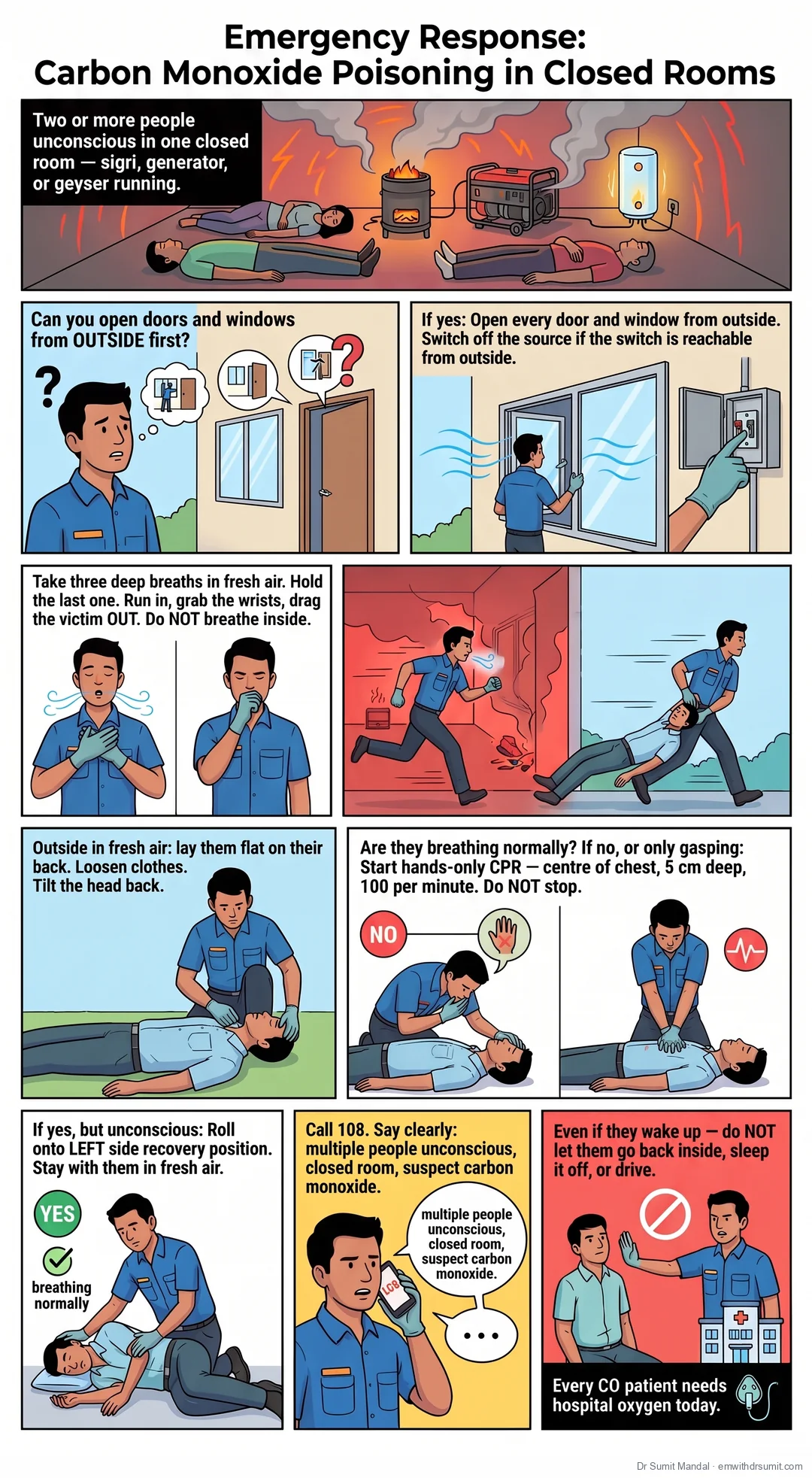
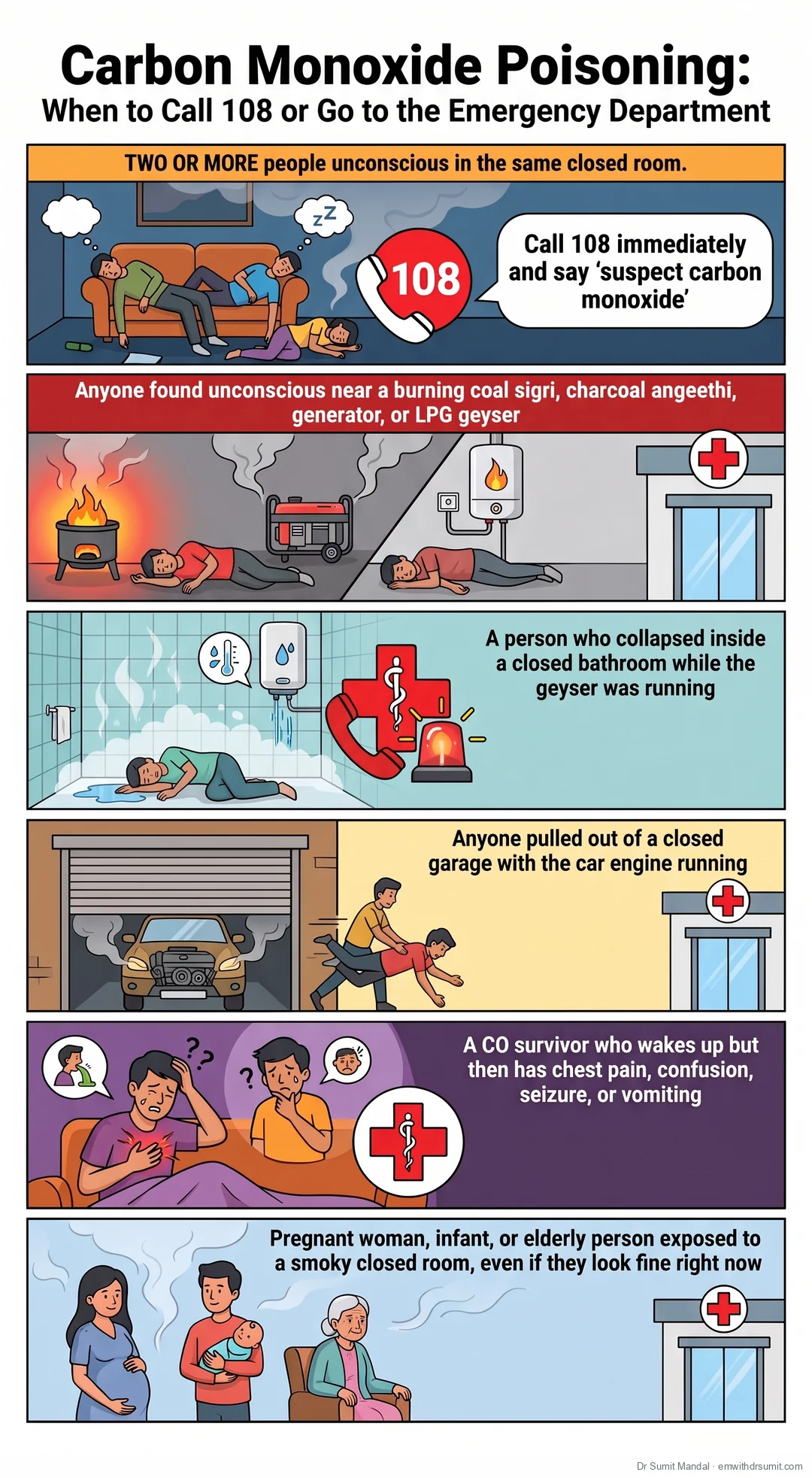
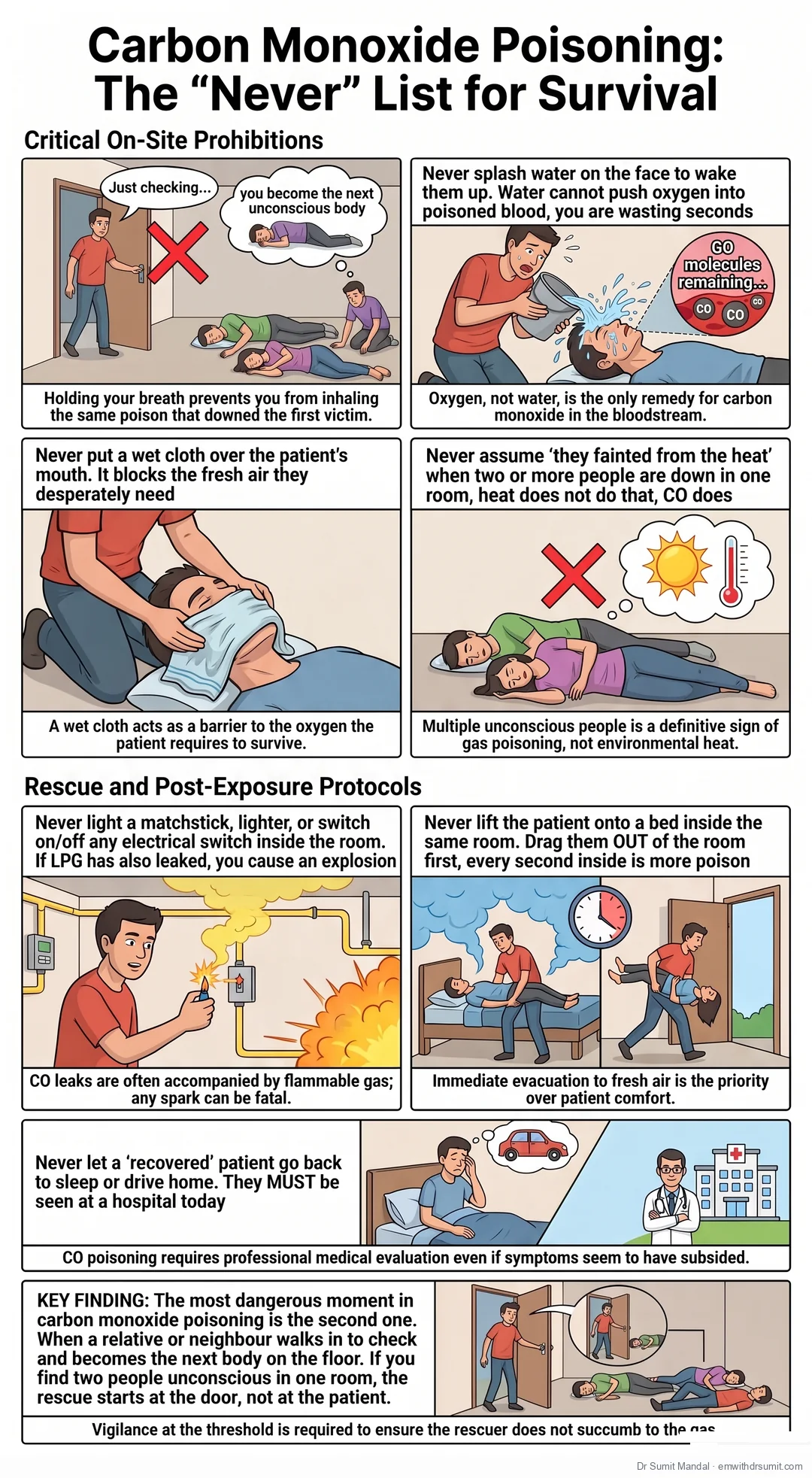
Carbon monoxide poisoning: coal sigri, generator, gas geyser in a closed bathroom
Carbon monoxide zeher: band kamre mein sigri, generator, ya gas geyser
When more than one person is unconscious in the same closed room, a coal sigri, a diesel generator, or an LPG geyser running in a sealed bathroom. Assume carbon monoxide. The gas is invisible, has no smell, and kills the rescuer just as fast as the victim. Hold your breath, drag them out, fresh air, 108.
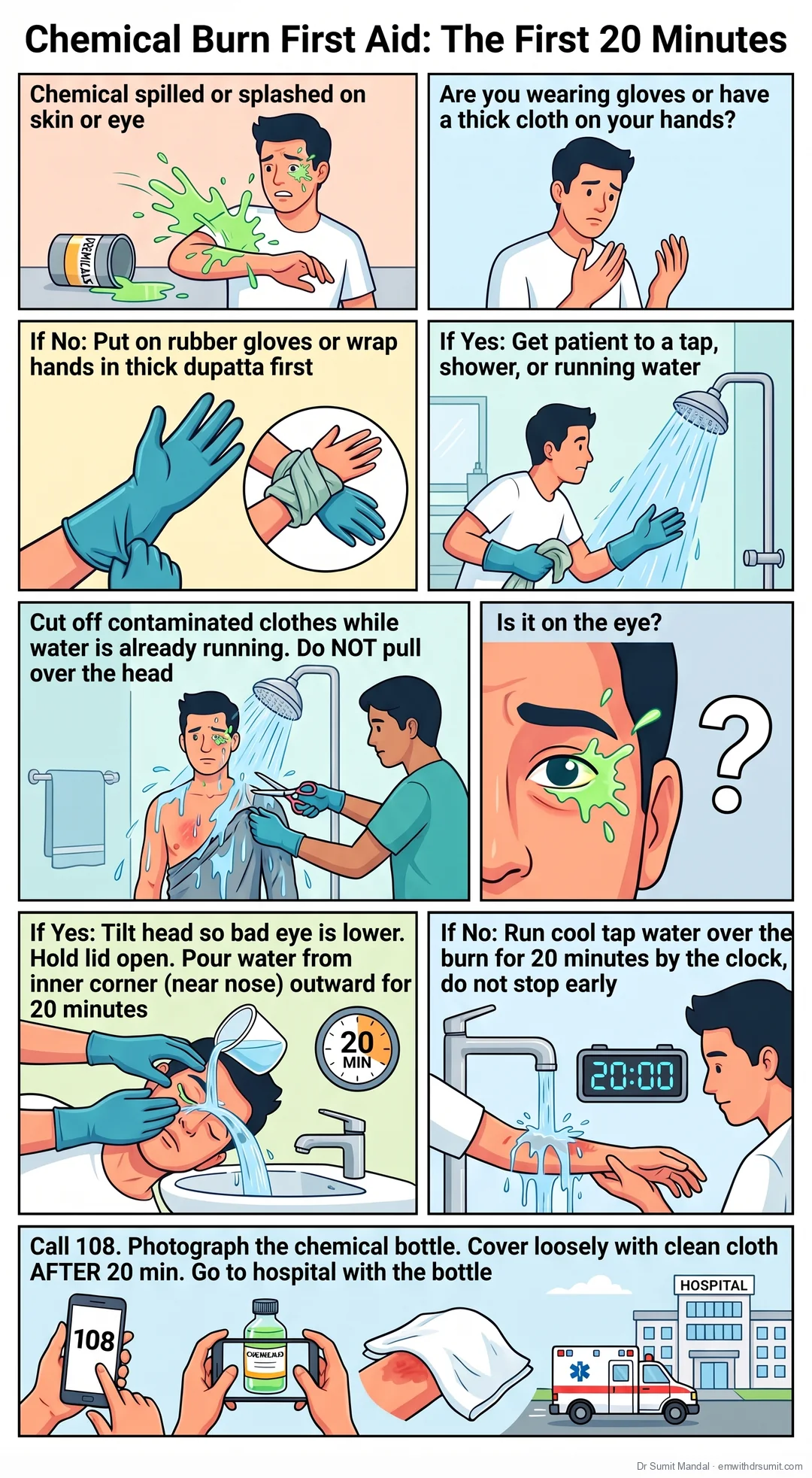
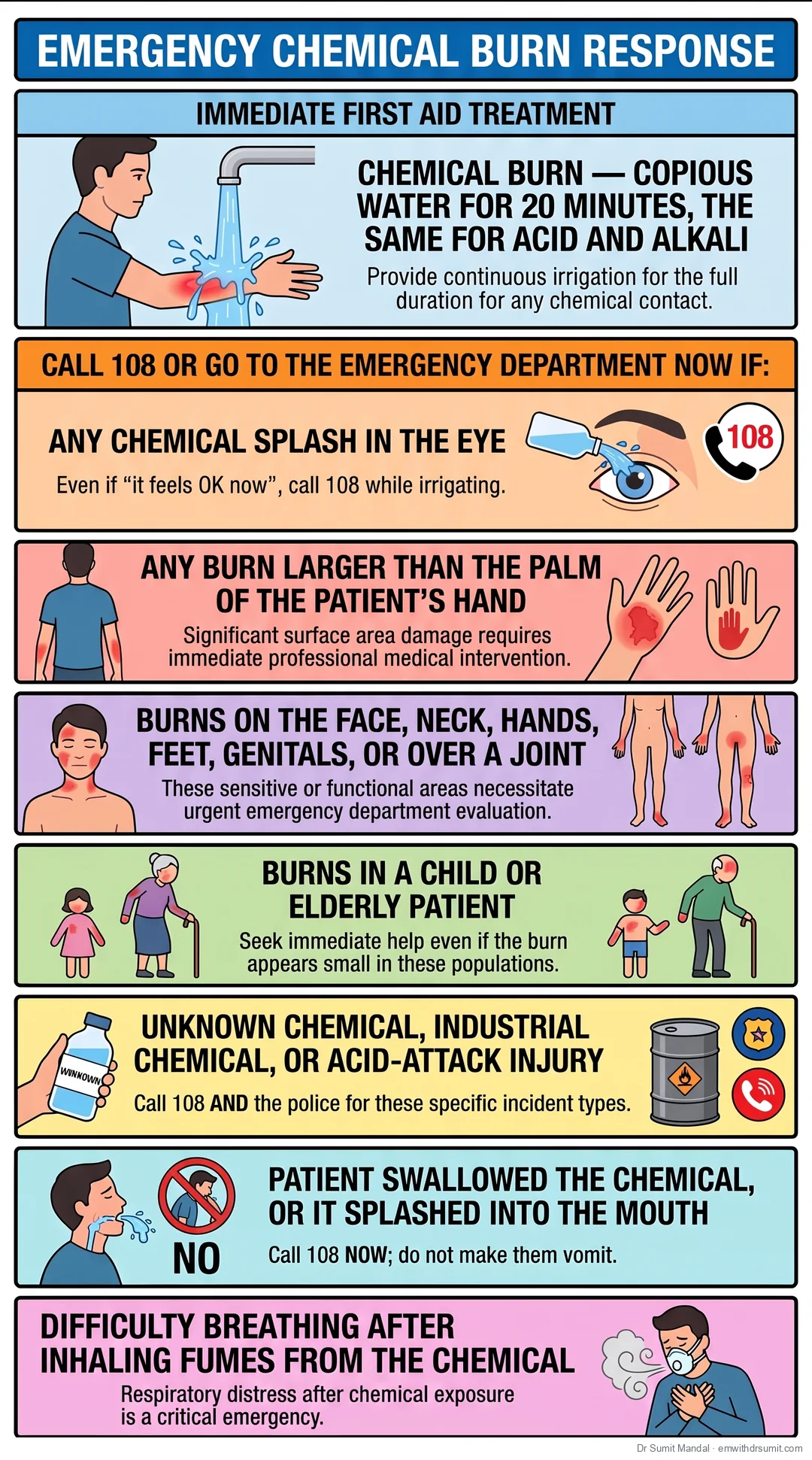
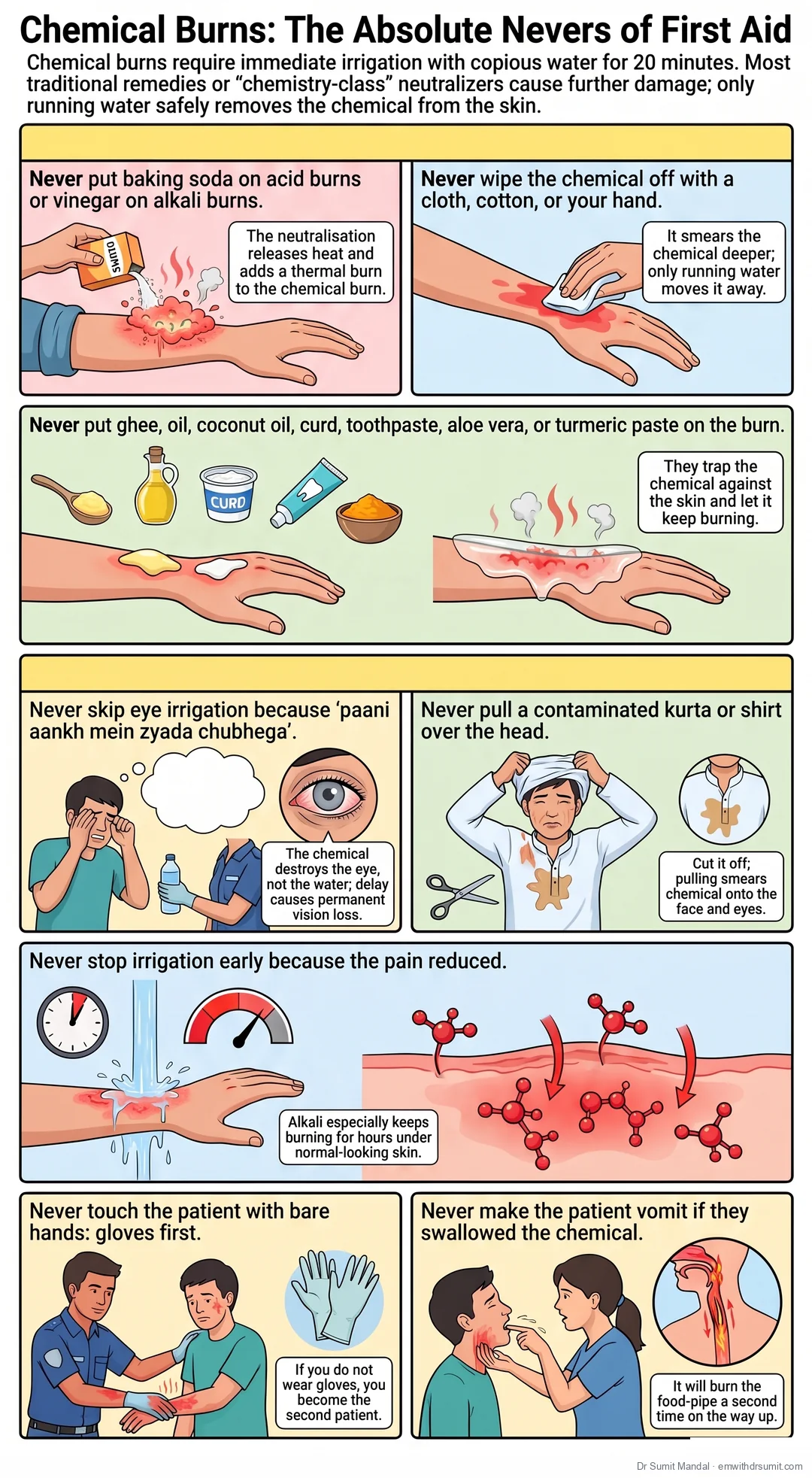
Chemical burn: copious water for 20 minutes, the same for acid and alkali
Chemical jal jaaye: 20 minute tak khoob paani, acid ho ya alkali, ilaaj ek hi hai
Acid (Harpic, drain cleaner, acid attack) or alkali (chuna, plaster, oven cleaner) on skin or eyes: do not look for the 'right' antidote. Run tap water over the area for an uninterrupted 20 minutes from the very first second. That one act decides how deep the burn goes.
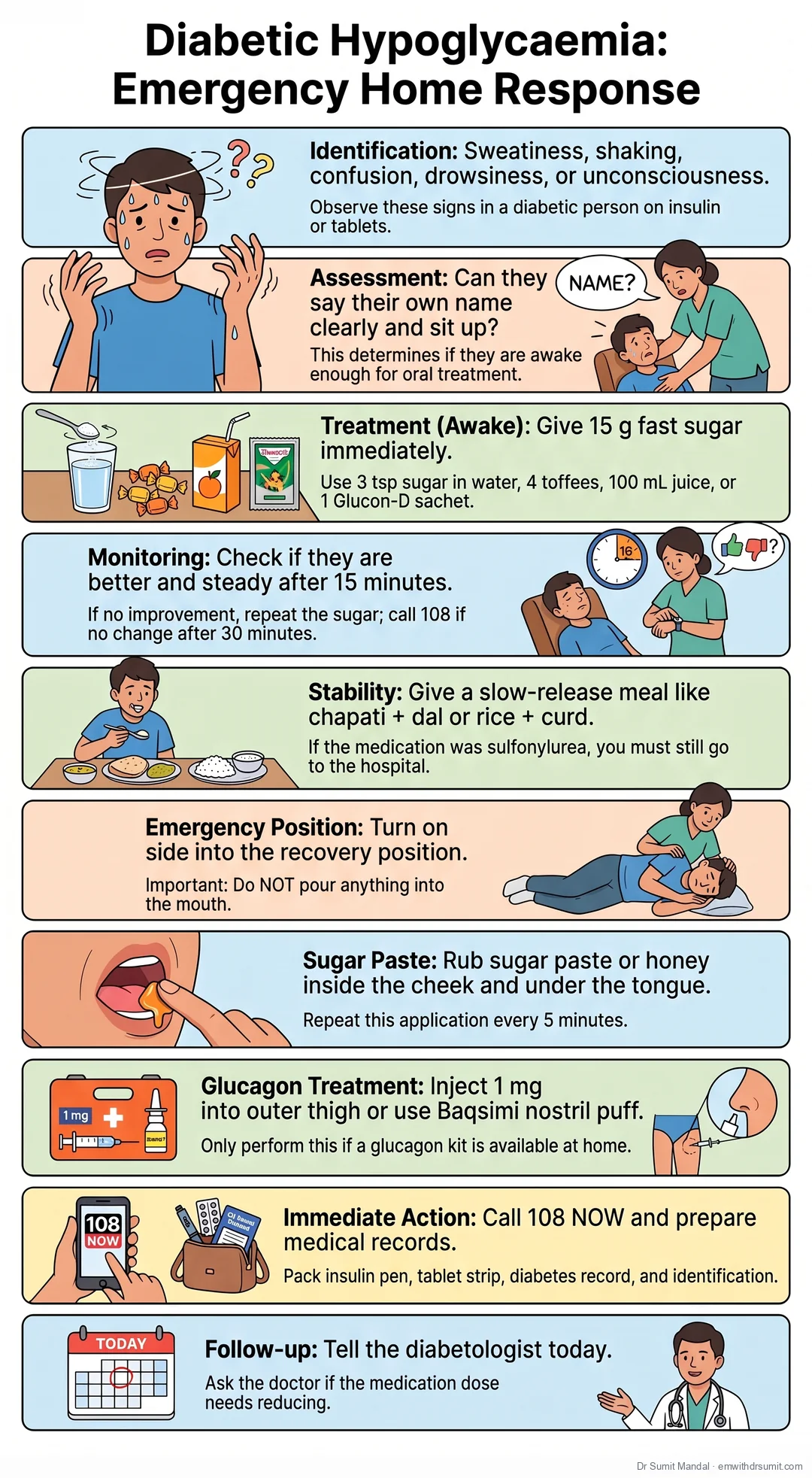
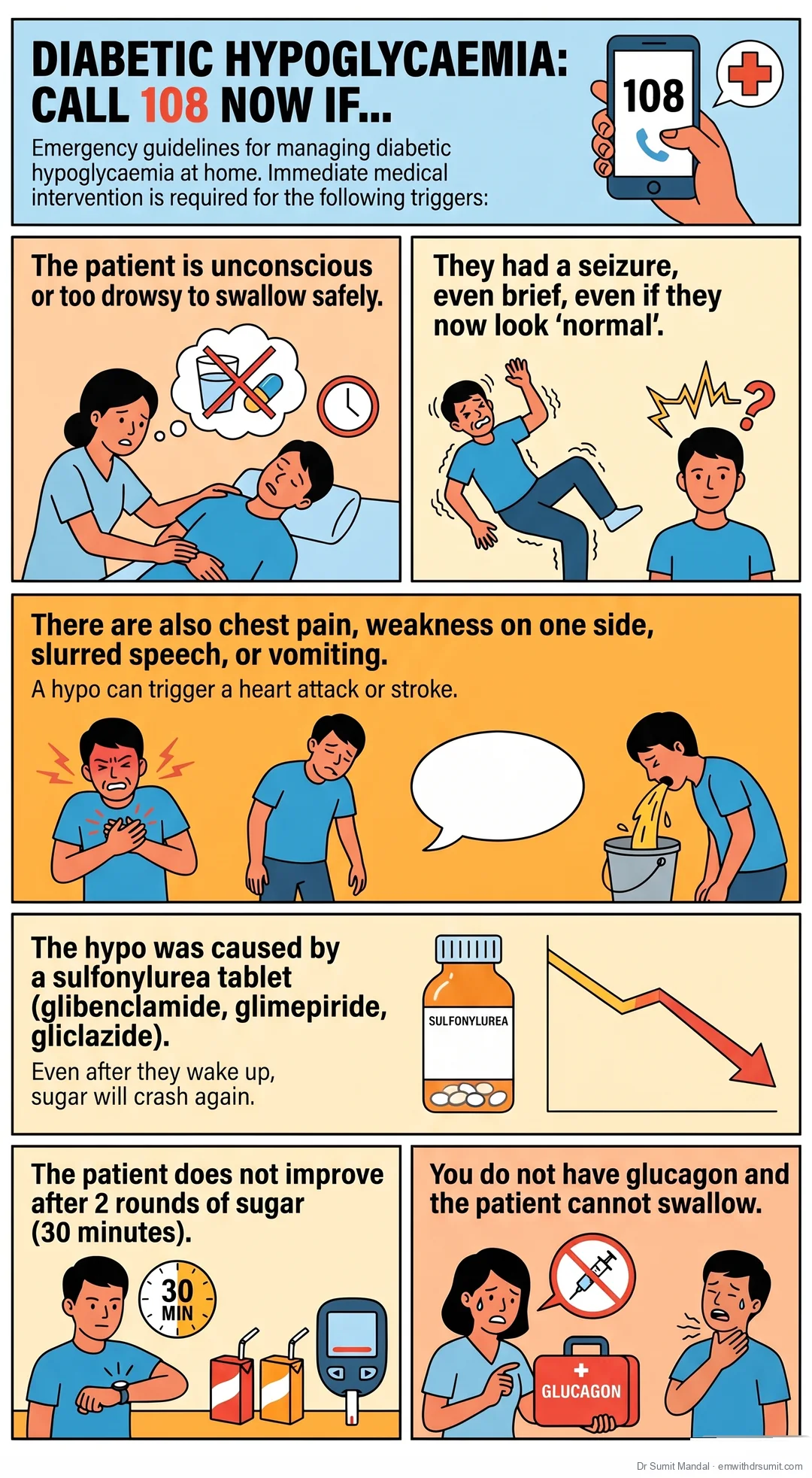
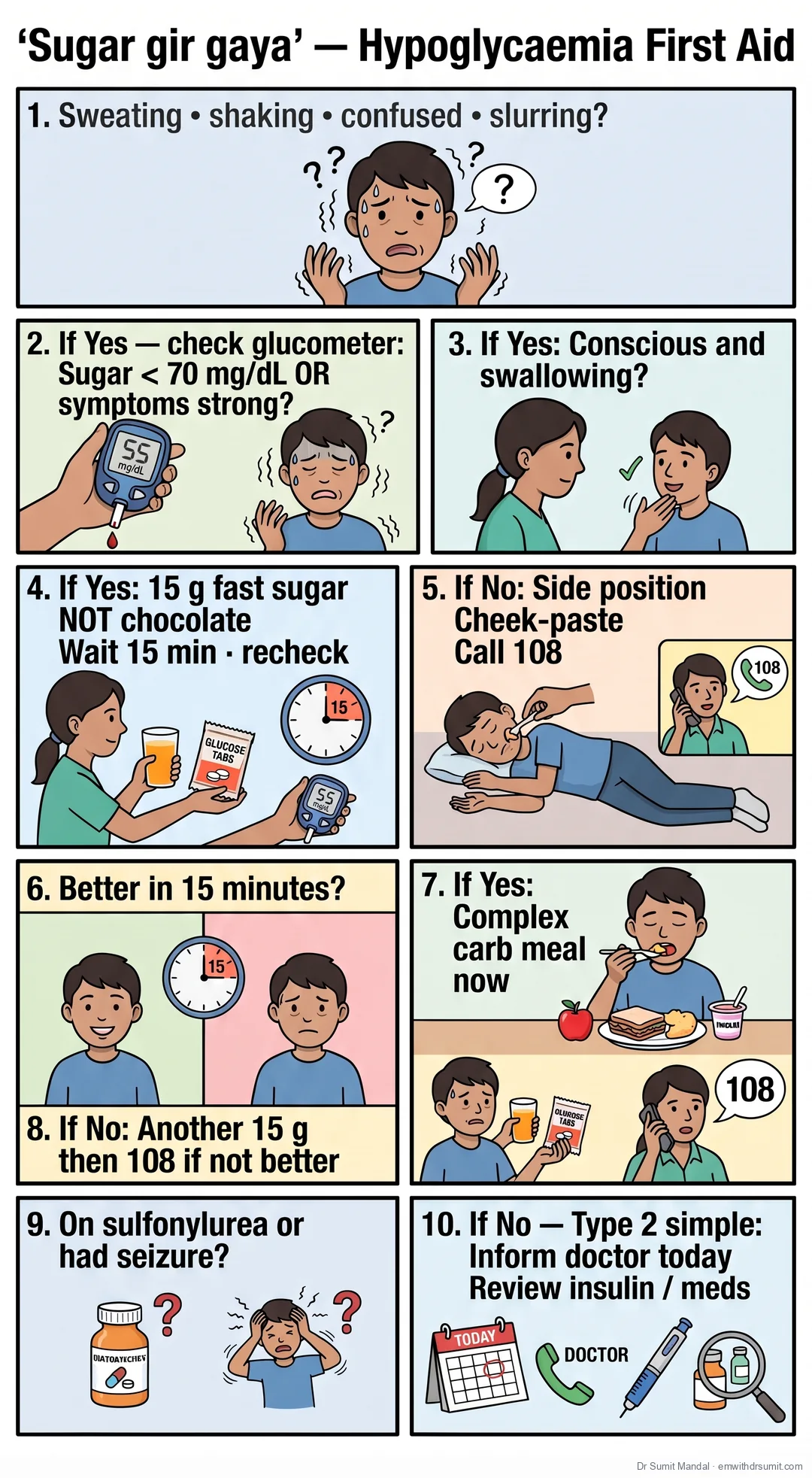
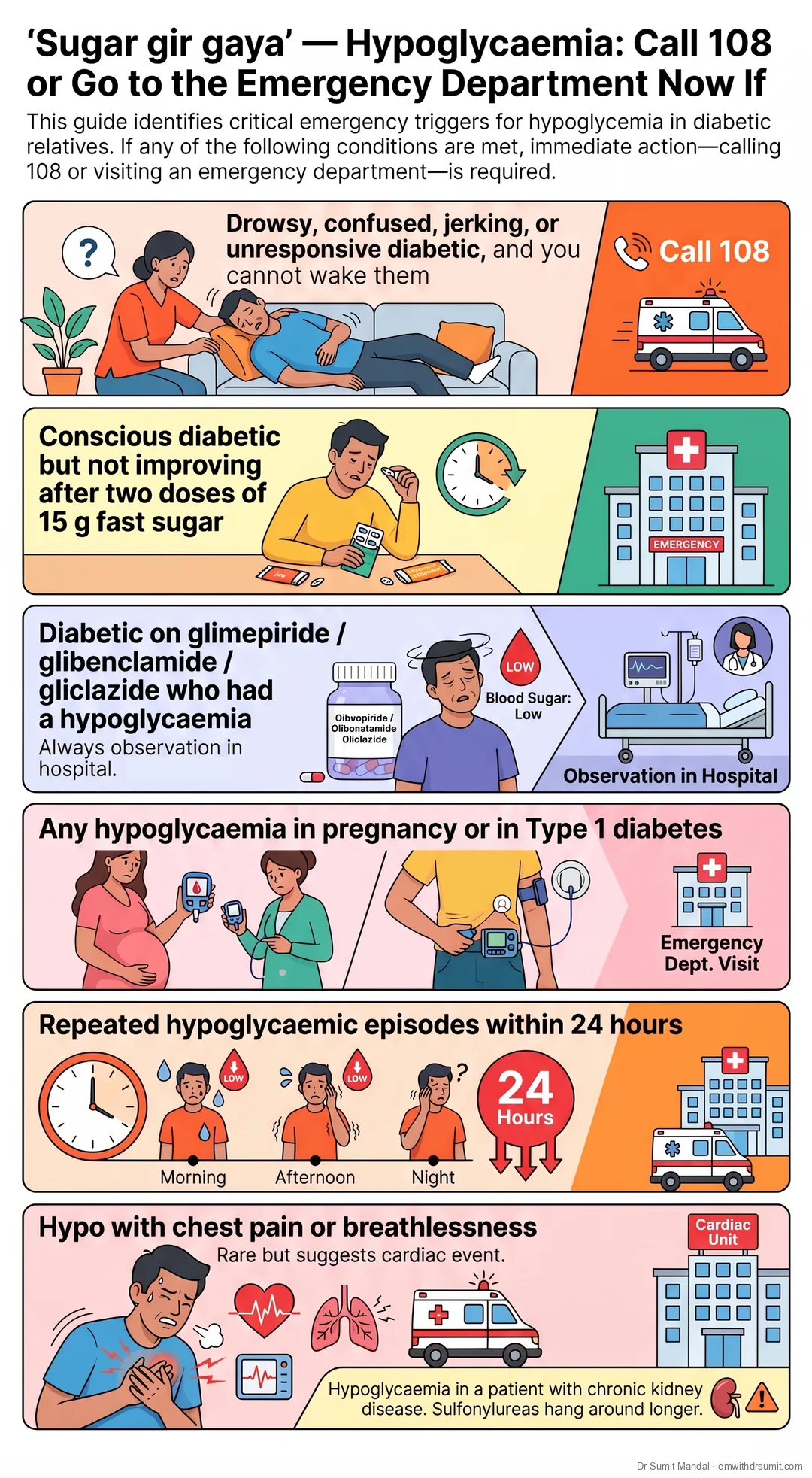
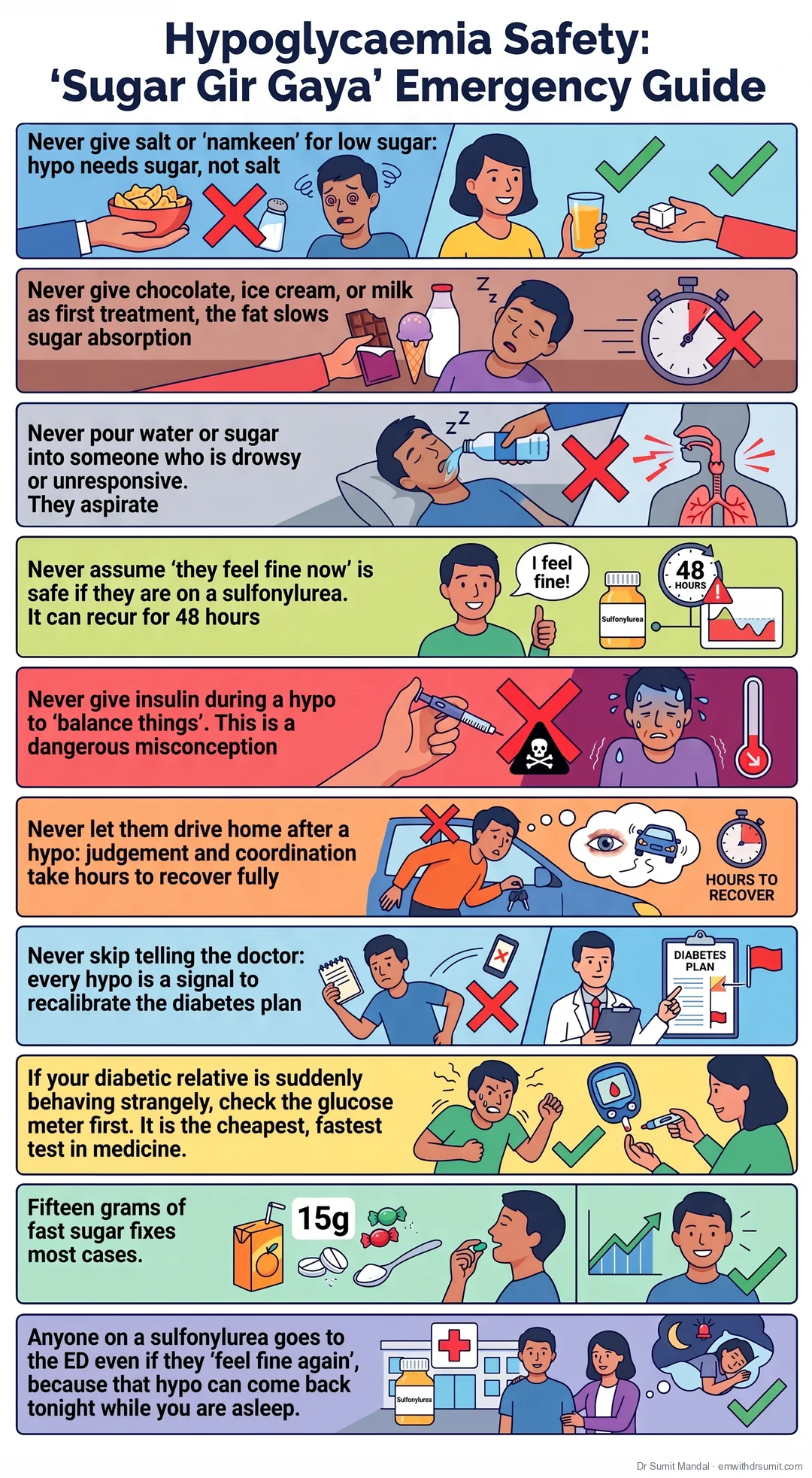
Diabetic hypoglycaemia at home: sugar paste, glucagon, recovery position
Diabetic patient ka sugar gir gaya: chini paste, glucagon, recovery position
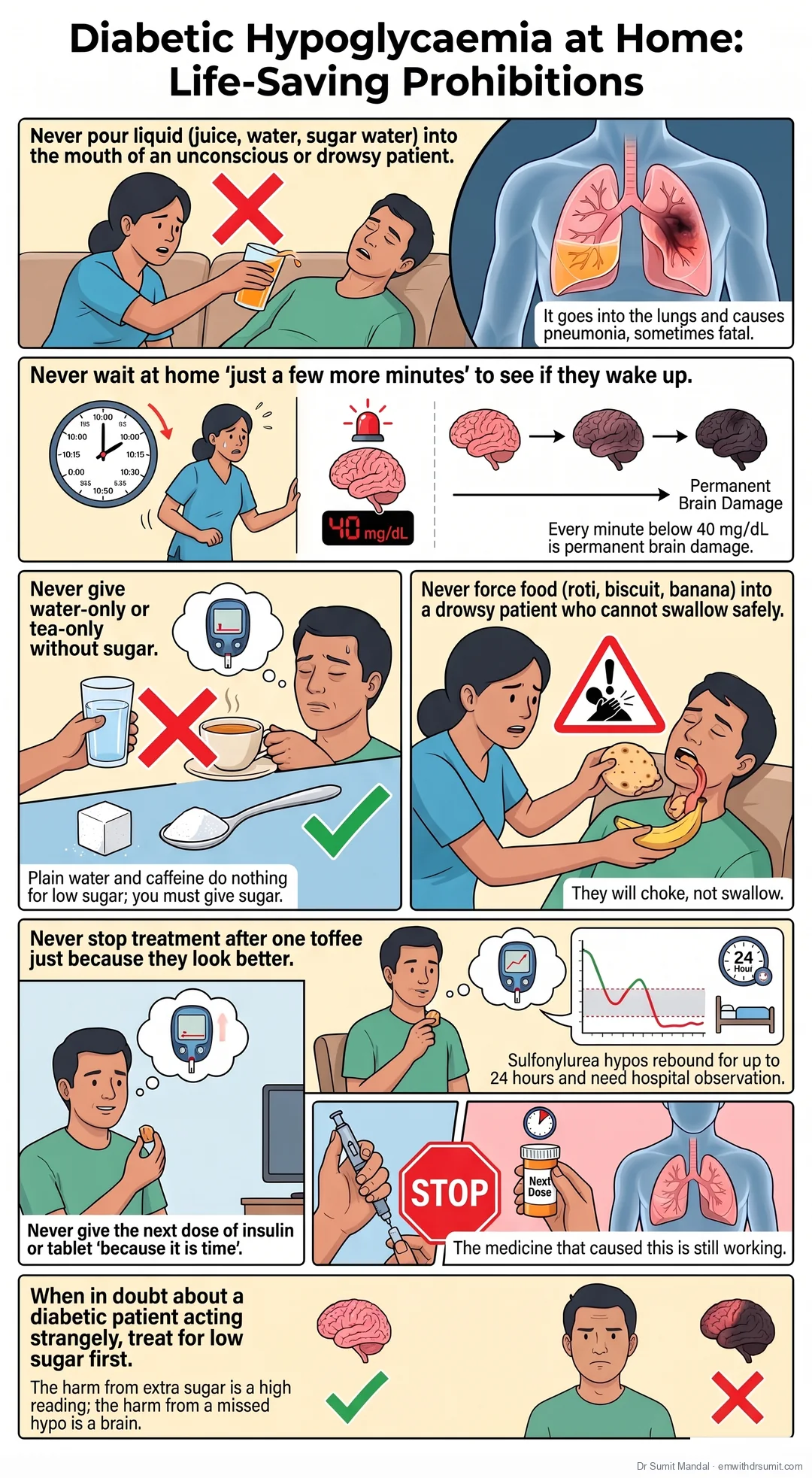
An insulin or sulfonylurea patient who suddenly turns sweaty, shaky, confused, or unconscious is having a sugar crash, and a sugar crash kills brain cells in minutes, not hours. If they can swallow, give sugar by mouth. If they cannot, do NOT pour anything in, rub sugar paste inside the cheek, give glucagon IM if you have it, lay them in recovery position, and call 108.
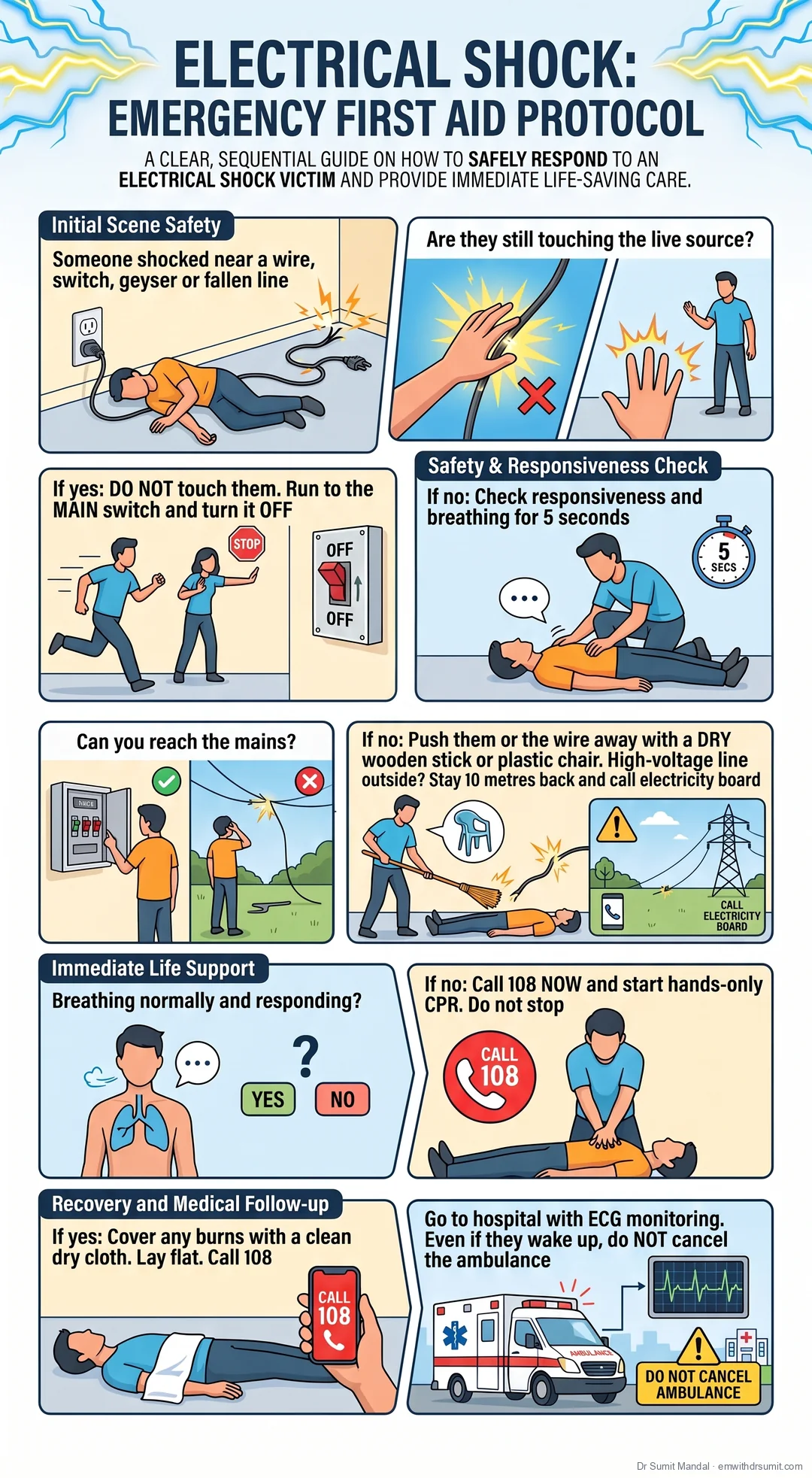
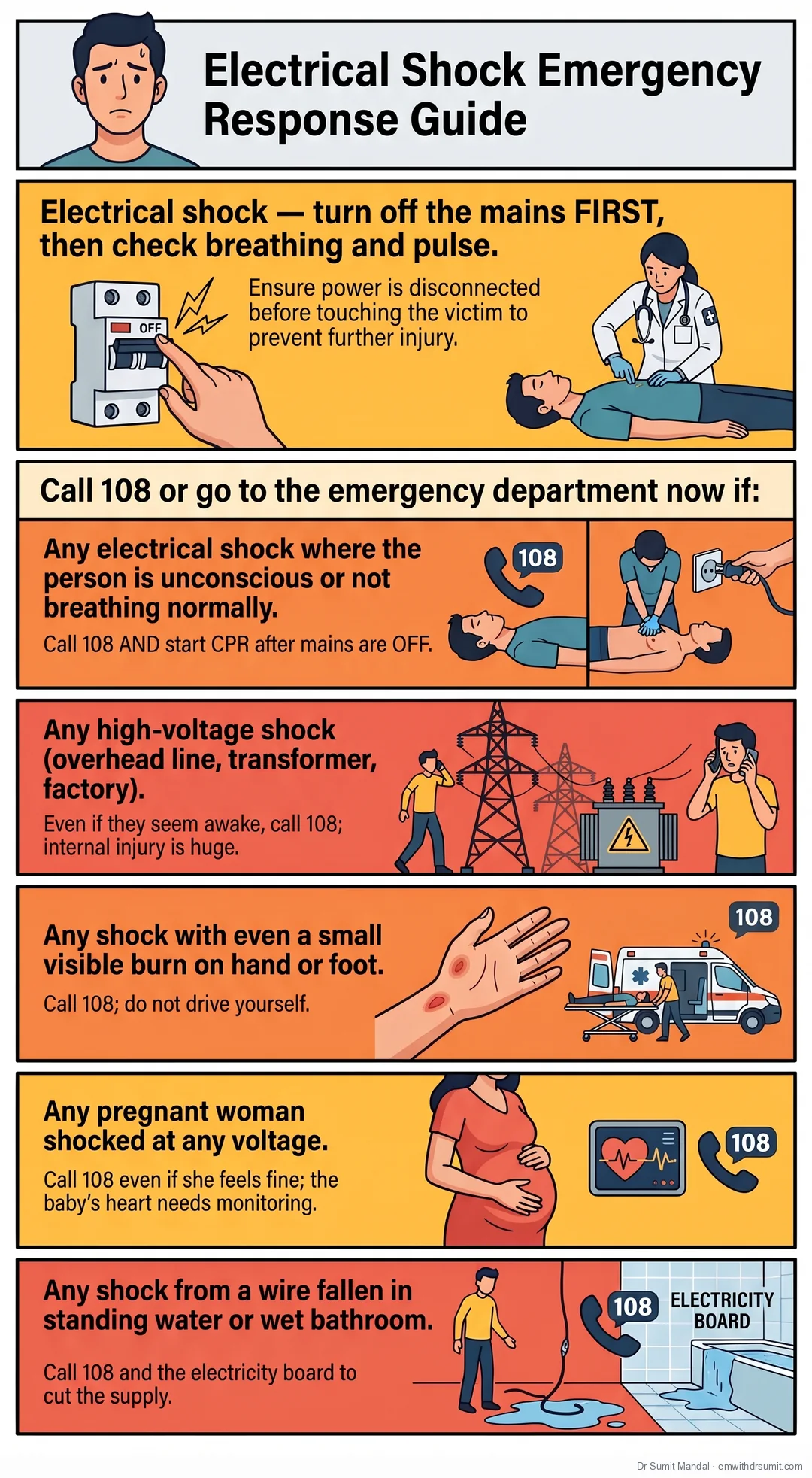
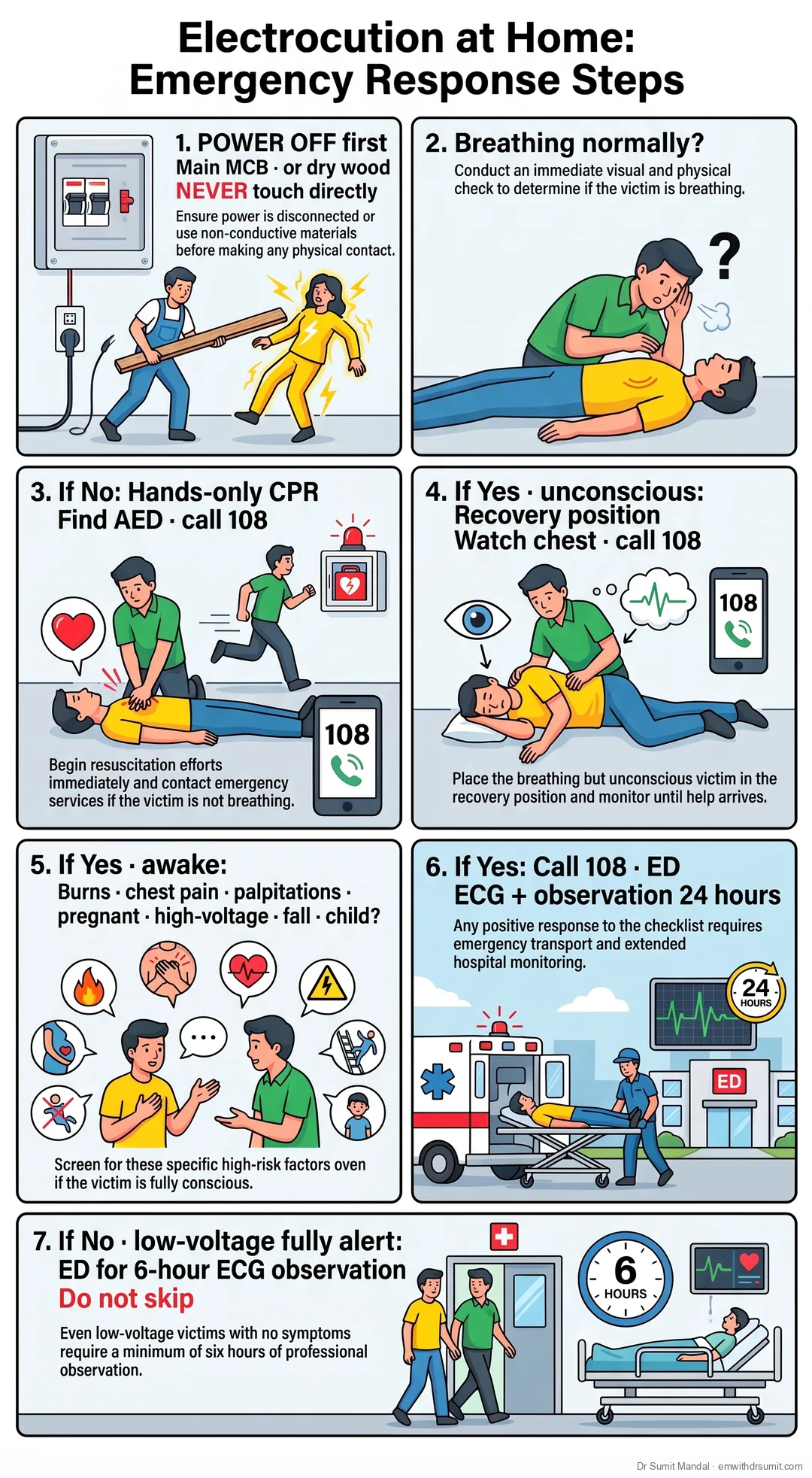
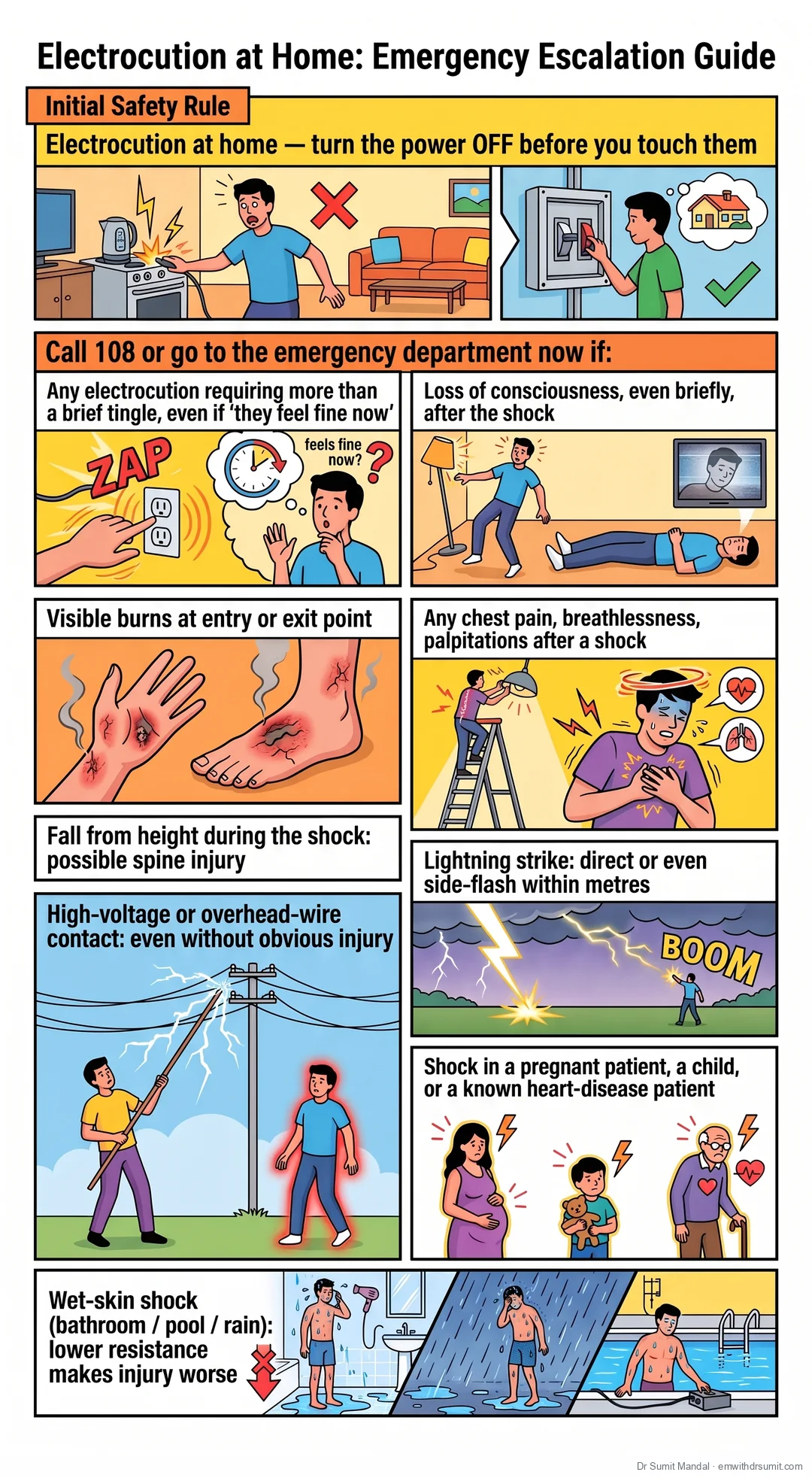
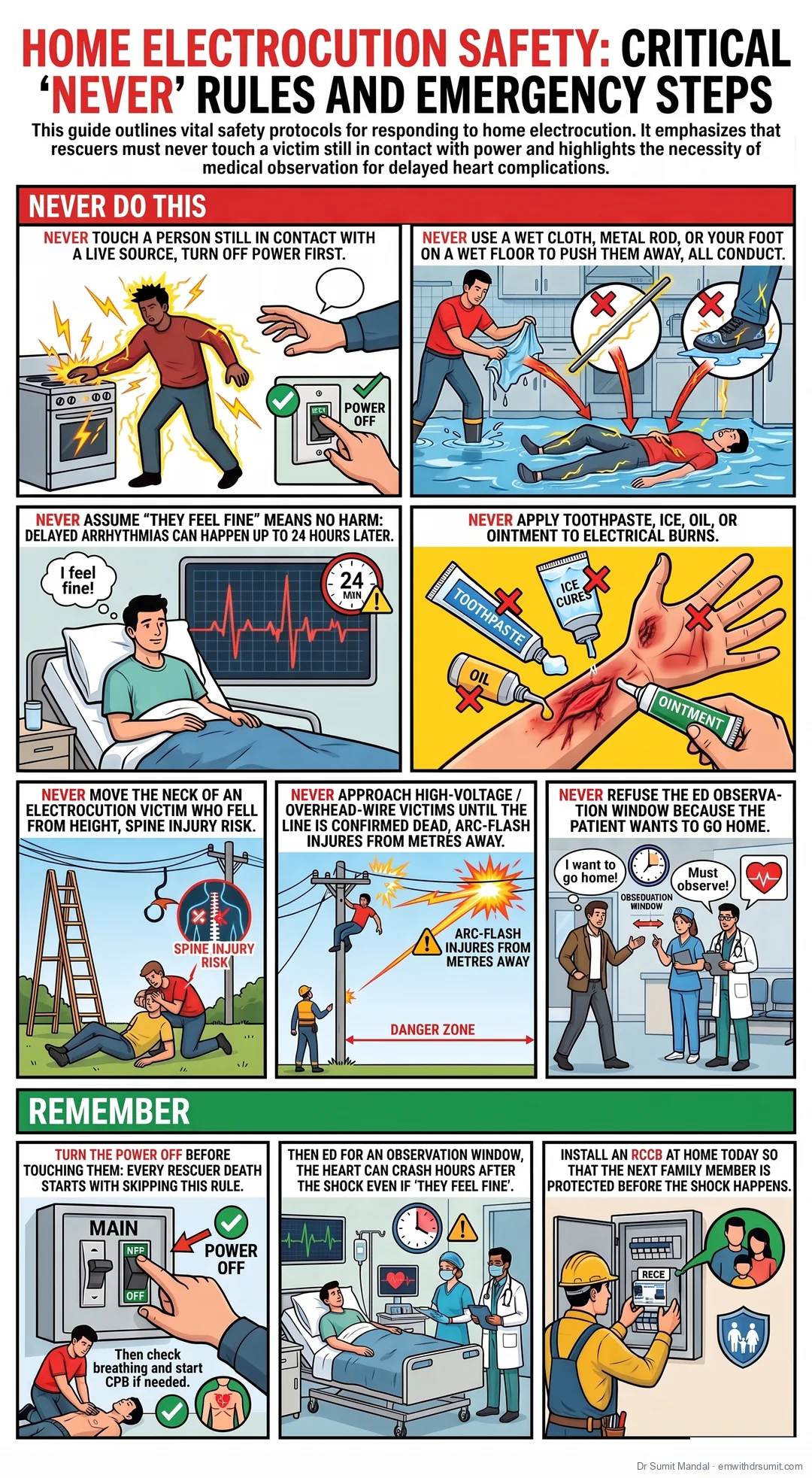
Electrical shock: turn off the mains FIRST, then check breathing and pulse
Bijli ka jhatka: pehle MAIN switch band karo, phir saans aur nabz dekho
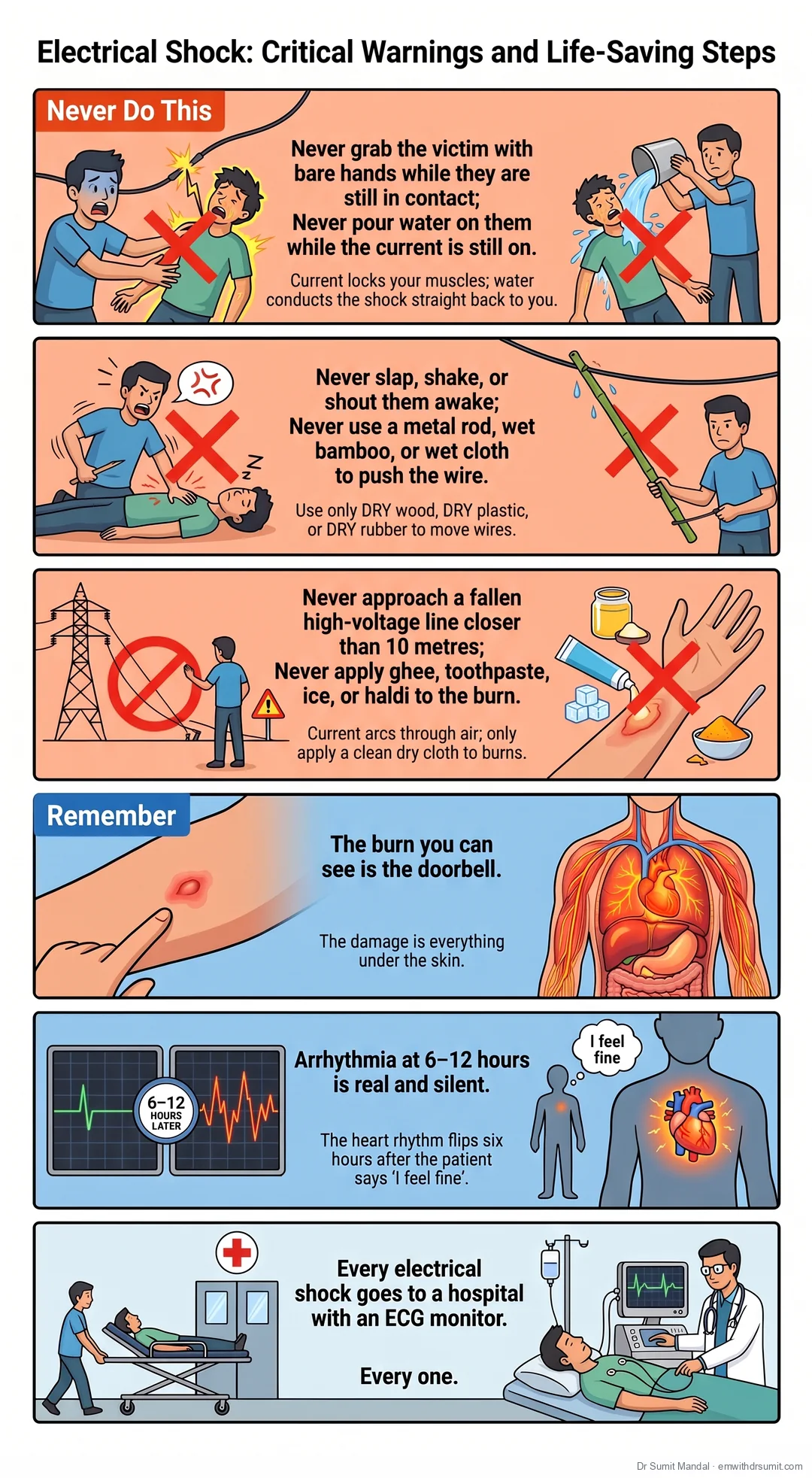
If someone is shocked by household current or a fallen wire, your first job is NOT to grab them. It is to kill the supply. The shock that floored them will floor you the moment you touch them.
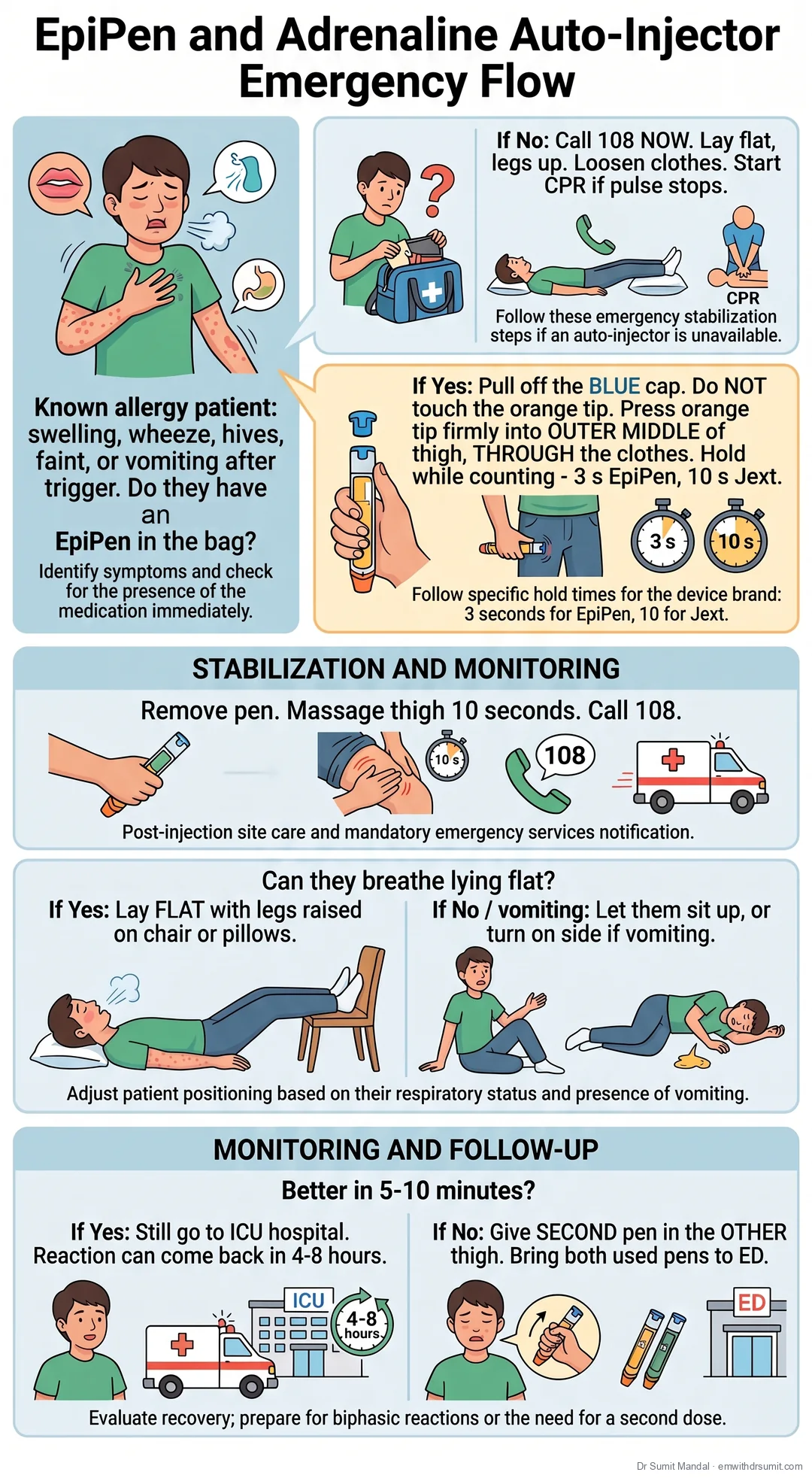
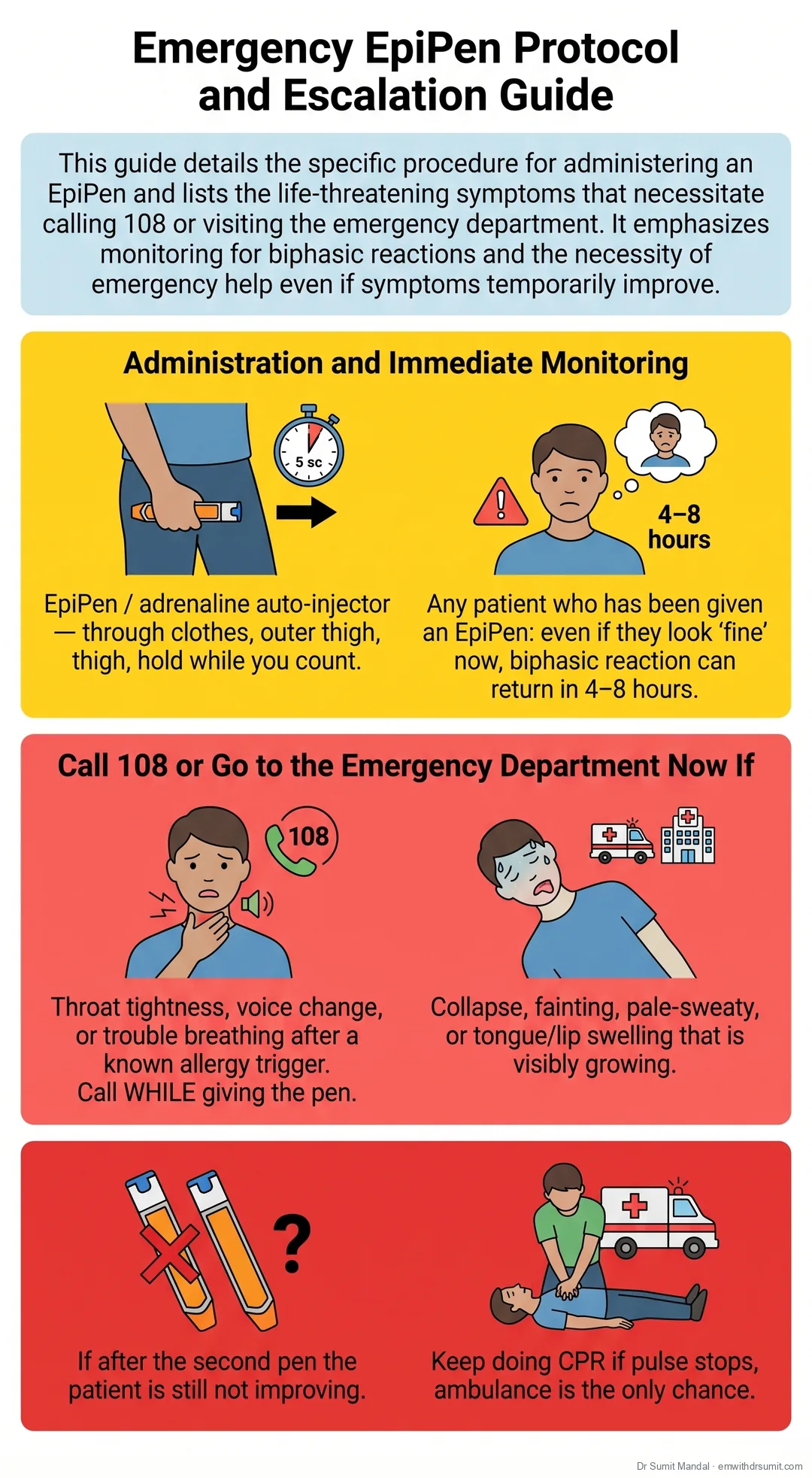
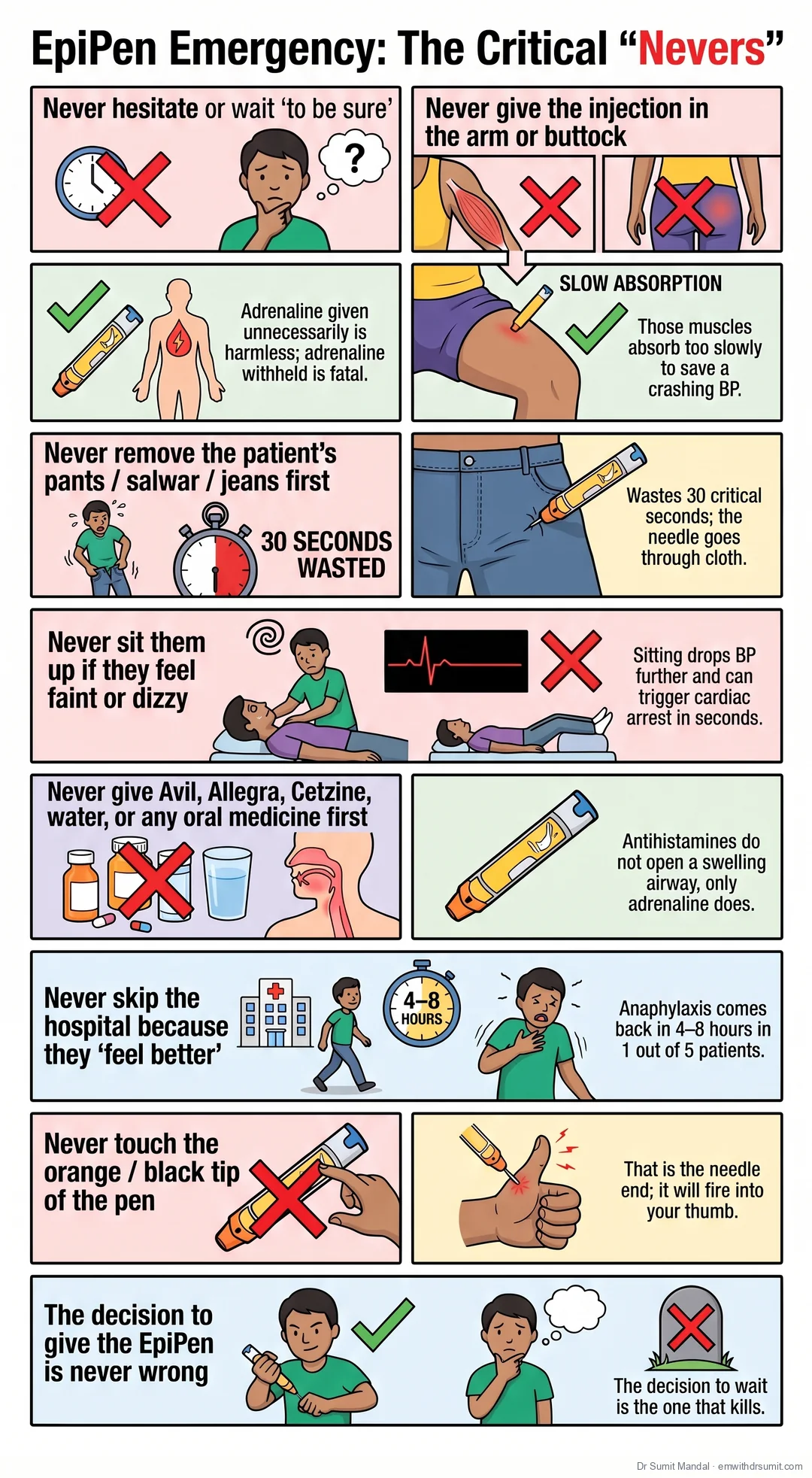
EpiPen / adrenaline auto-injector: through clothes, outer thigh, hold while you count
EpiPen / adrenaline auto-injector: kapde ke upar se, jaangh ke bahar, ginti karte hue pakdo
If someone with known allergy collapses, swells, or struggles to breathe, the EpiPen in their bag is the only thing between them and death. You do not need to remove their clothes, you do not need a doctor's permission, and you cannot 'overdose' them by giving it early.
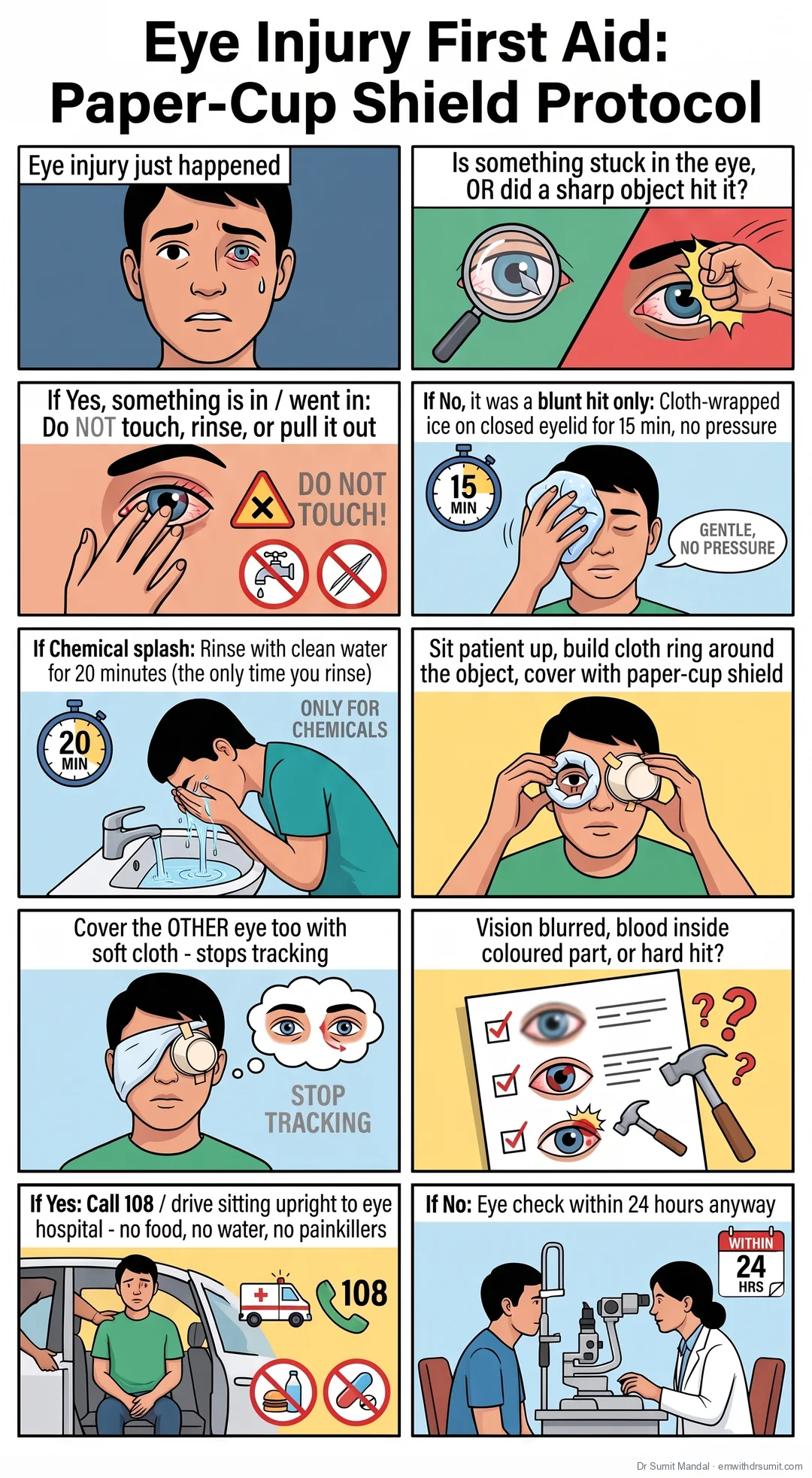
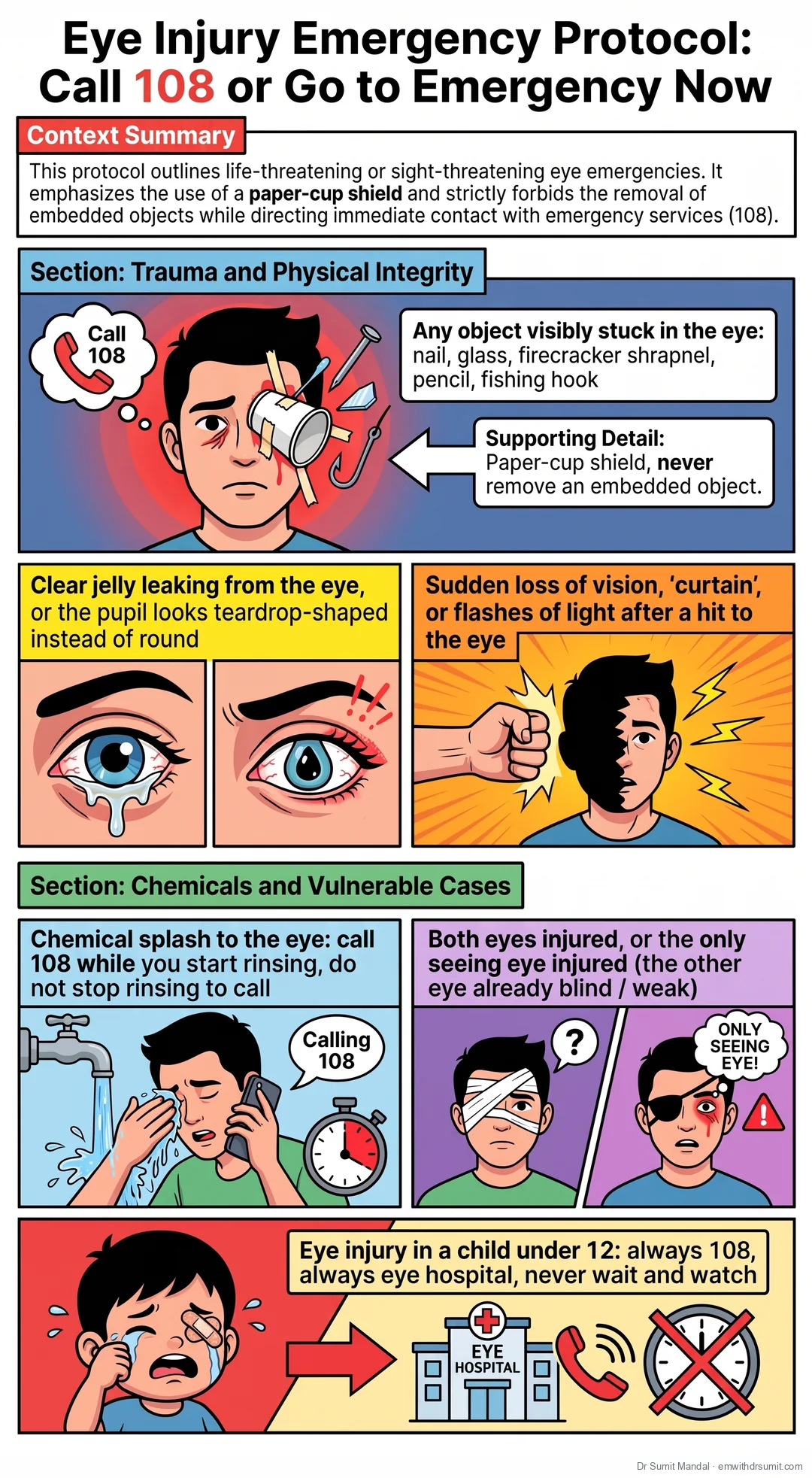
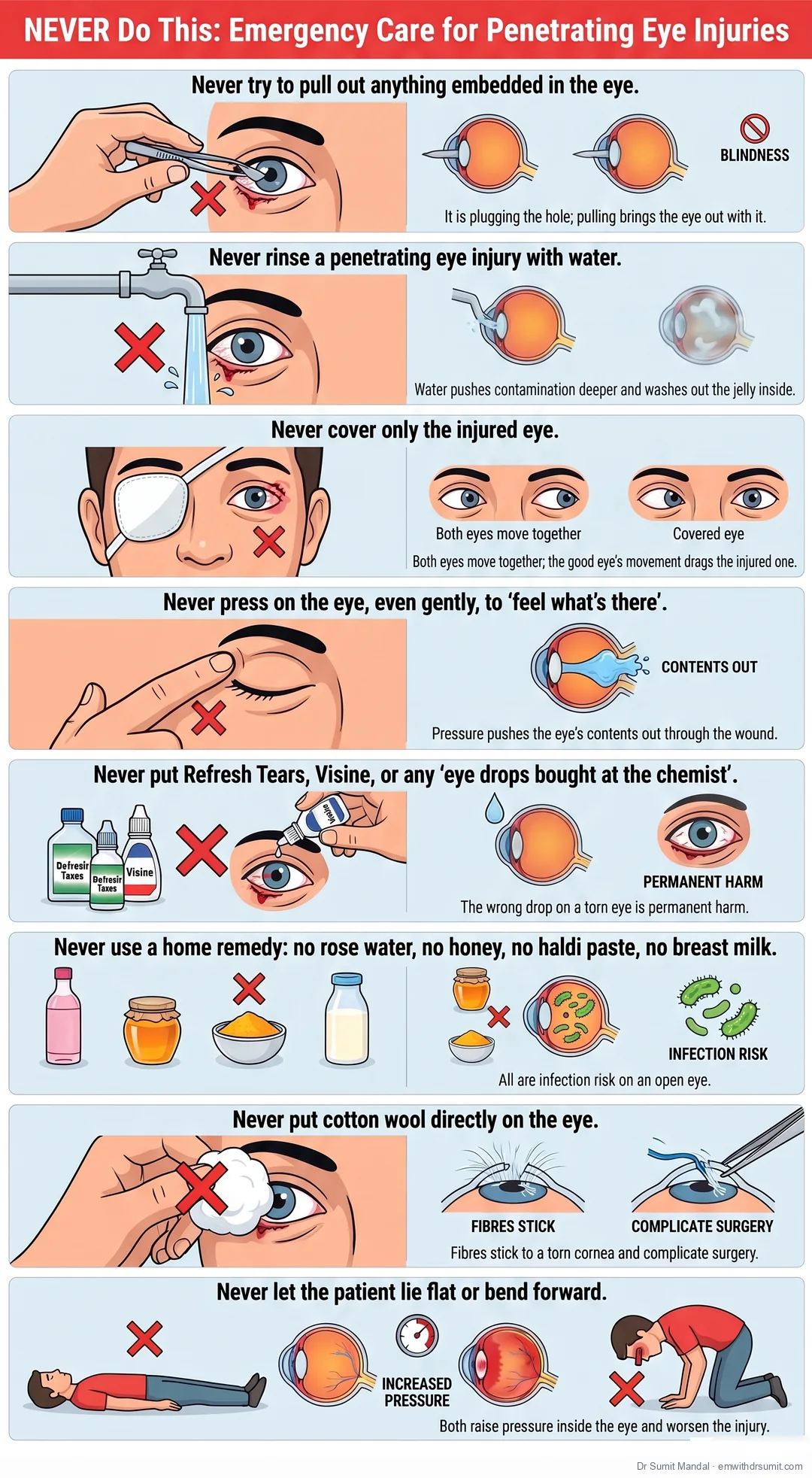
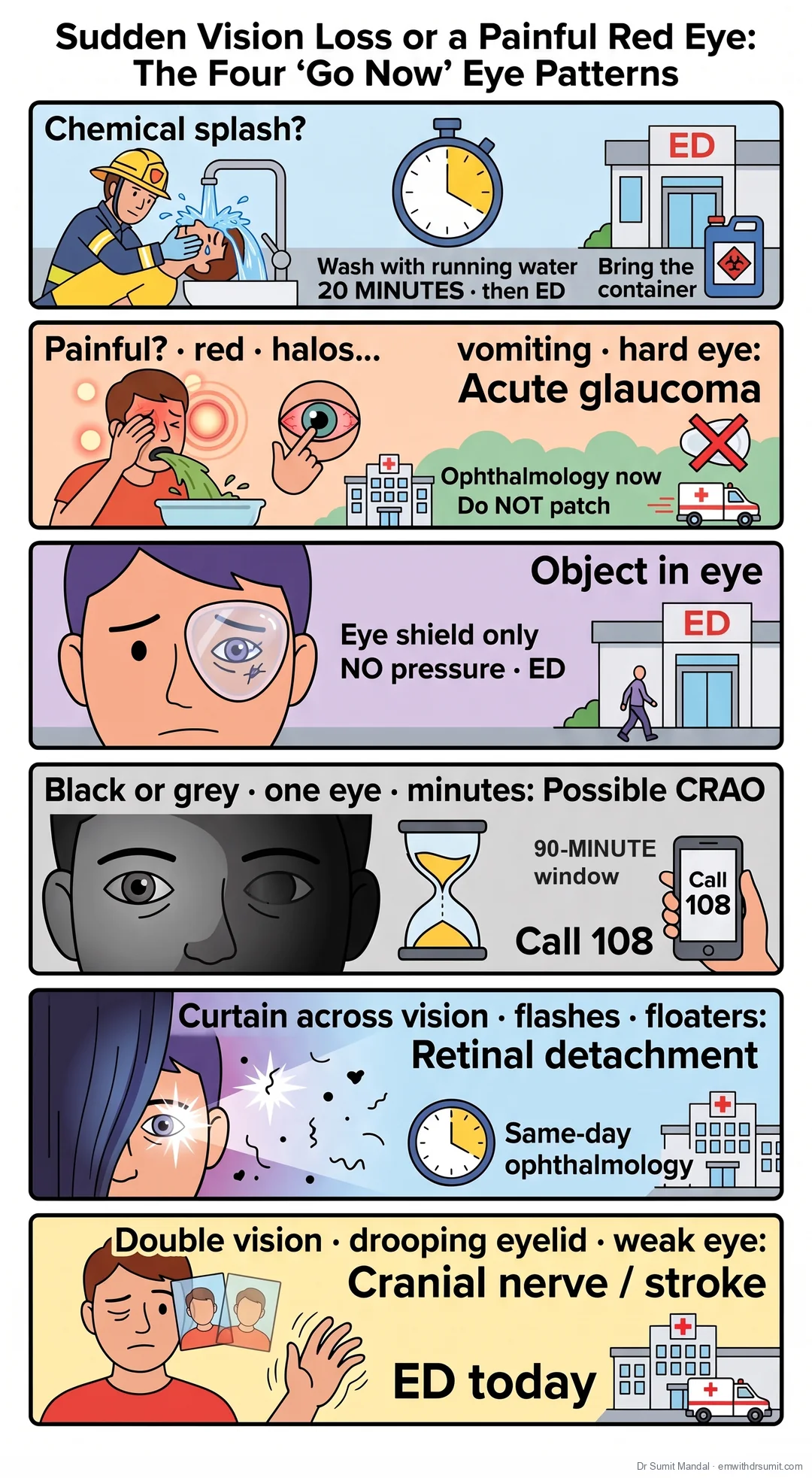
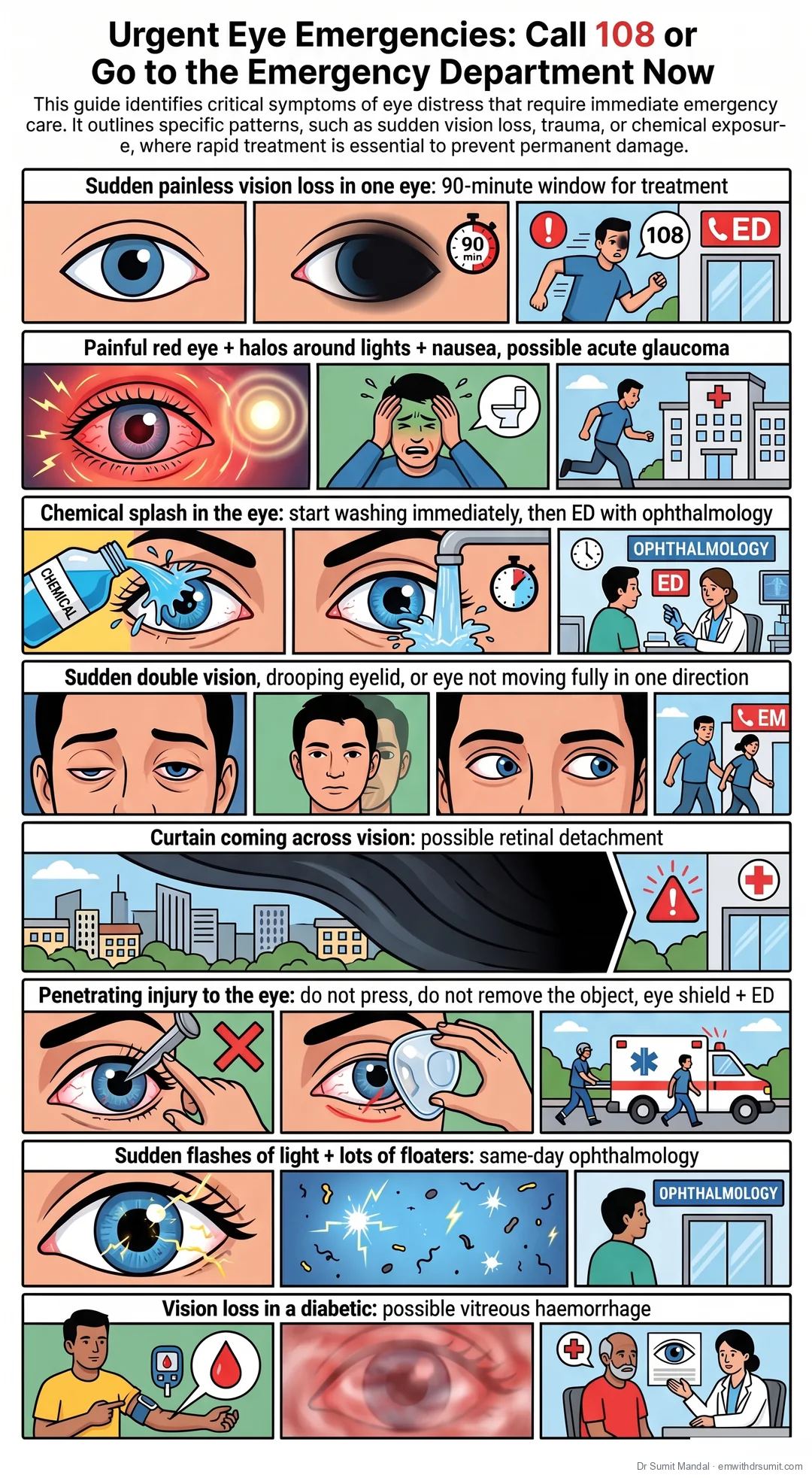
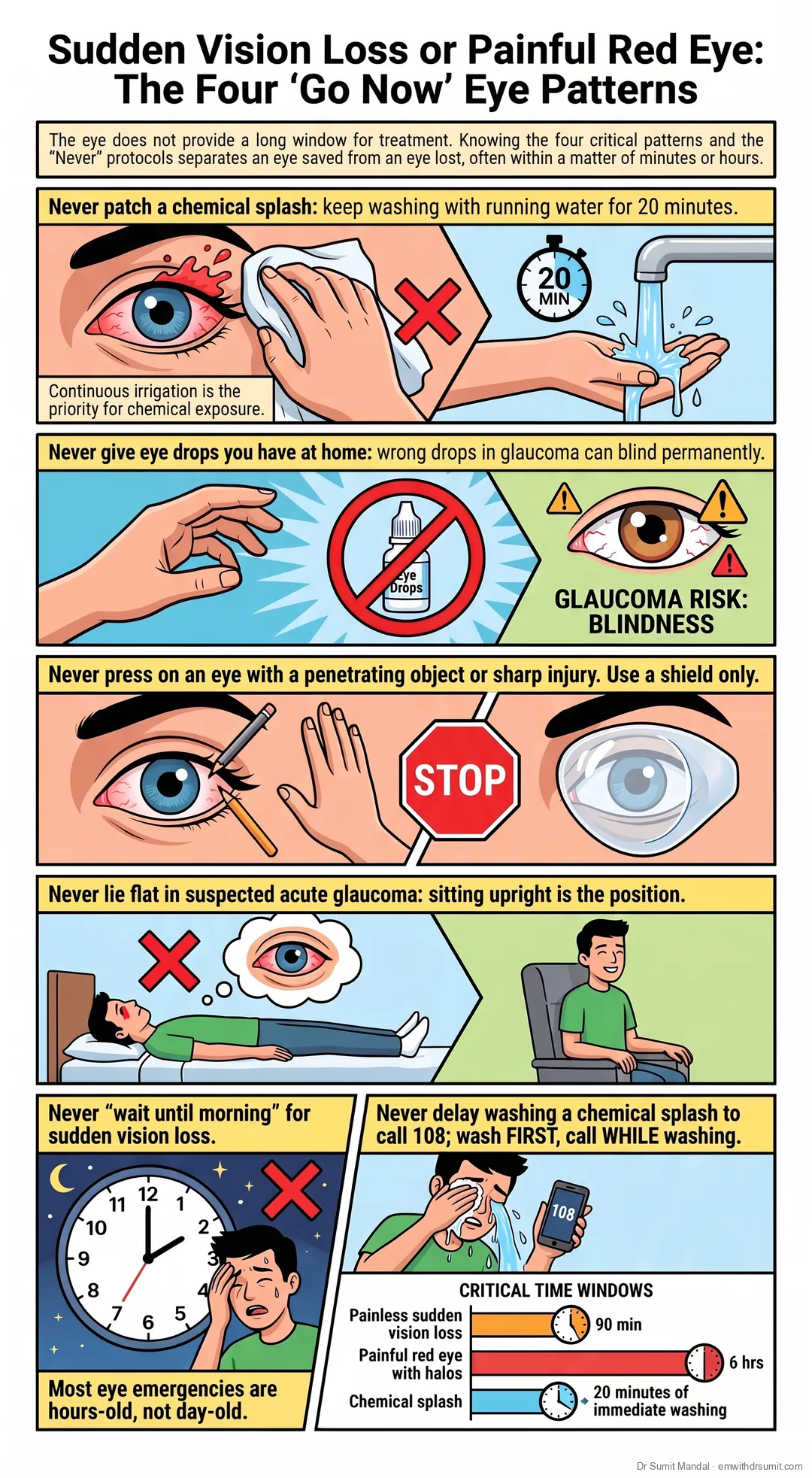
Eye injury: paper-cup shield, NEVER remove an embedded object
Aankh ki chot: kaagaz ke cup ka shield, gadi hui cheez KABHI mat nikalo
When something pierces the eye (a nail, a piece of firecracker, a knife tip) the worst thing a loving hand can do is pull it out. Stabilise it, shield it without pressure, cover BOTH eyes, and move to an eye hospital sitting upright.
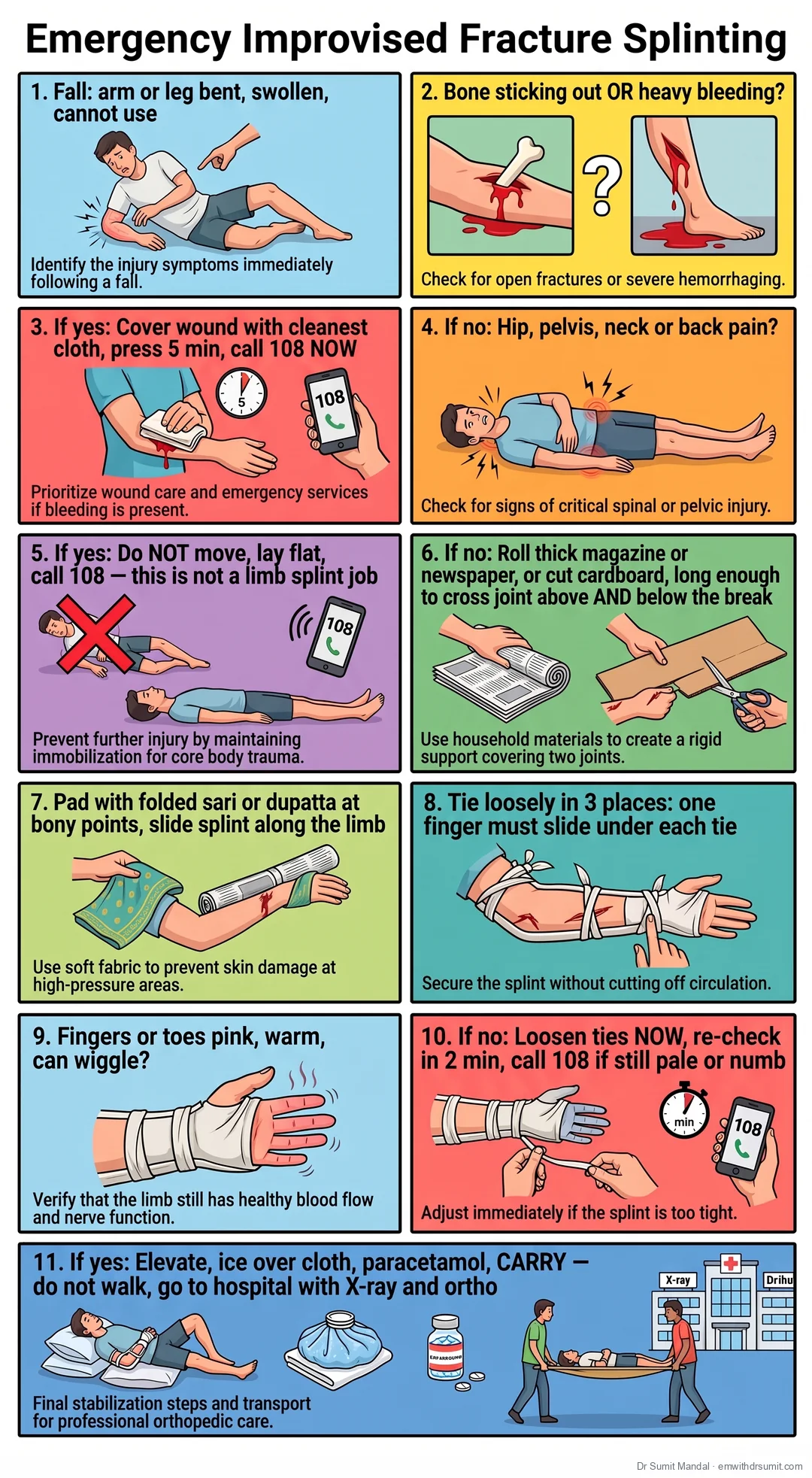
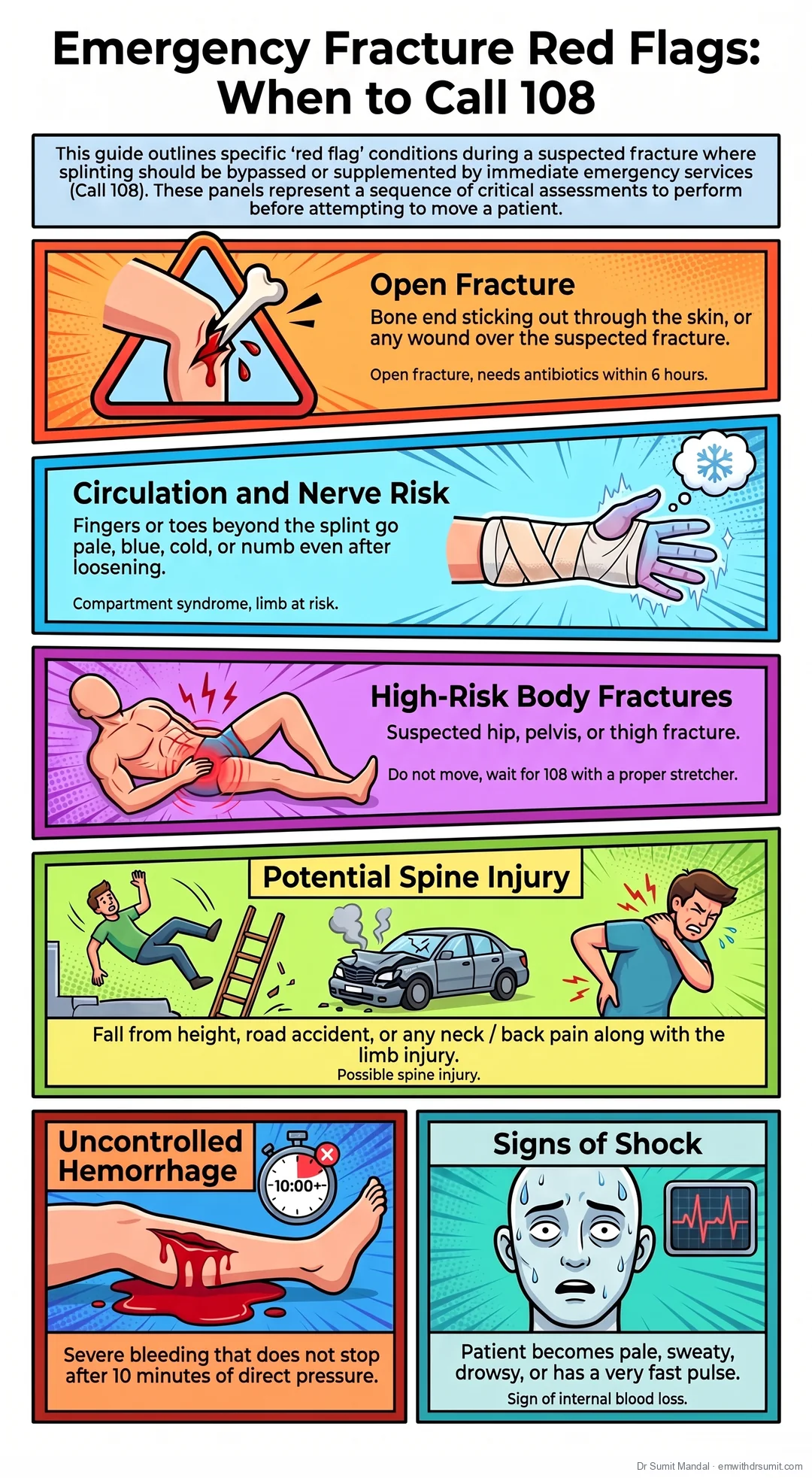
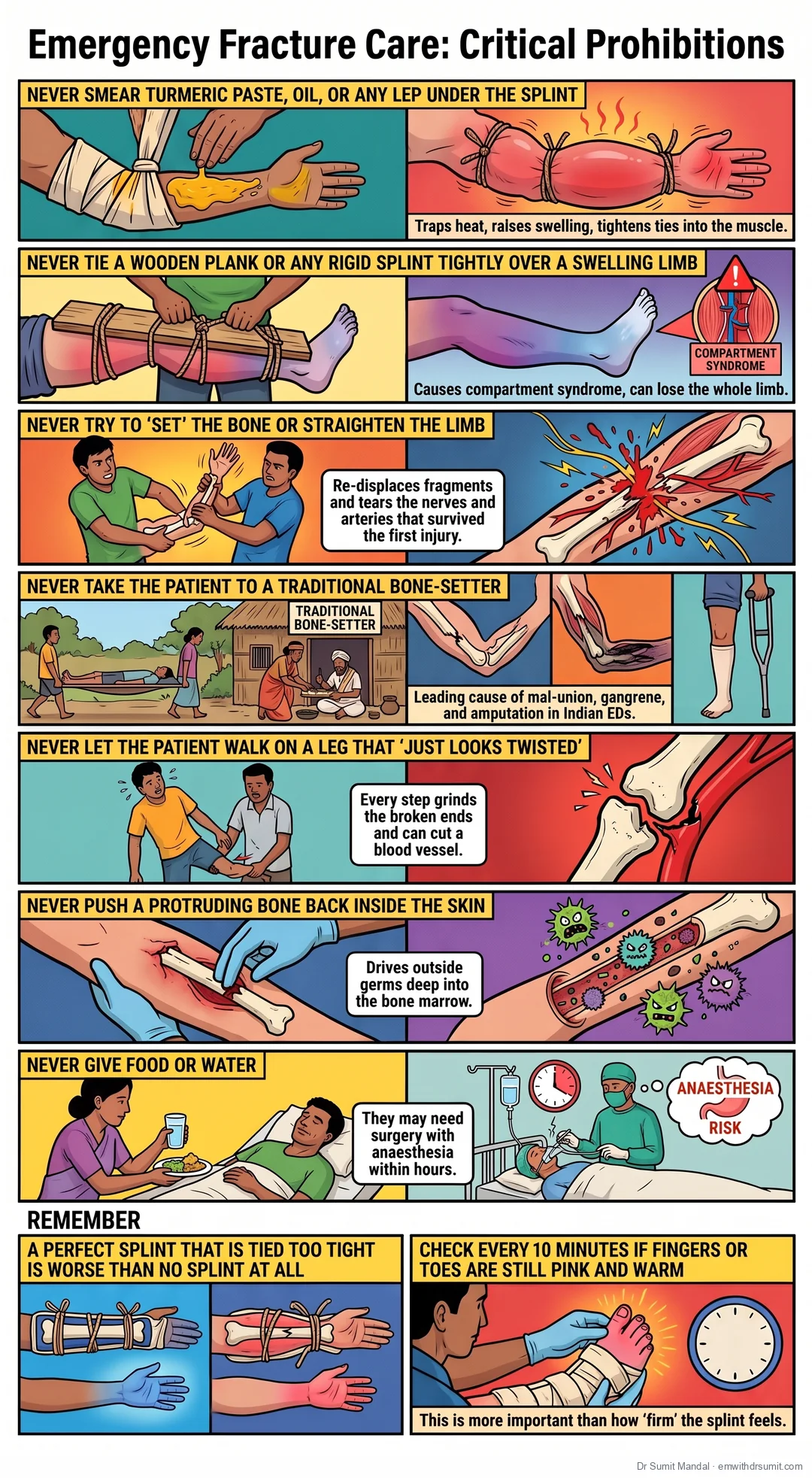
Fracture splinting with newspaper, magazine, or cardboard: when there is no plaster, no doctor, and you have to move
Newspaper, magazine, ya cardboard se fracture splint: jab plaster nahi, doctor nahi, aur patient ko le jaana hai
A broken arm or leg in the field does not need a hospital splint. It needs to be held still. A rolled-up magazine, a folded newspaper, or a piece of cardboard, tied loosely above and below the break, is enough to get the patient to a hospital without making the injury worse.
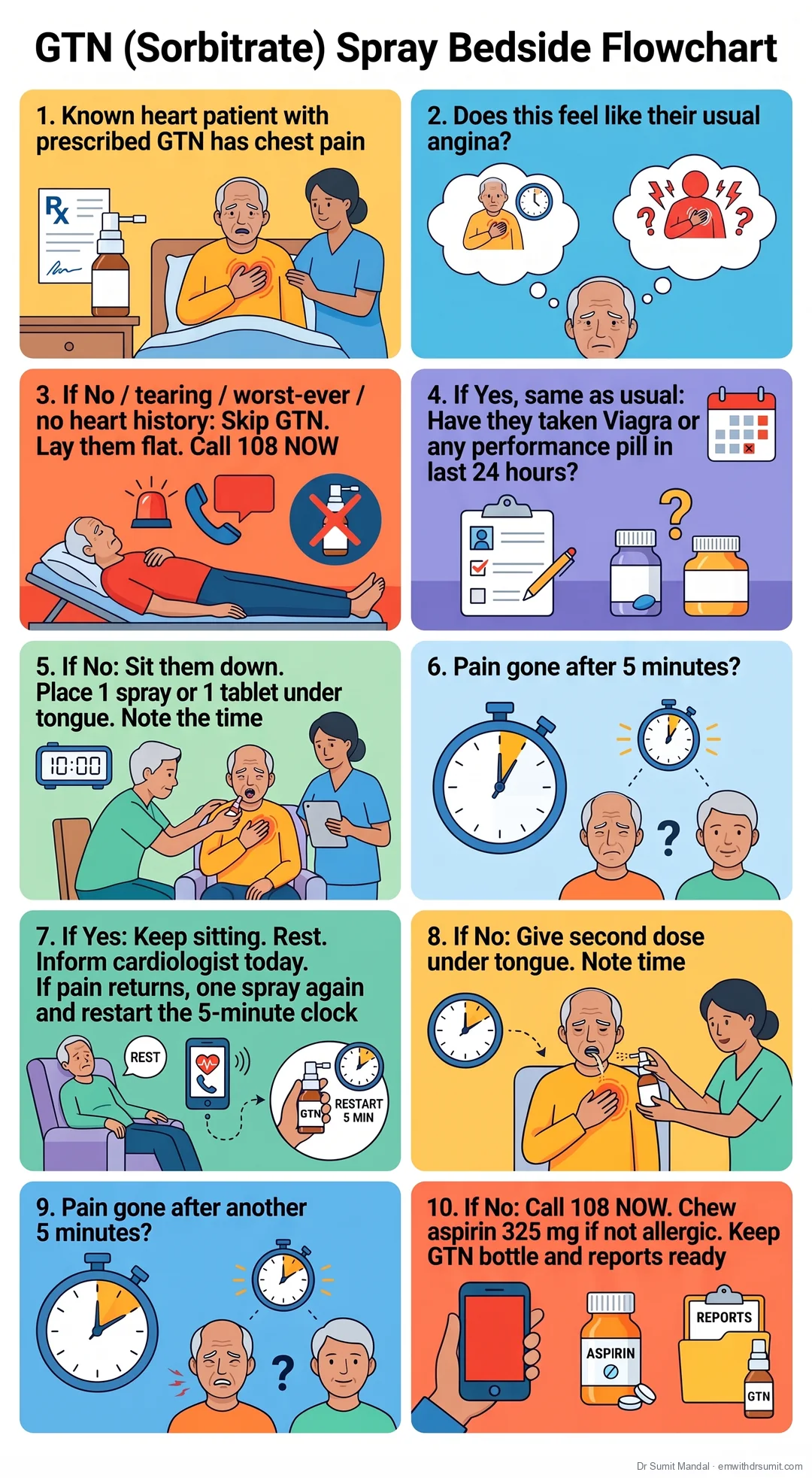
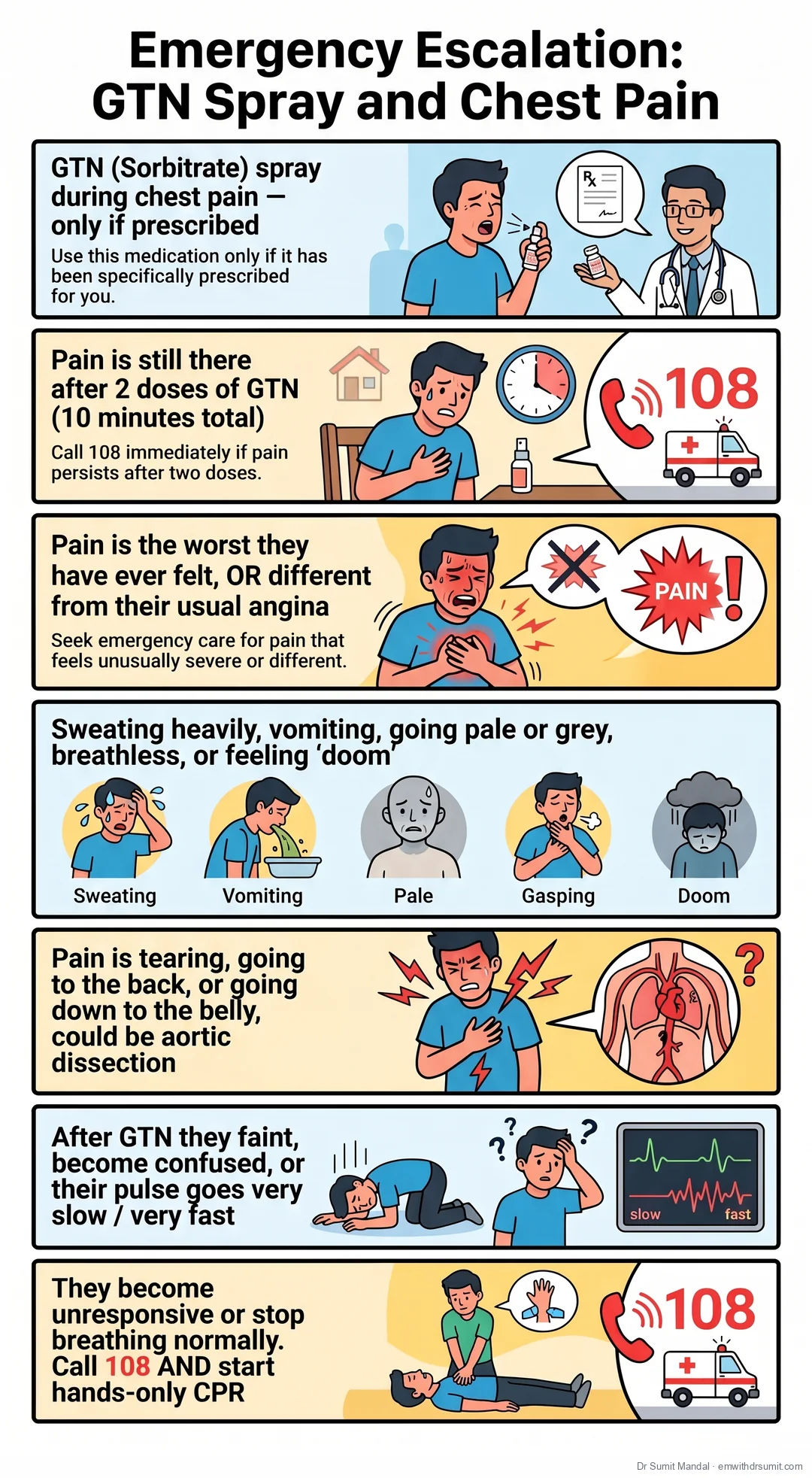
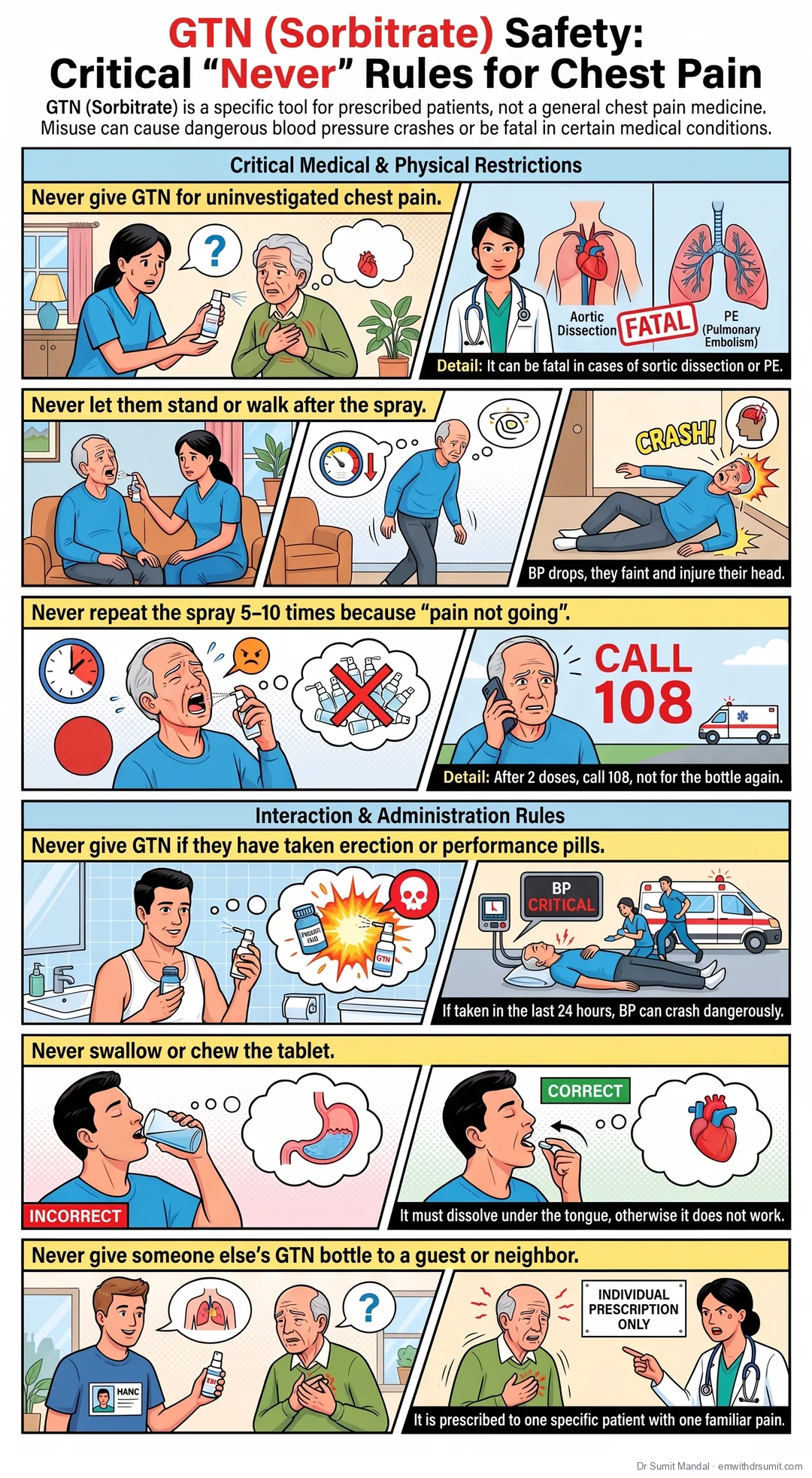
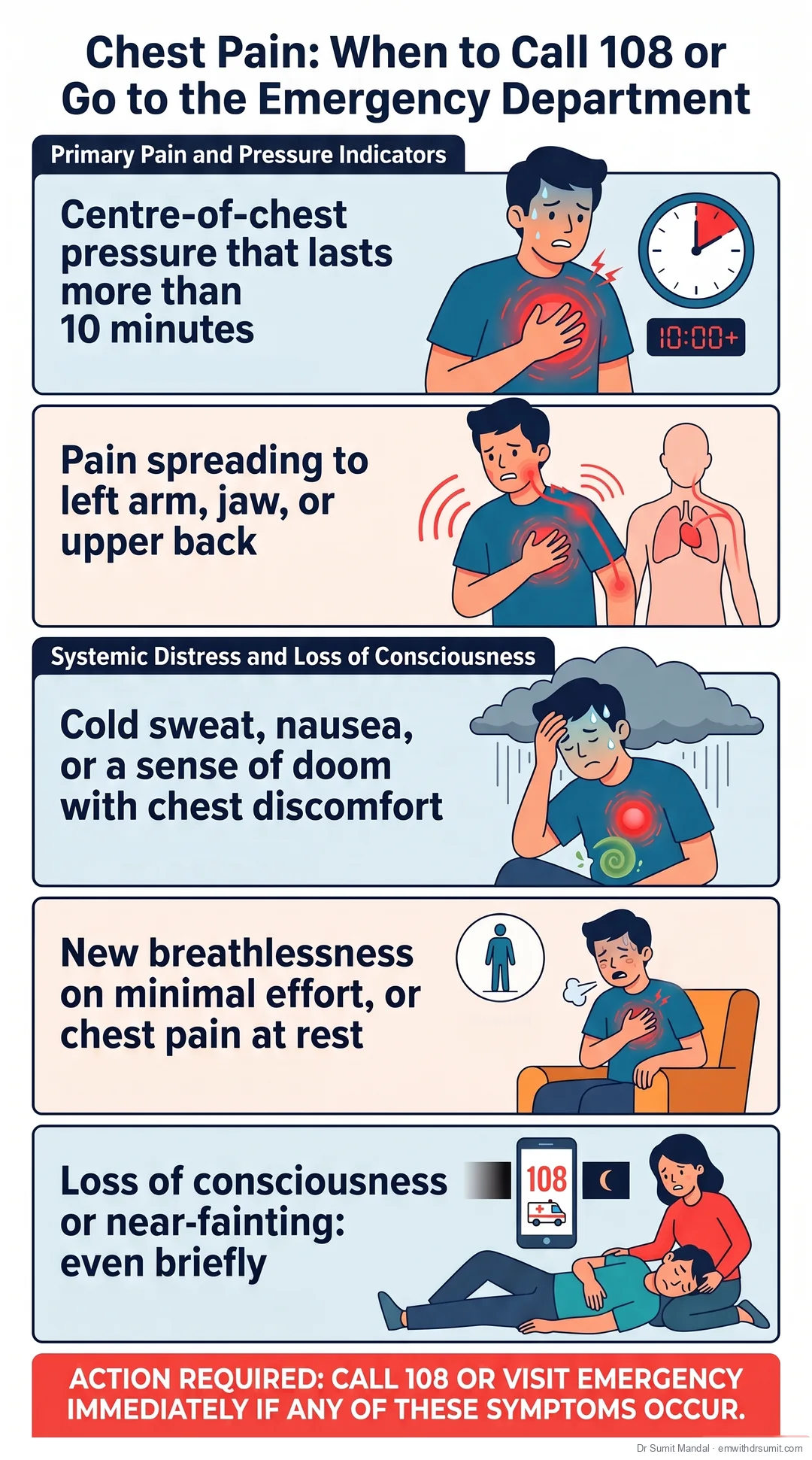
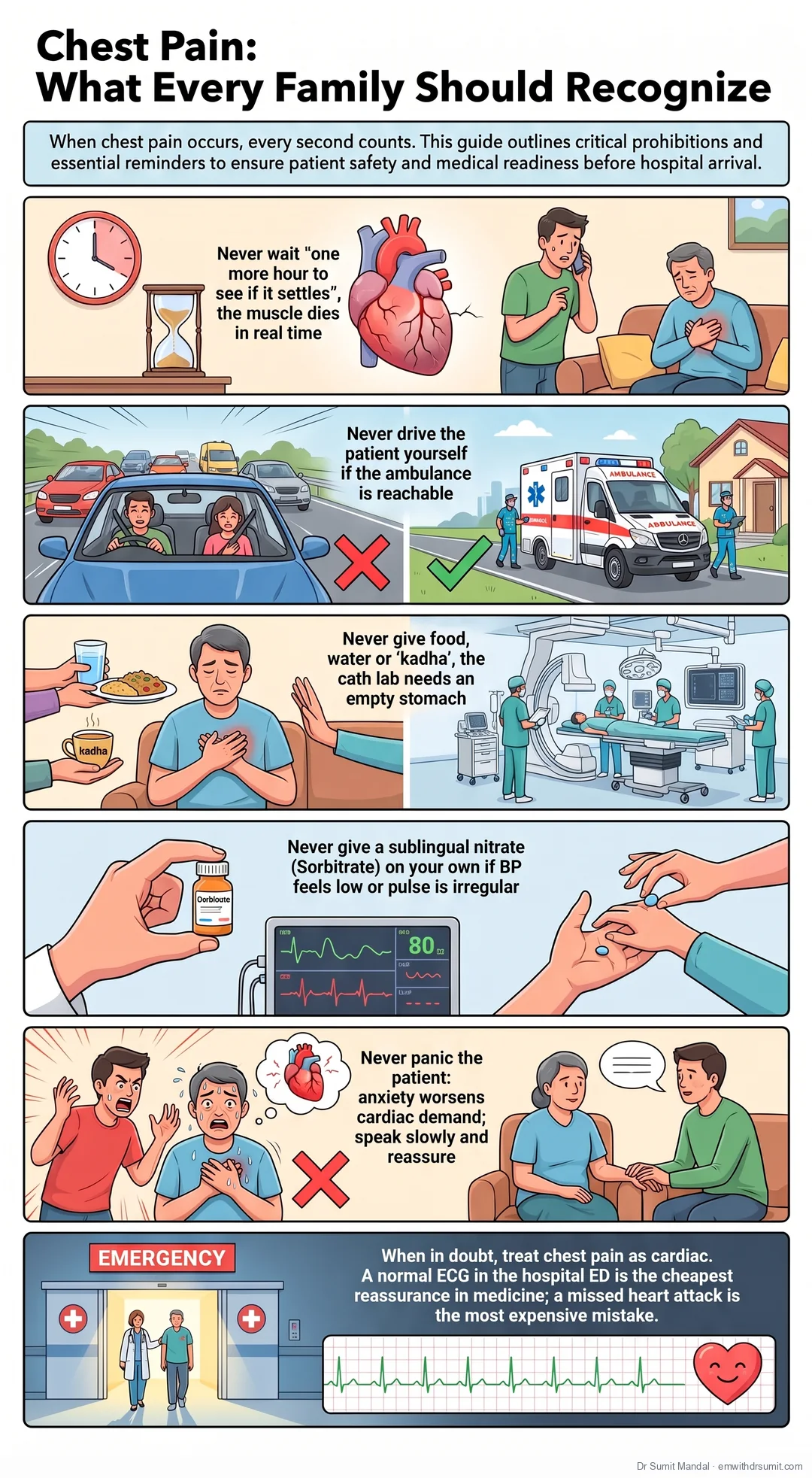
GTN (Sorbitrate) spray during chest pain: only if prescribed
GTN (Sorbitrate) spray seene ke dard mein: sirf agar doctor ne likhi ho
If a known angina patient has chest pain and was prescribed GTN or Sorbitrate, sit them down first, give one dose under the tongue, and call 108 if the pain doesn't settle in 5 minutes. Never give this medicine to someone whose chest pain has not been worked up by a doctor.
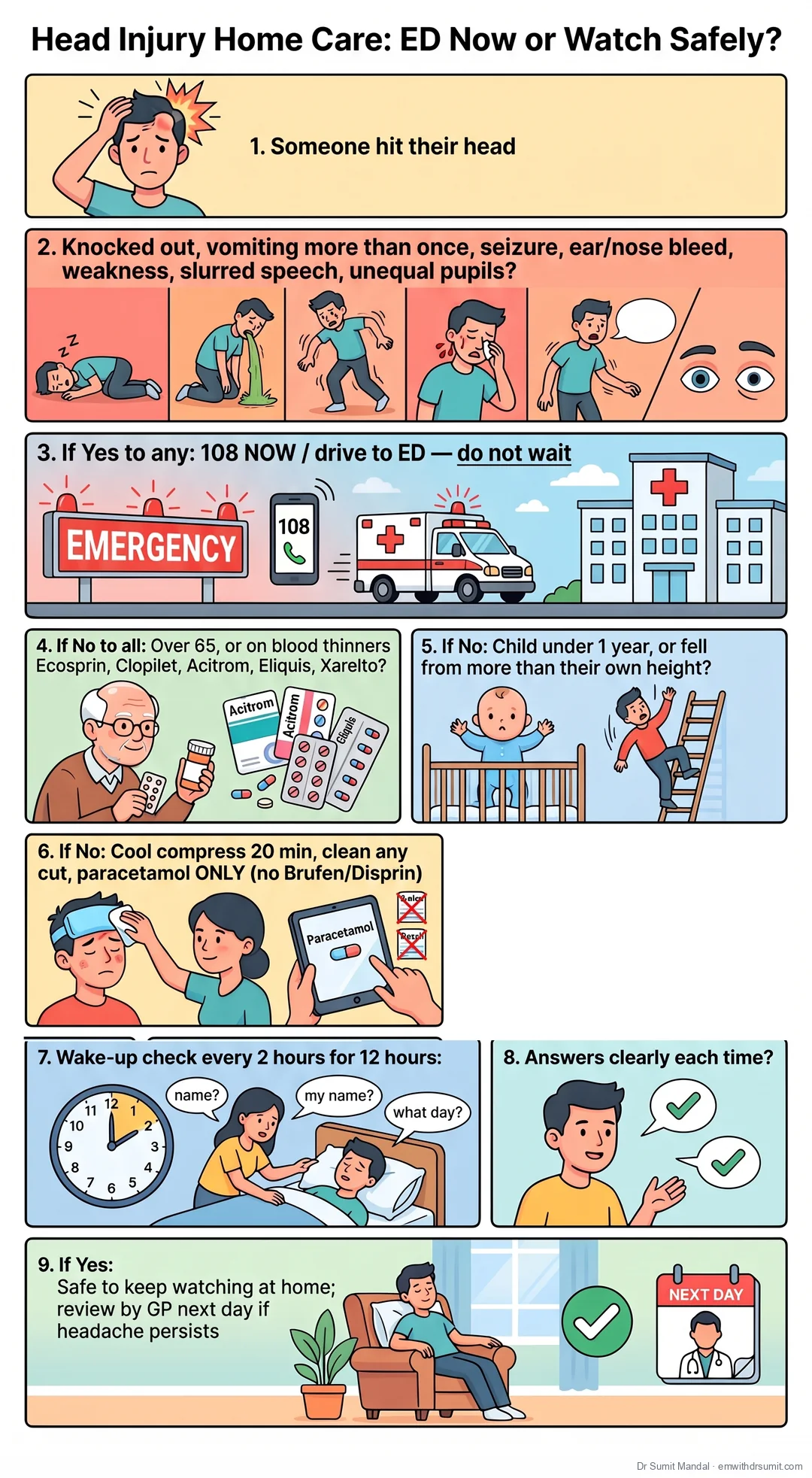
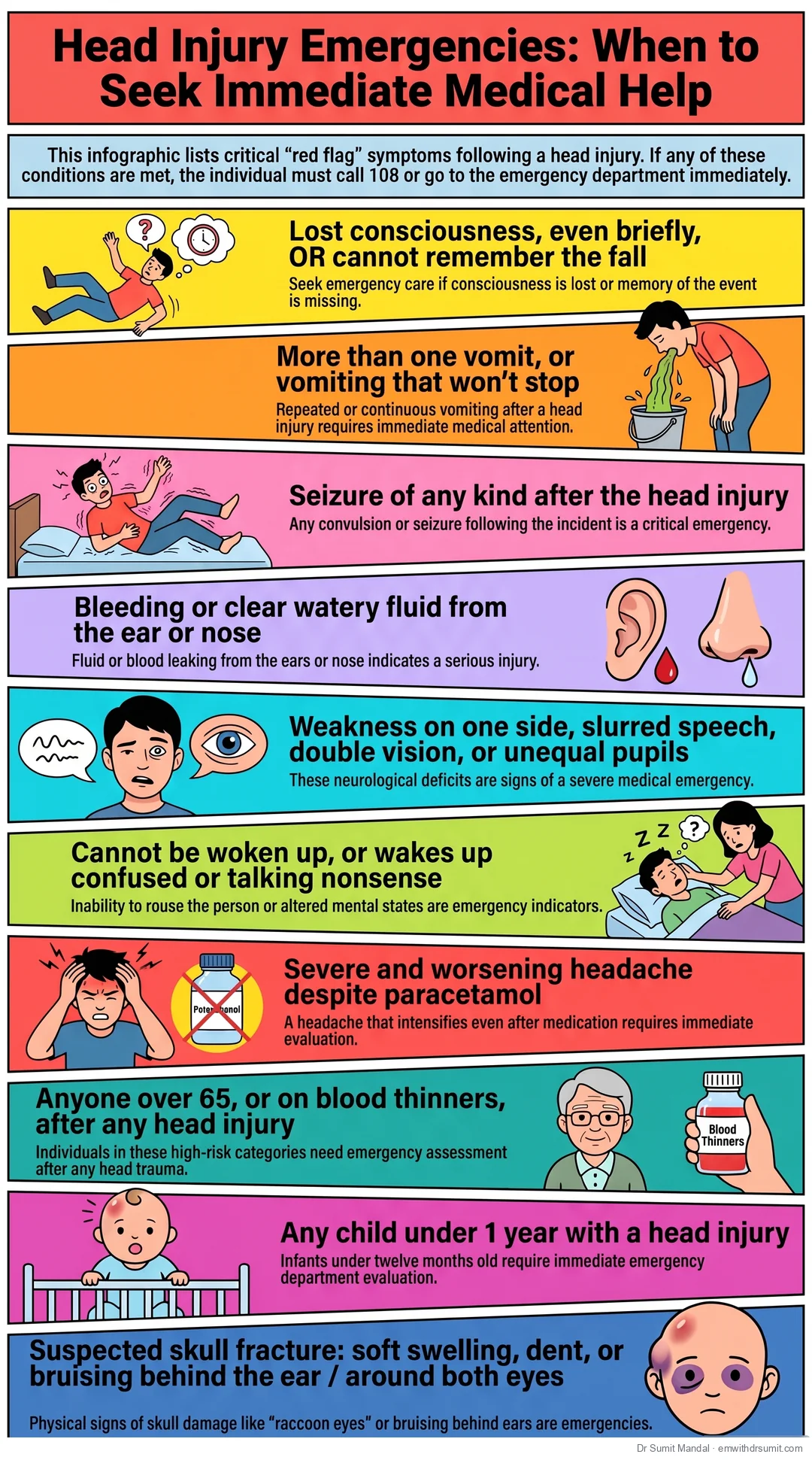
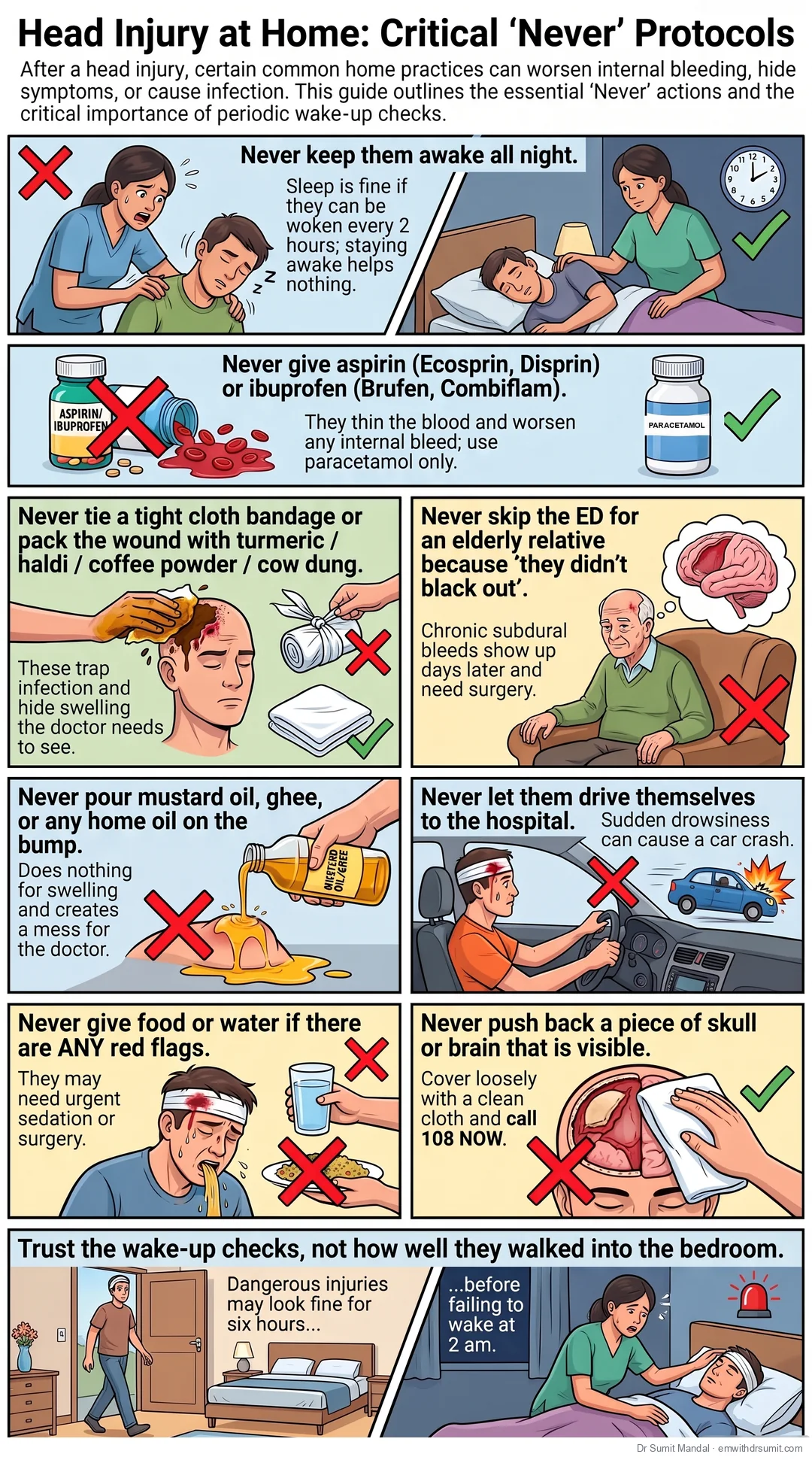
Head injury at home: when to let them sleep and when to wake them up
Sar par chot: kab sone do aur kab utha kar pucho
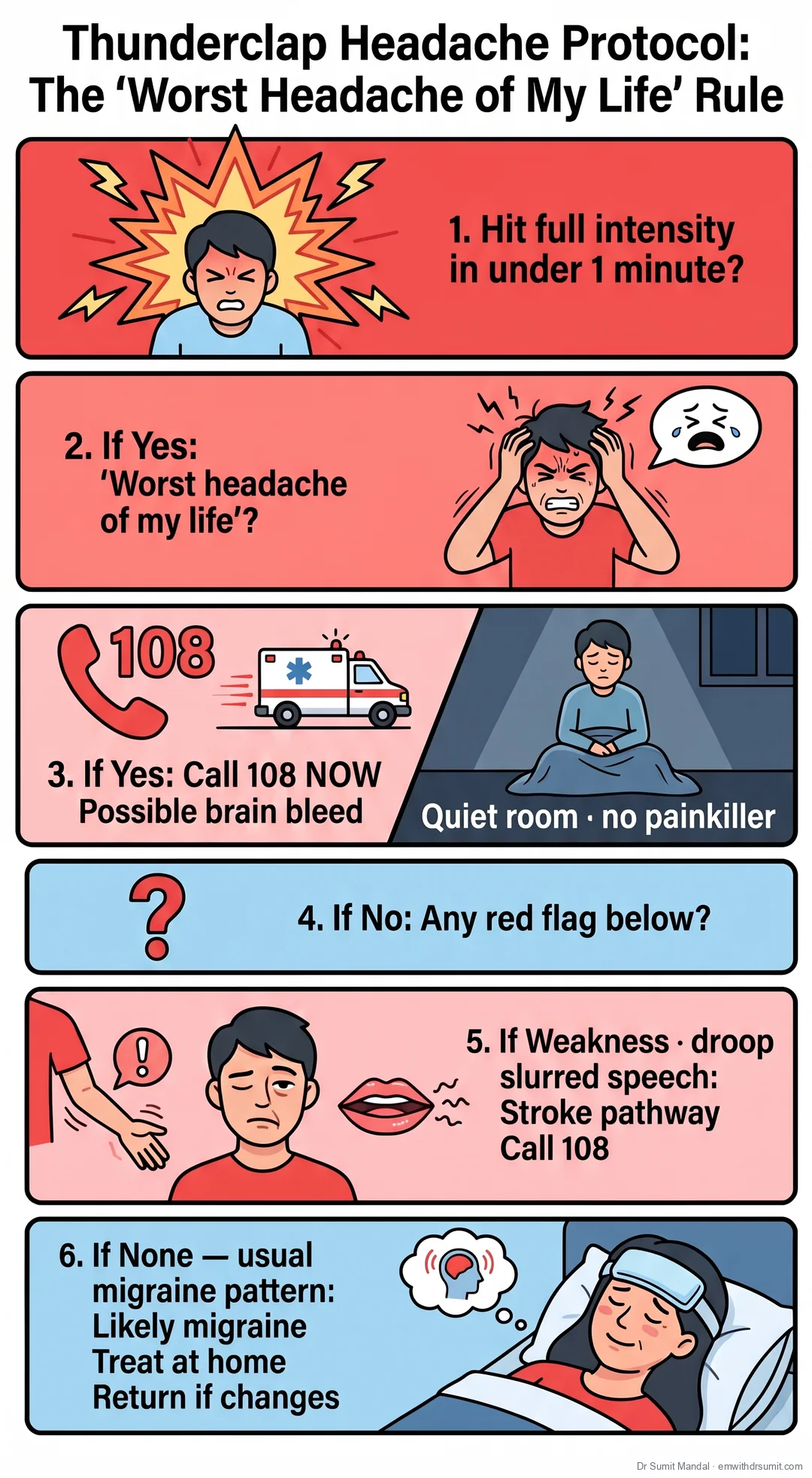
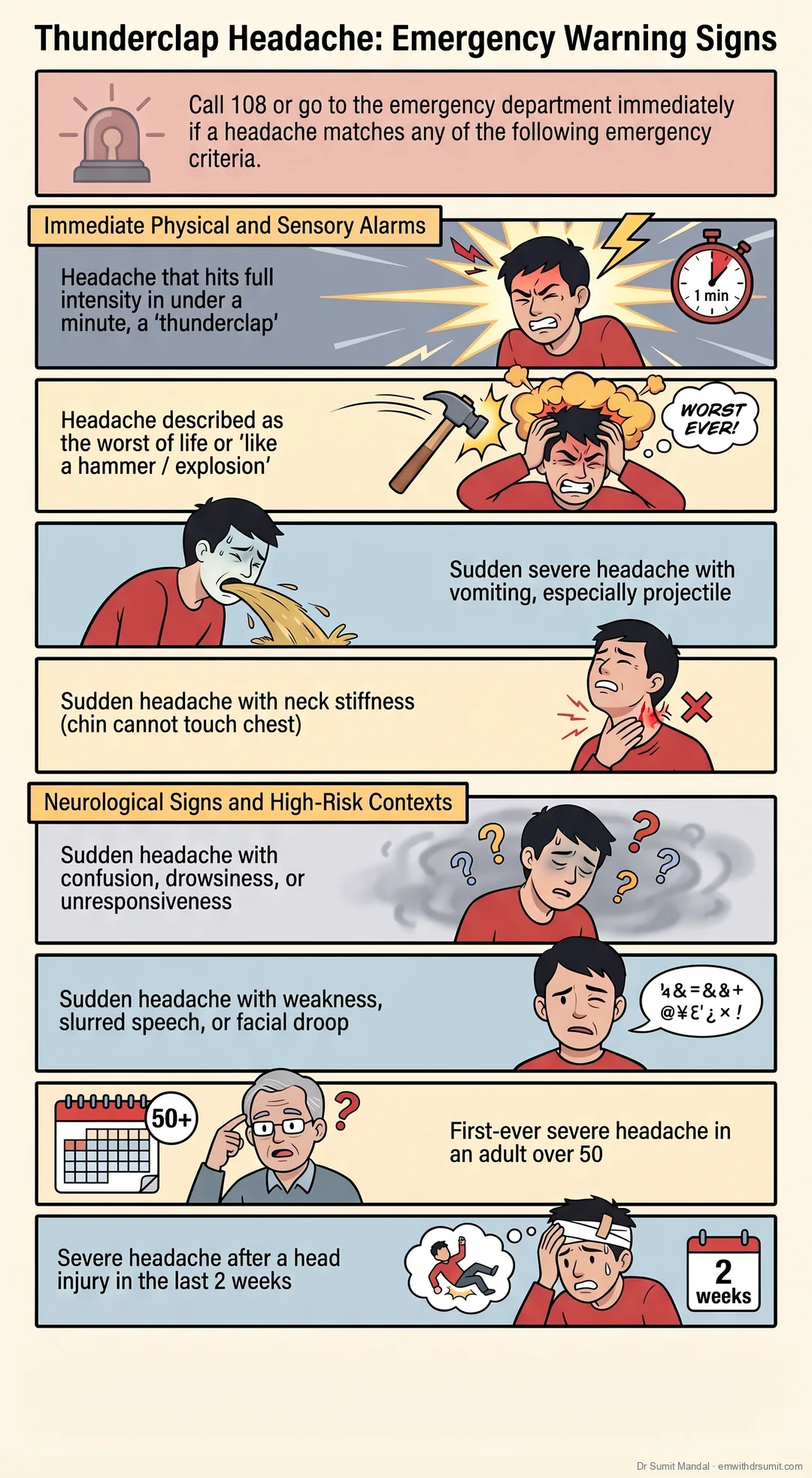
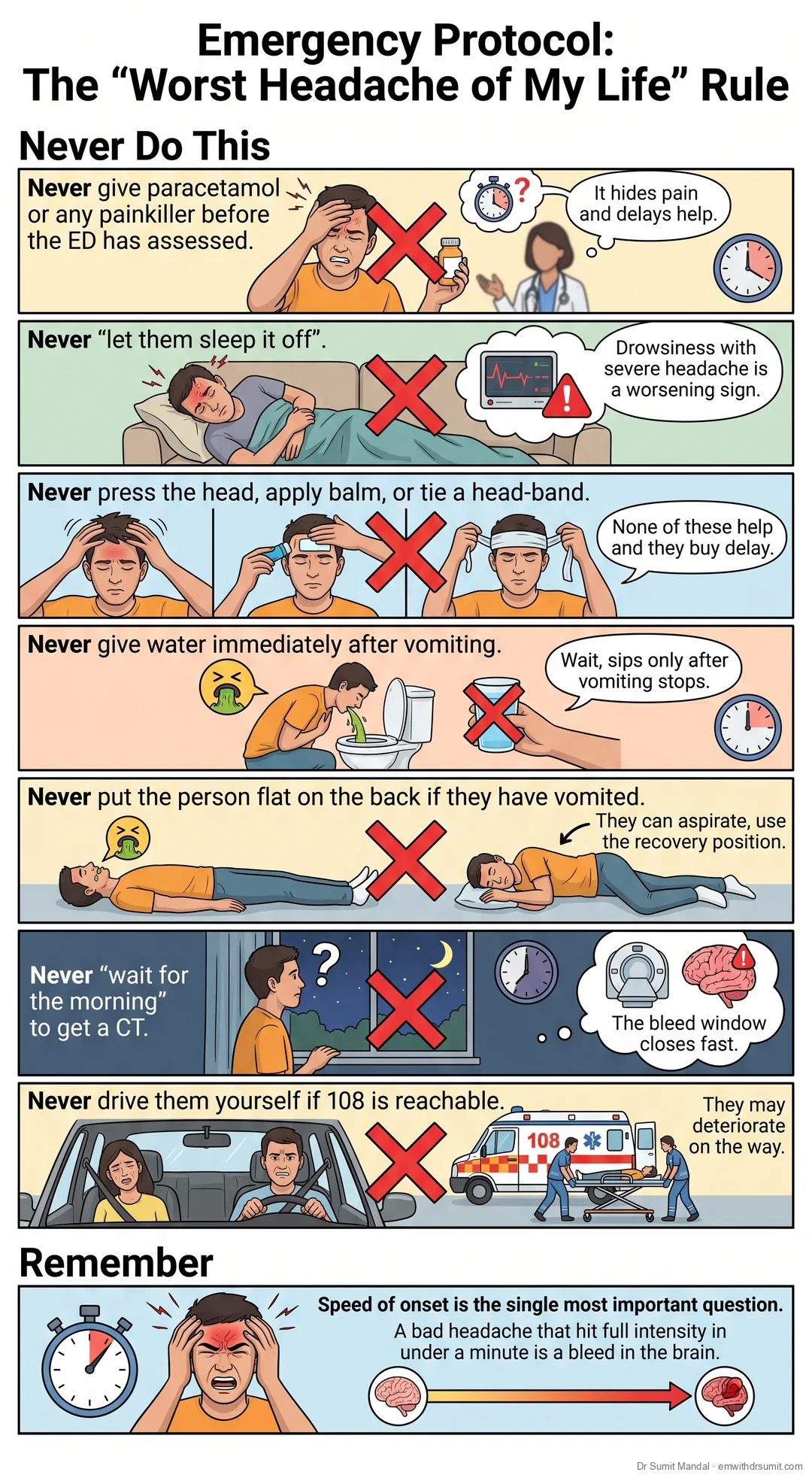
A bump on the head looks scary but most are safe to watch at home. This page tells you the exact red flags that mean 'go to ED now', the right painkiller to give, and the truth about whether you should keep them awake all night.
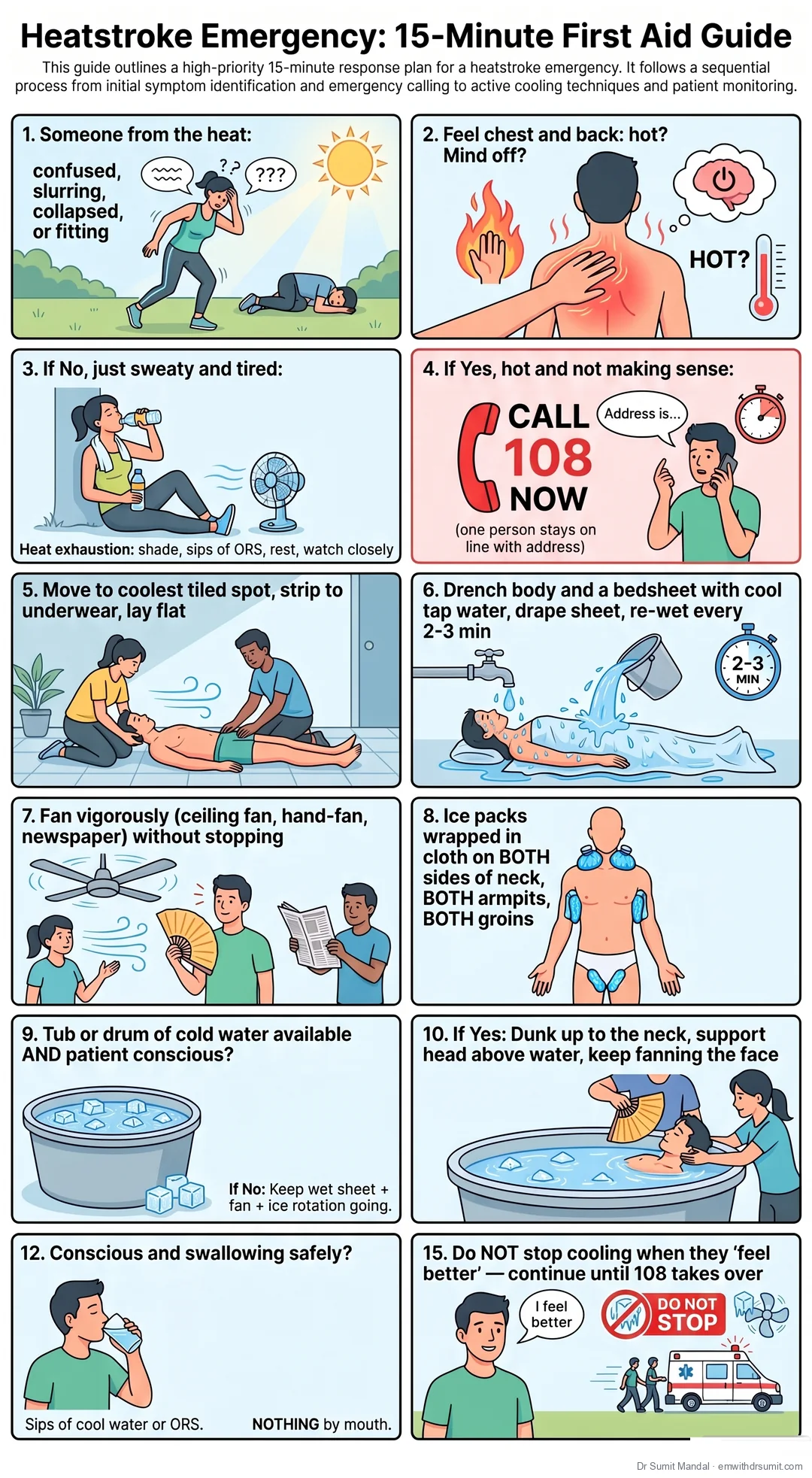
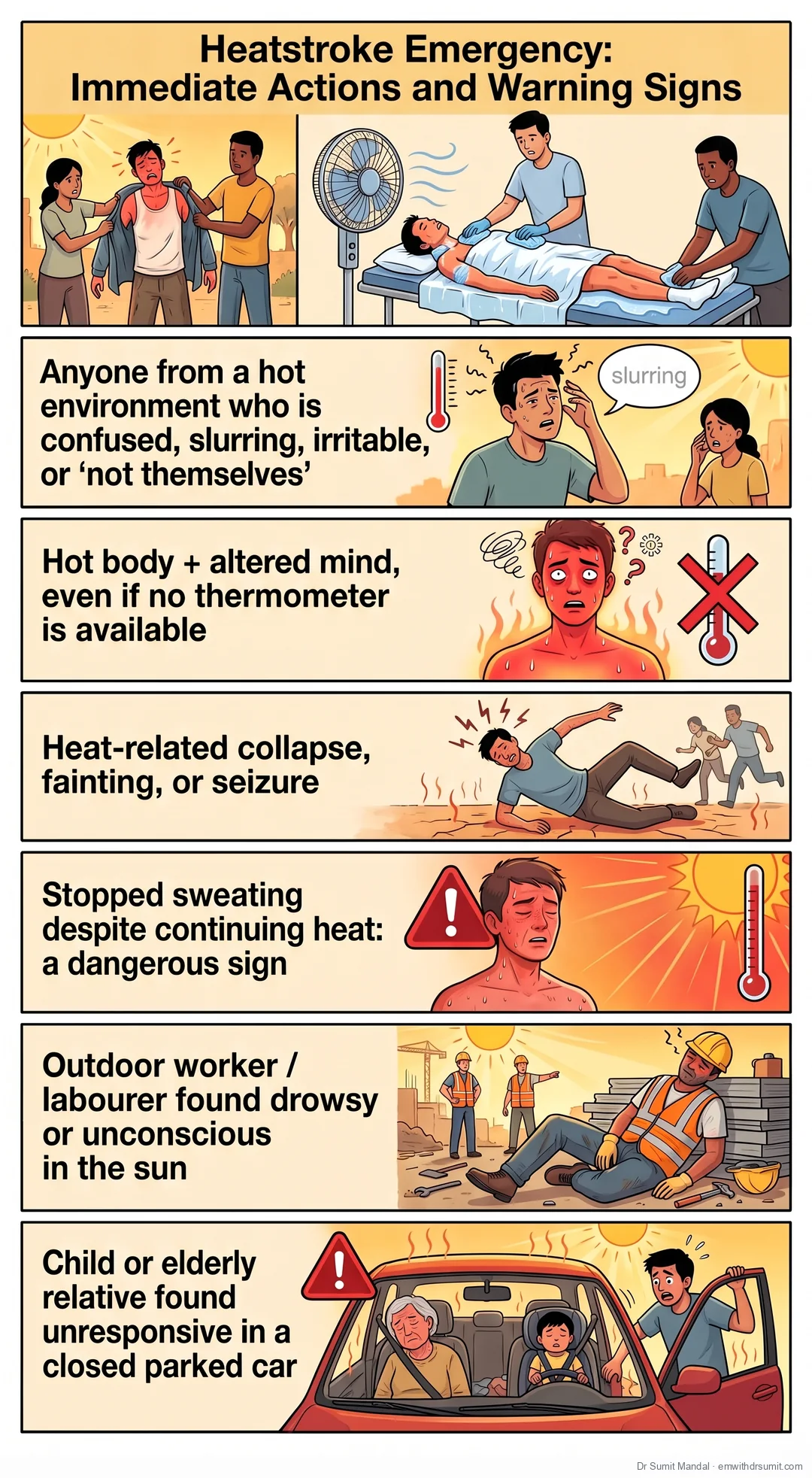
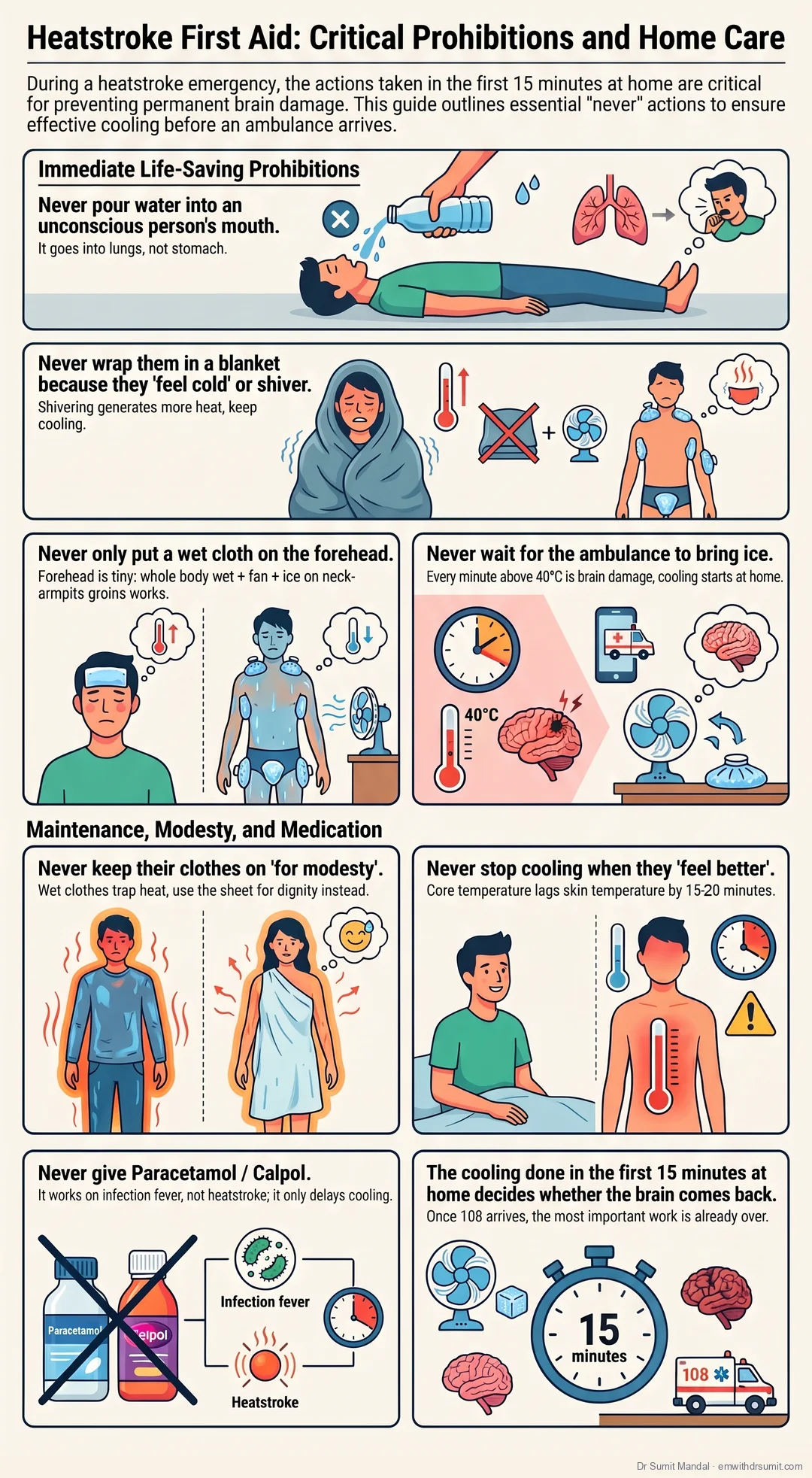
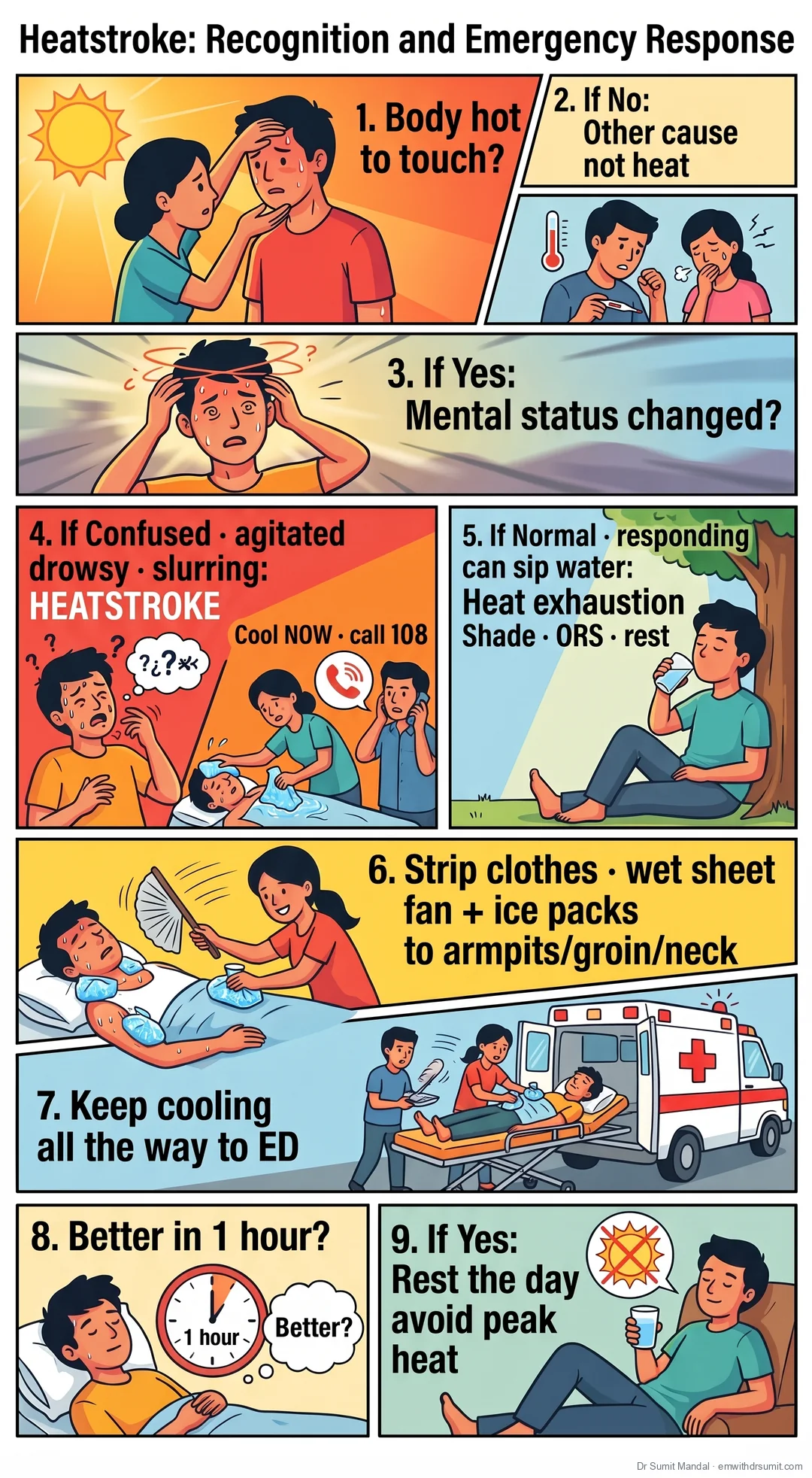
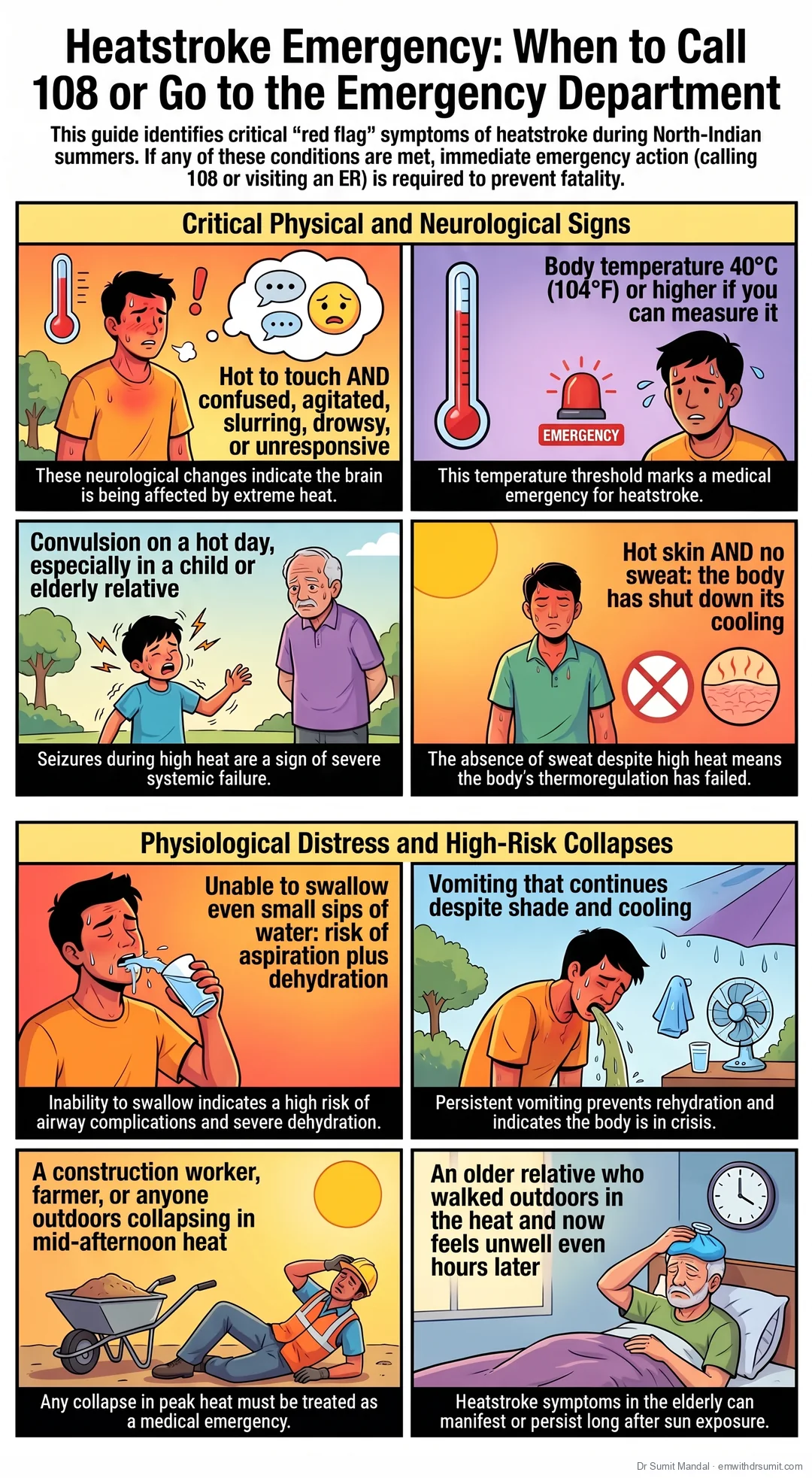
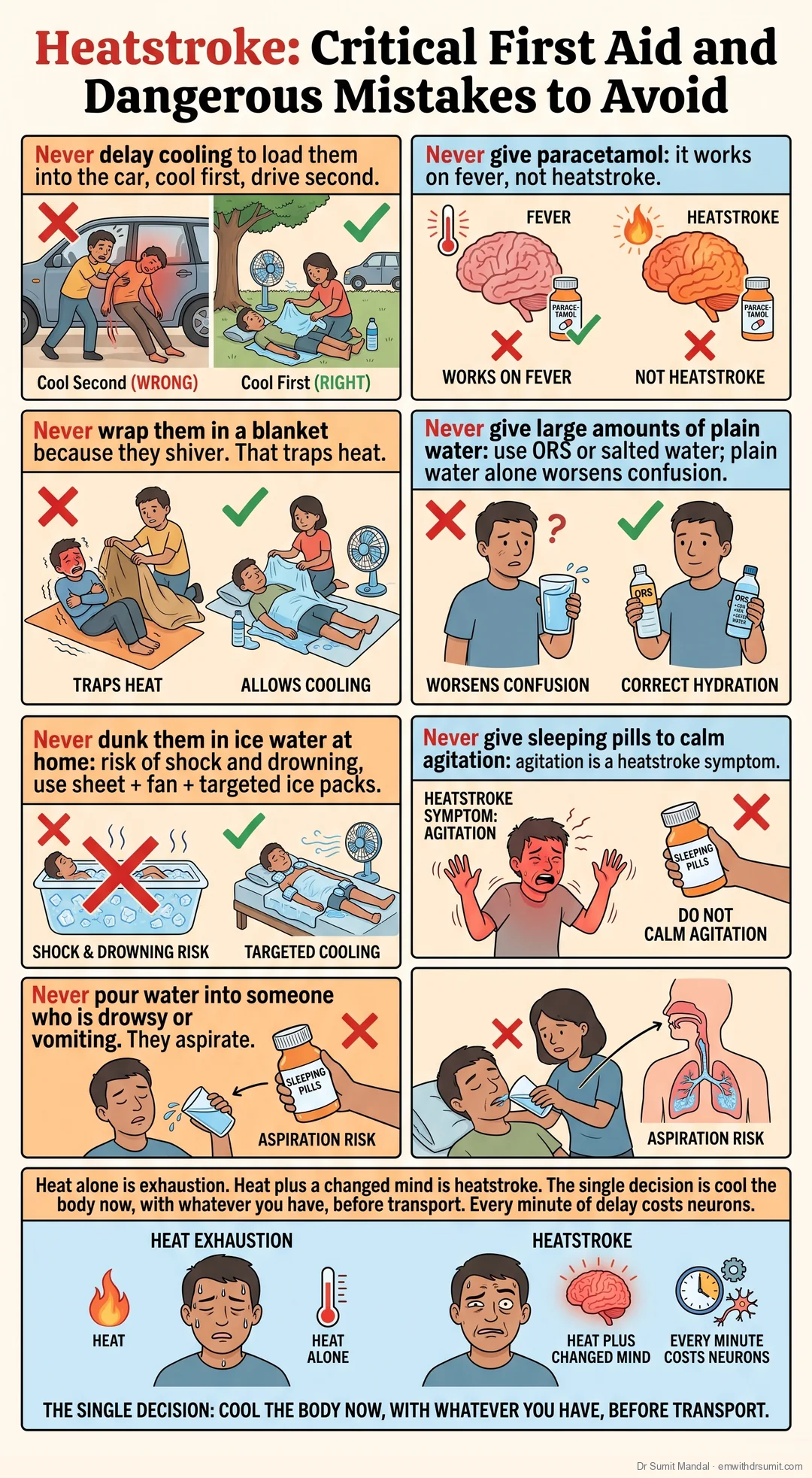
Heatstroke: undress, wet sheet, fan, neck-groin-axillae, before 108 arrives
Heatstroke: kapde utaaro, geela chaadar, hawa, gardan-kaanch-jaangh, 108 aane se pehle
Heatstroke is not 'just a fever': every minute the body stays above 40°C, the brain is cooking. You do not wait for the ambulance to bring ice; you strip the person, soak them, fan them, and pack ice on neck, armpits and groins NOW.
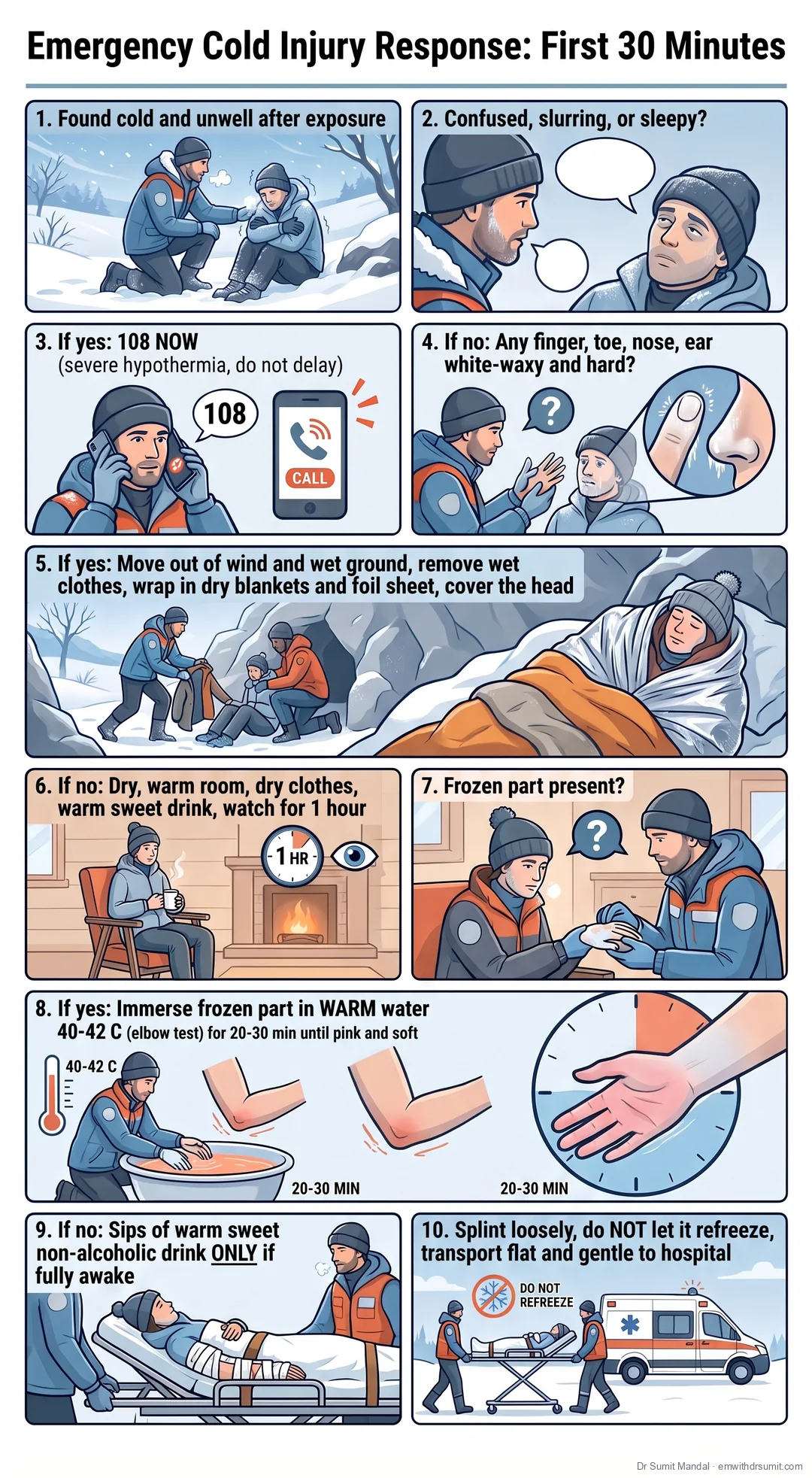
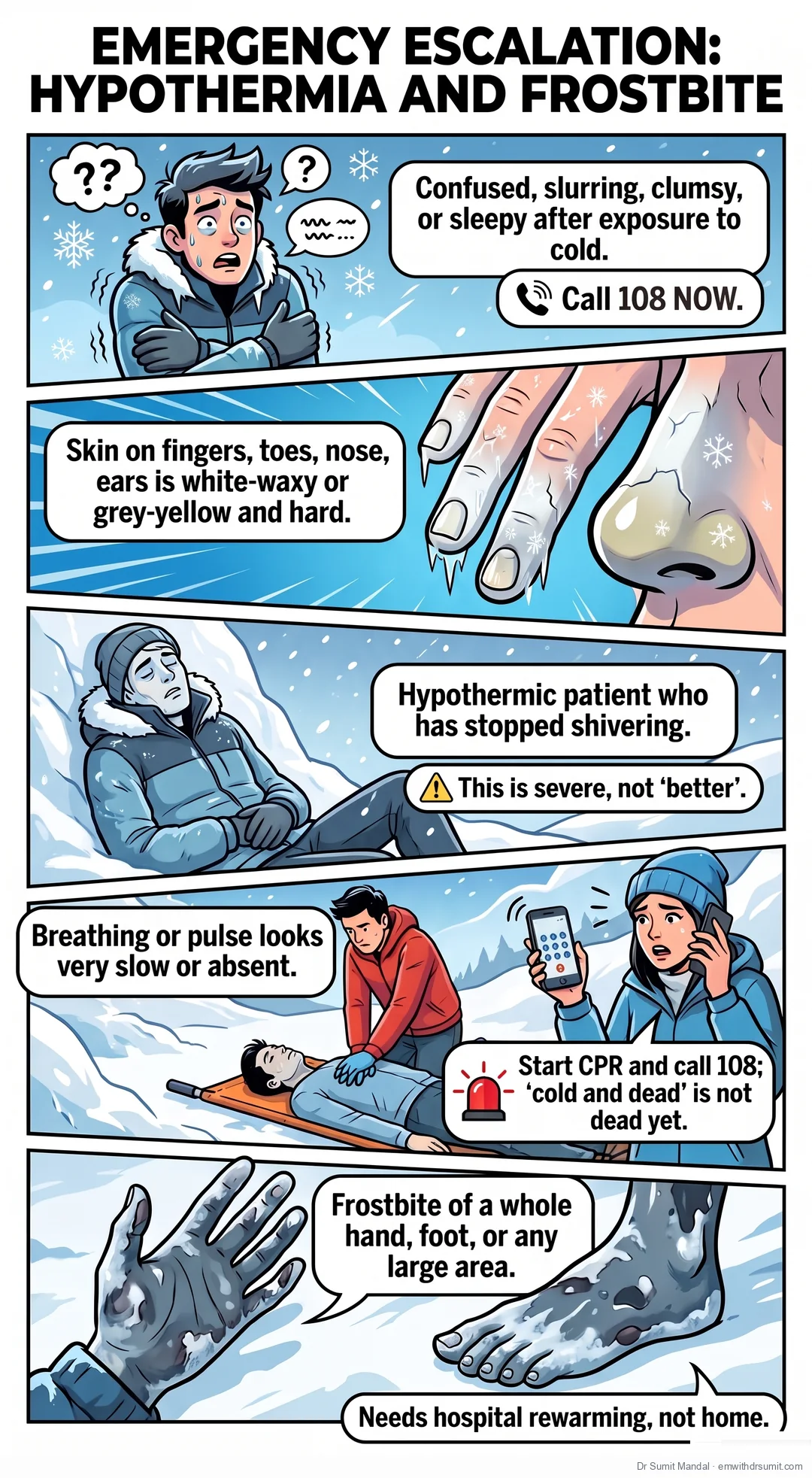
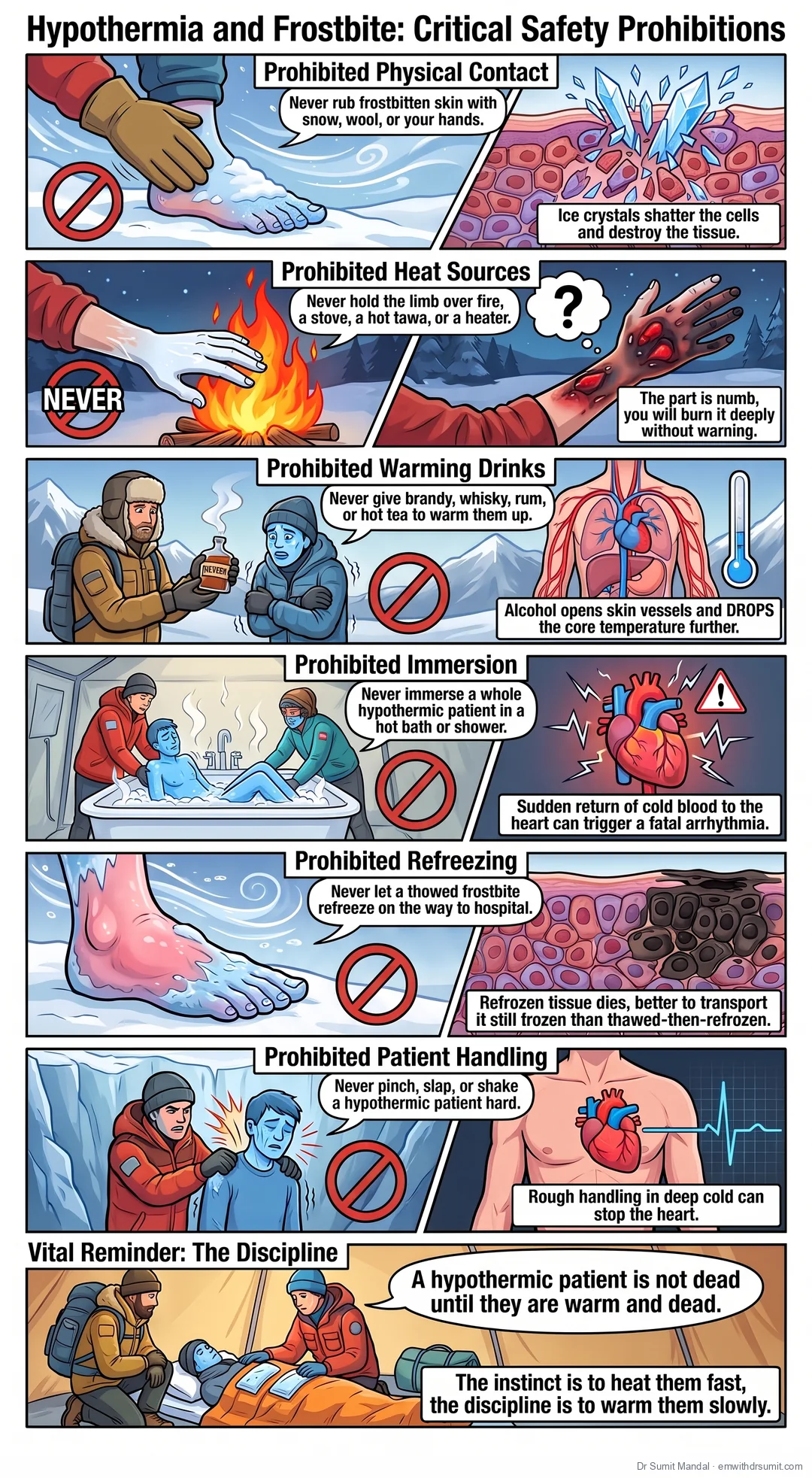
Hypothermia and frostbite: slow rewarming, no rubbing, no fire
Hypothermia aur frostbite: dheere se garam karo, ragdo mat, aag ke paas mat le jaao
A trekker on a Himalayan pass, a labourer asleep in fog, a homeless man in a Delhi January. Cold kills slowly and the wrong rescue kills faster. Warm, do not heat. Wrap, do not rub. Sip, not gulp.
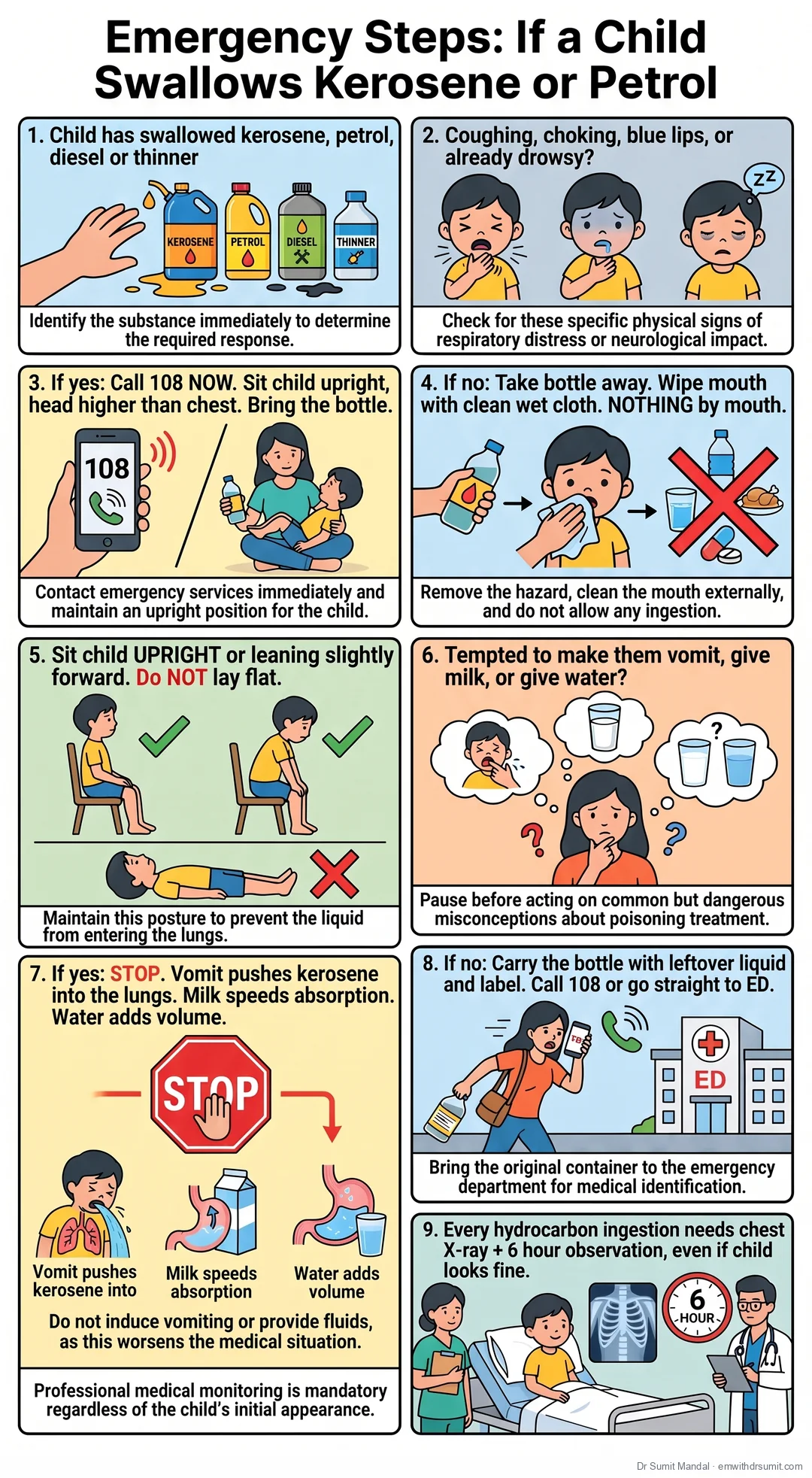
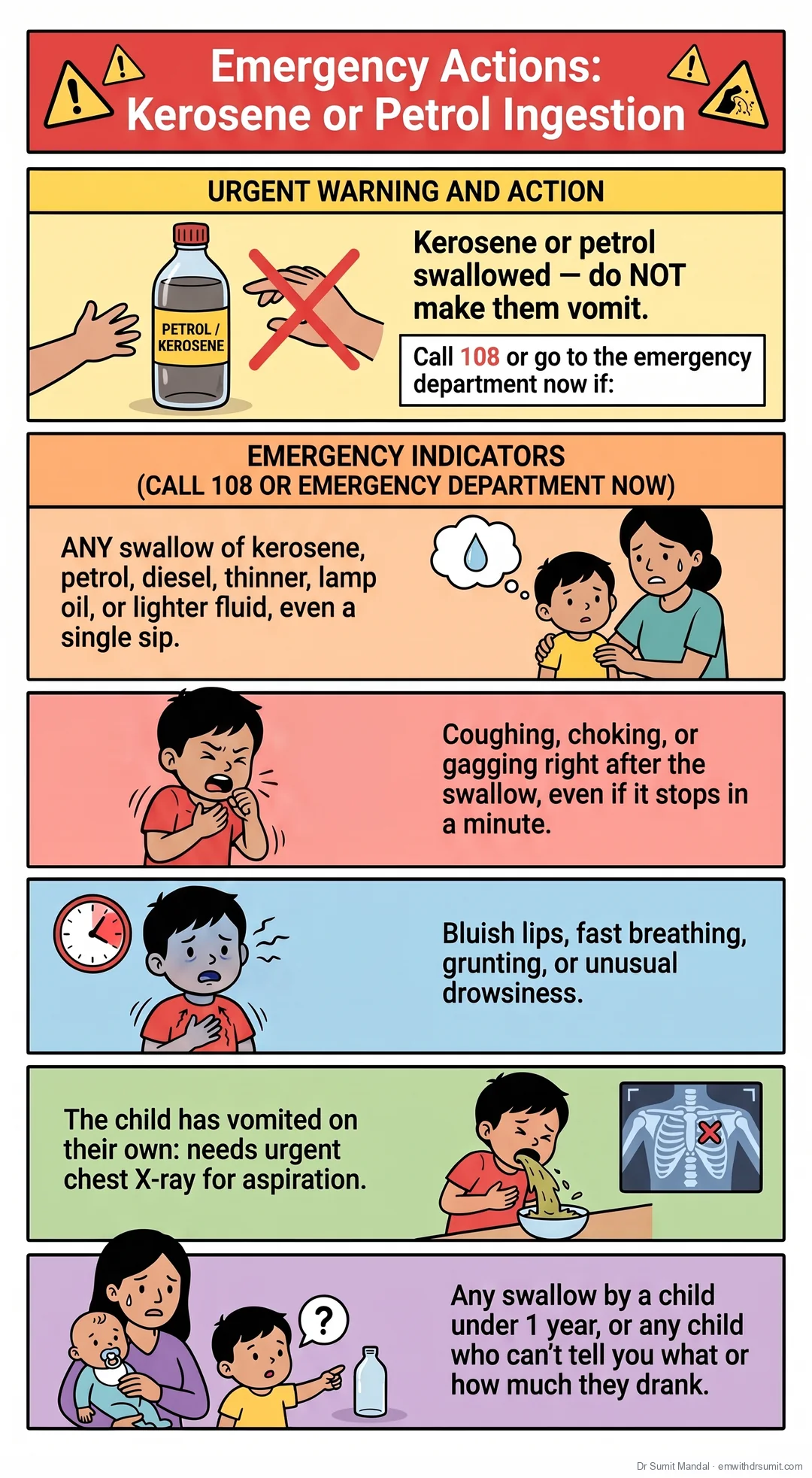
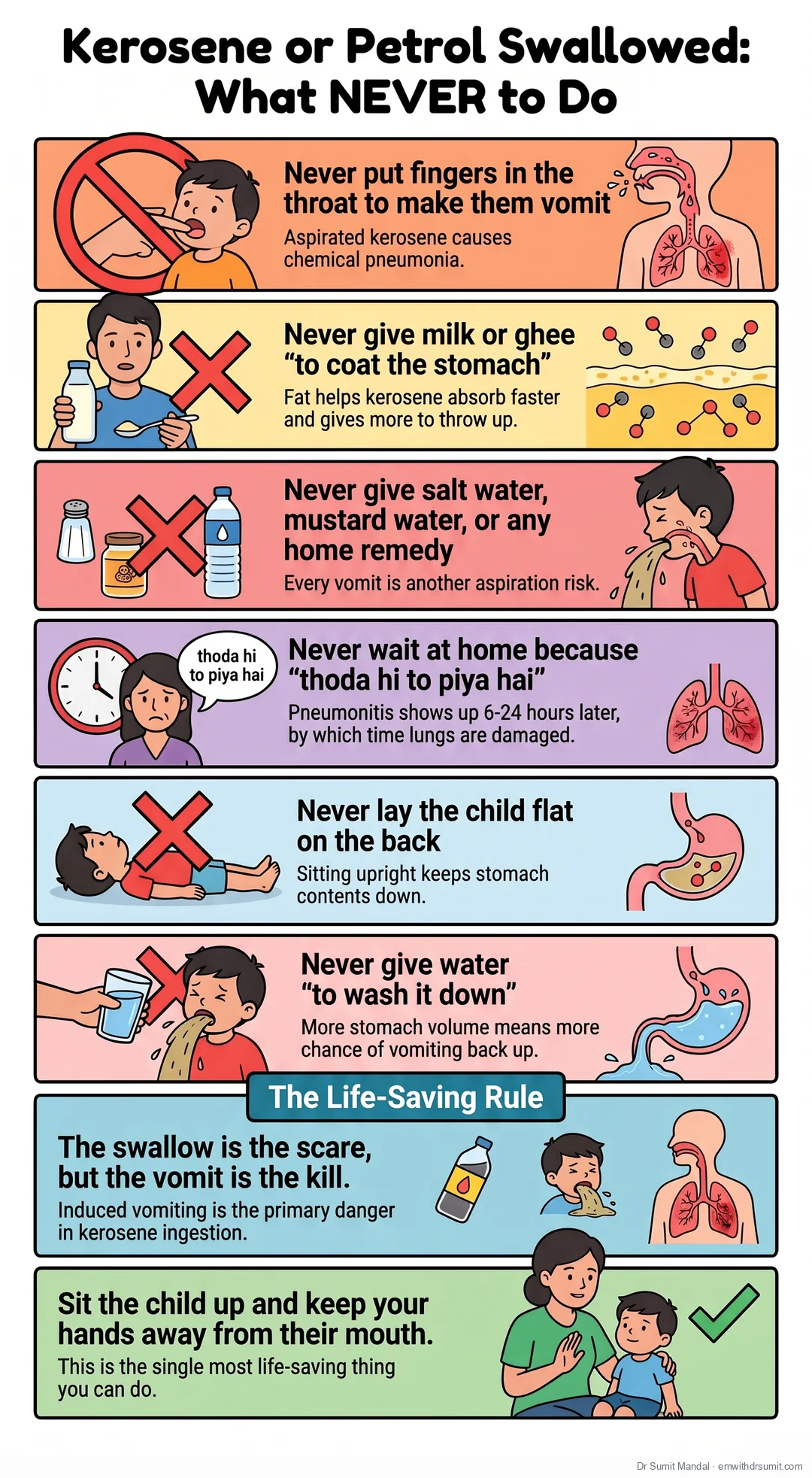
Kerosene or petrol swallowed: do NOT make them vomit
Mitti ka tel ya petrol pee liya: ulti BILKUL mat karwao
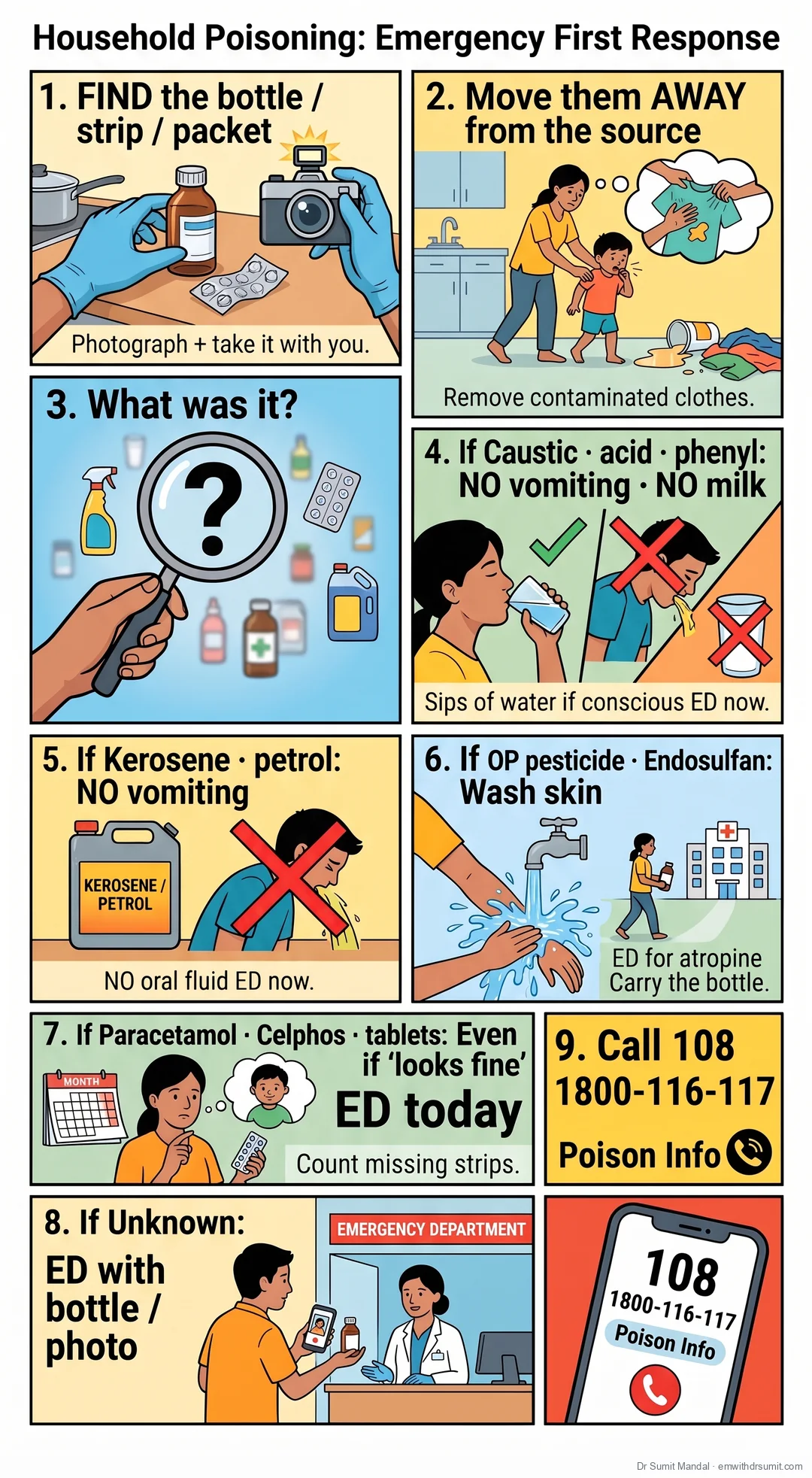
Children sip kerosene from glass bottles on the kitchen shelf, mistaking it for water or cold drink. The petrol or kerosene itself is rarely the killer, the real damage happens when it comes back up the throat and goes into the lungs. So the one thing every well-meaning relative wants to do (induce vomiting) is the exact thing that turns a scare into a chemical pneumonia.
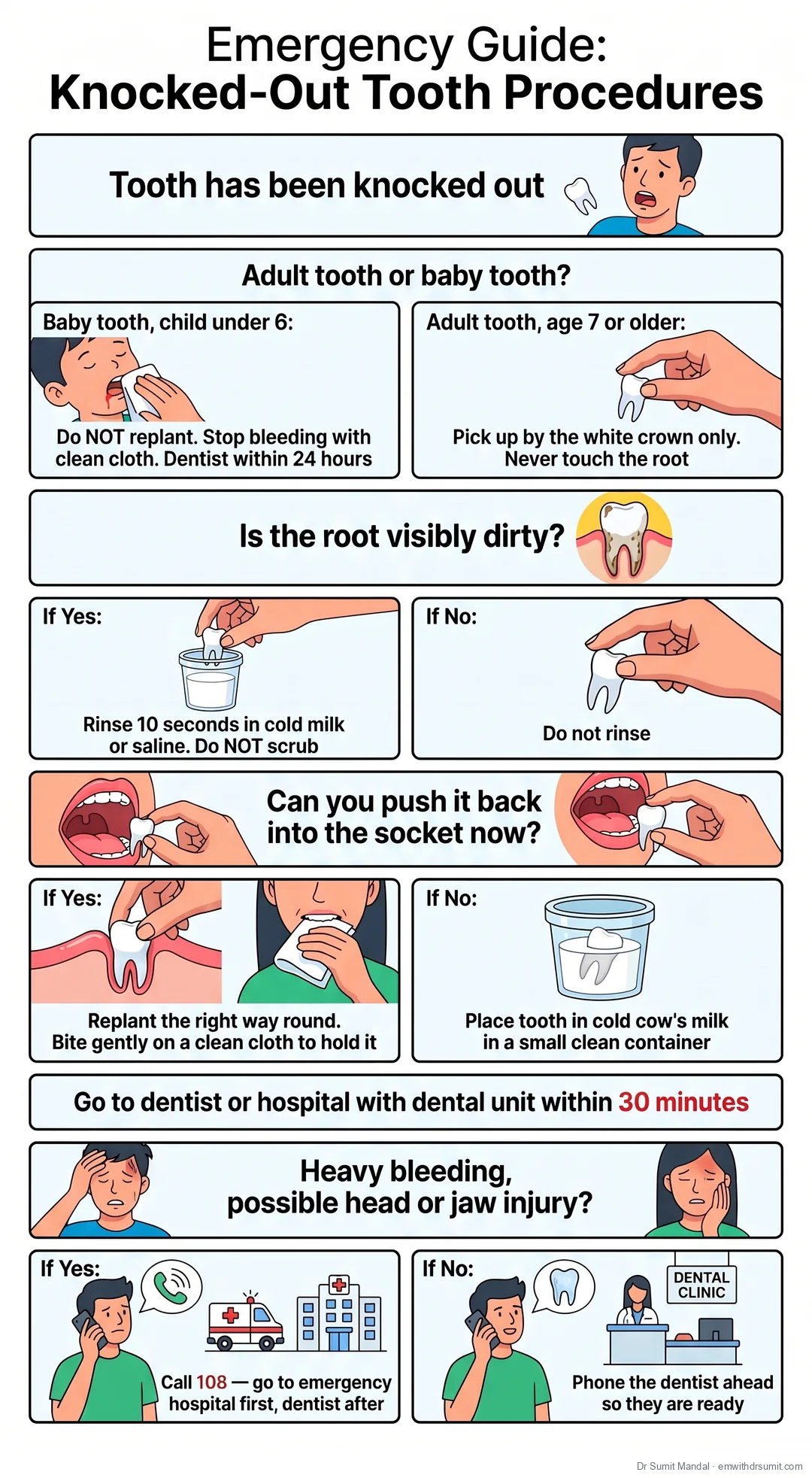
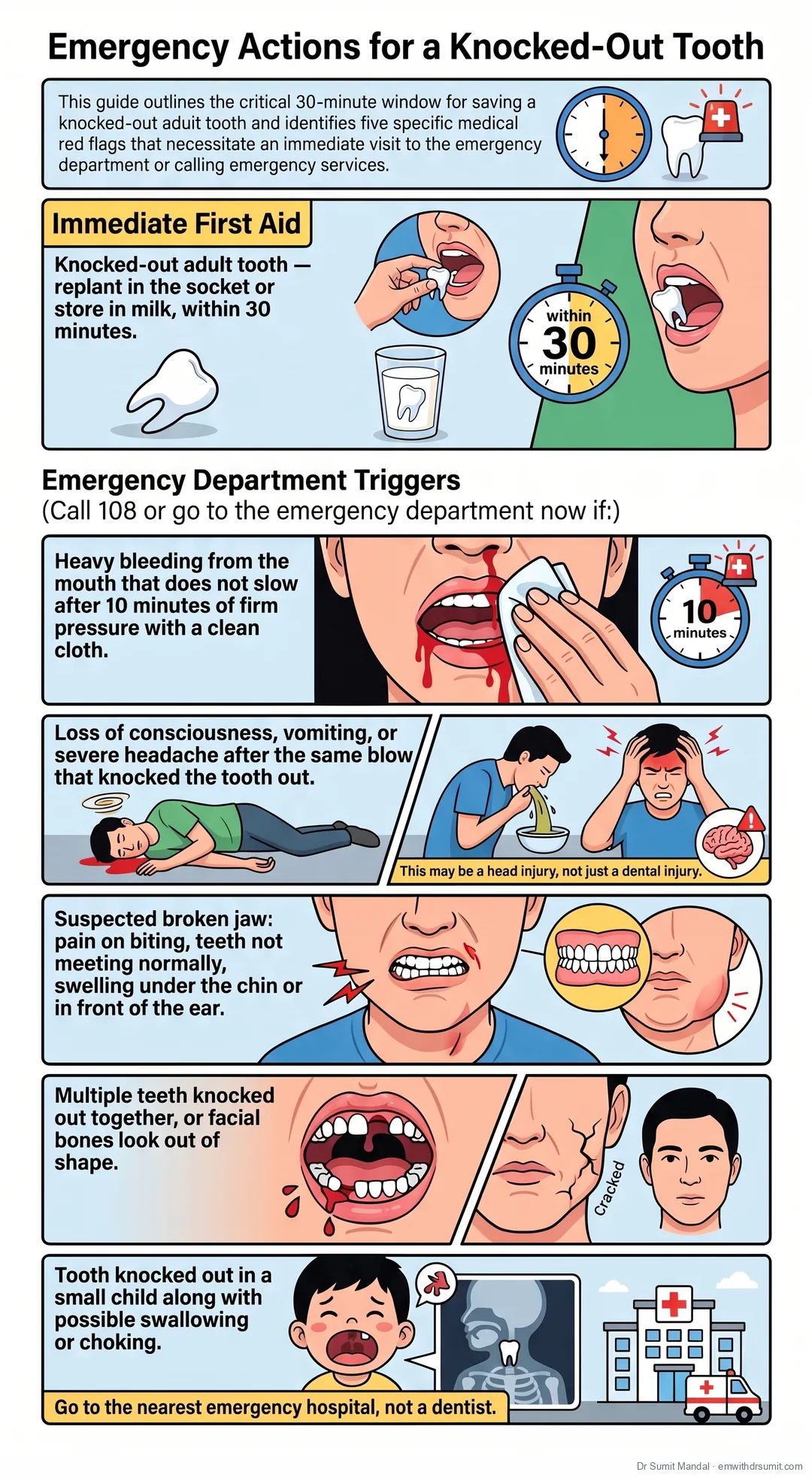
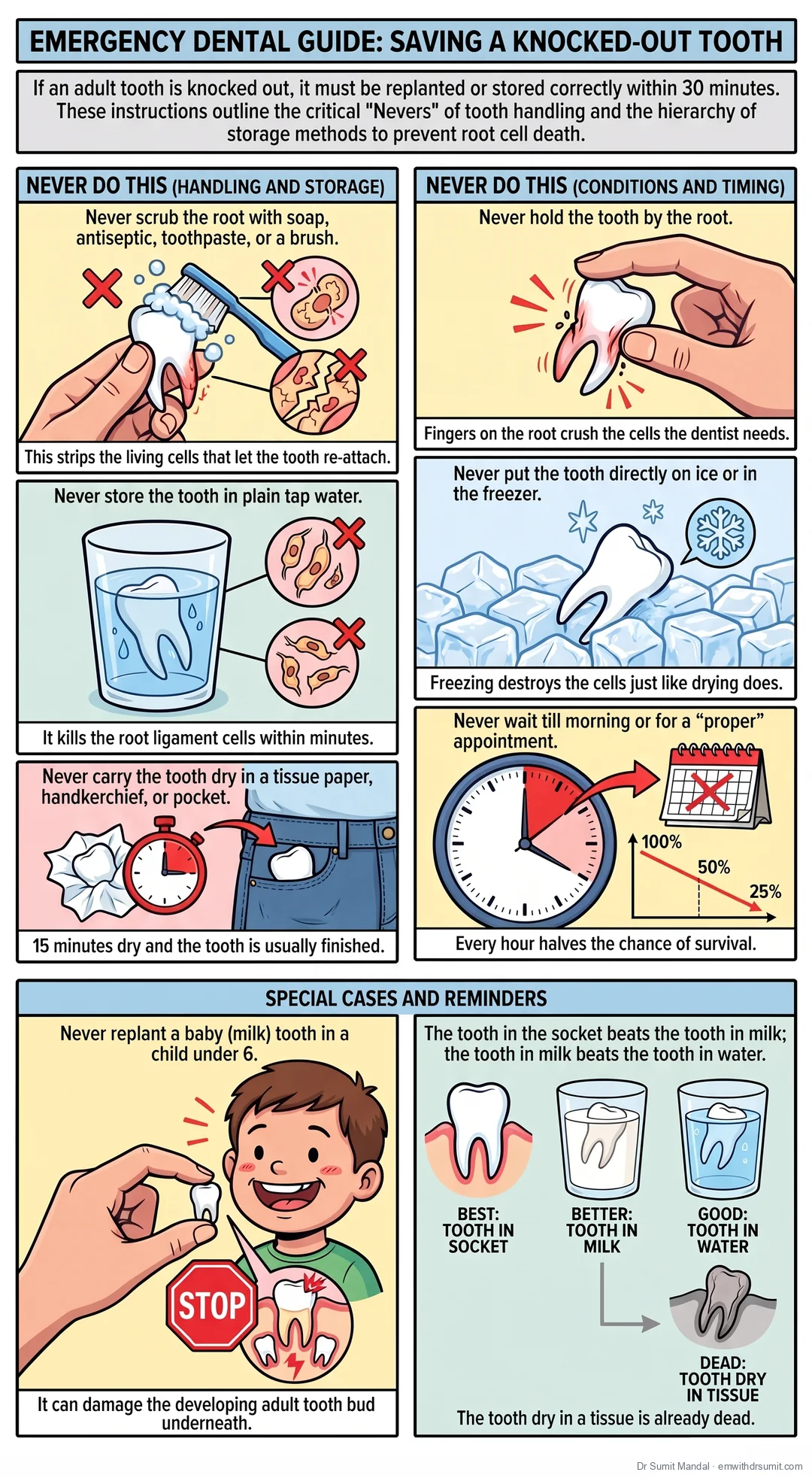
Knocked-out adult tooth: replant in the socket or store in milk, within 30 minutes
Adult ka daant gir gaya: 30 minute ke andar wapas socket mein lagao ya doodh mein rakho
A knocked-out adult tooth can be saved: but only if you act in the first 30 minutes. Pick it up by the white crown (never the root), rinse with milk if dirty, and either push it straight back into the socket or store it in cold cow's milk until you reach a dentist.
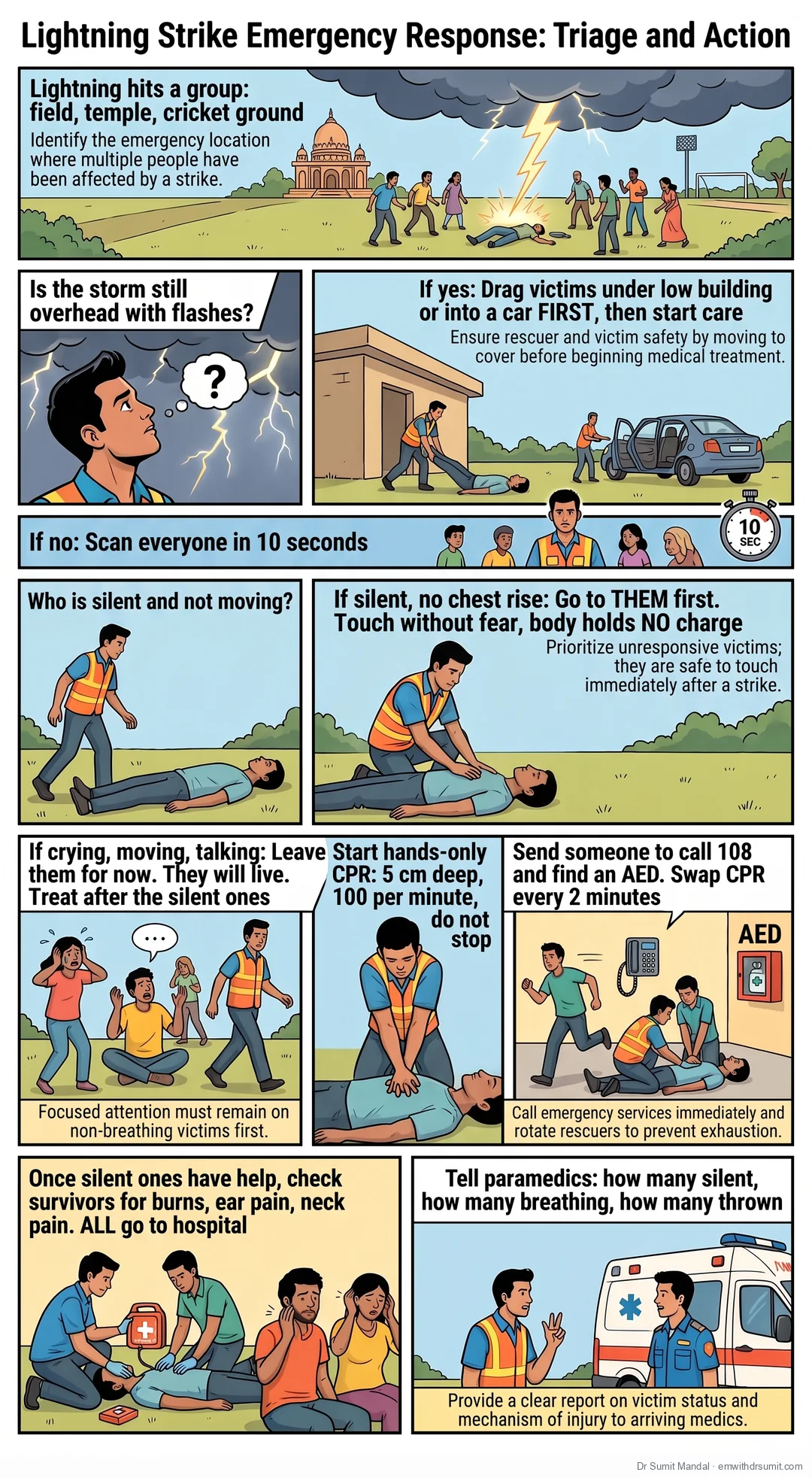
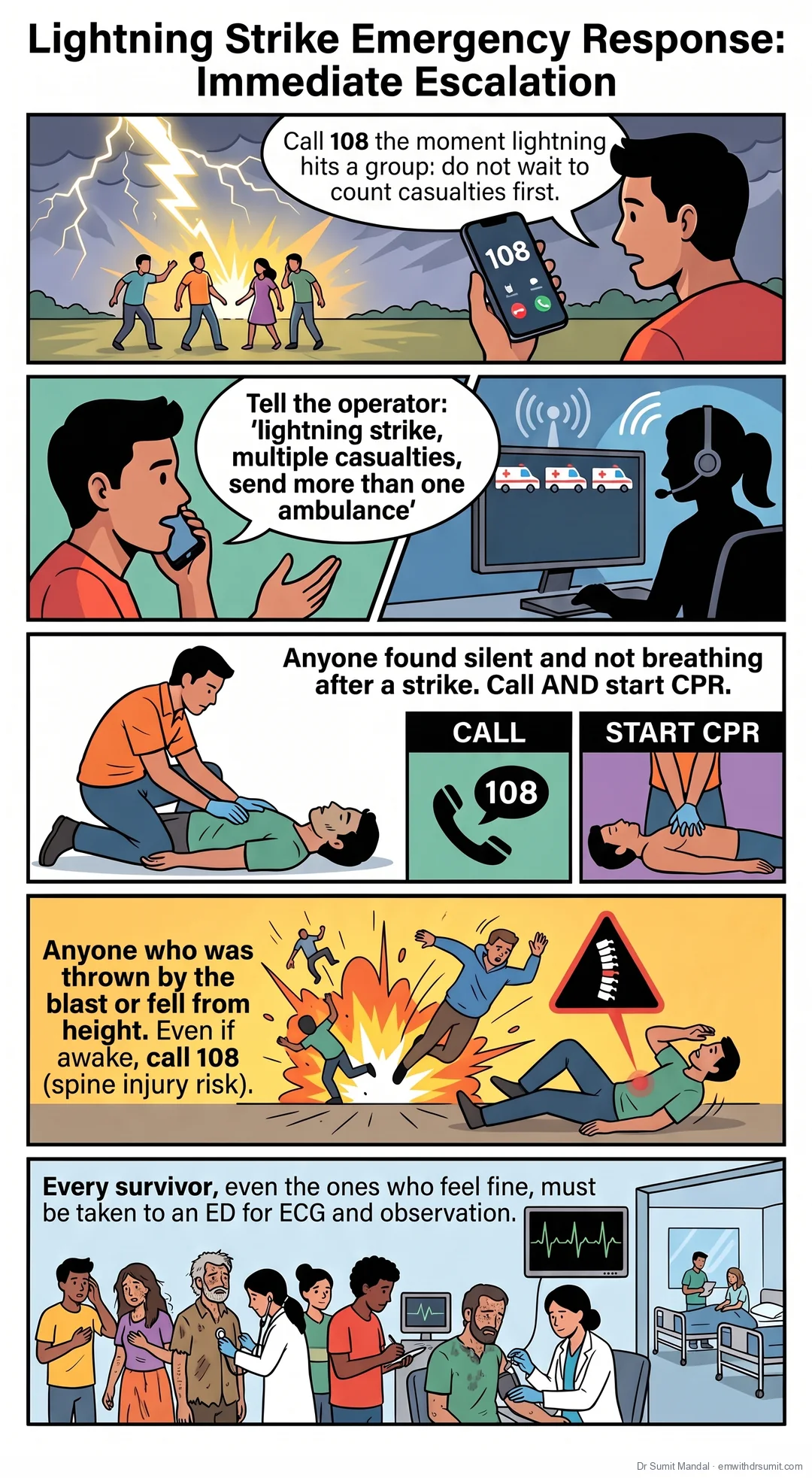
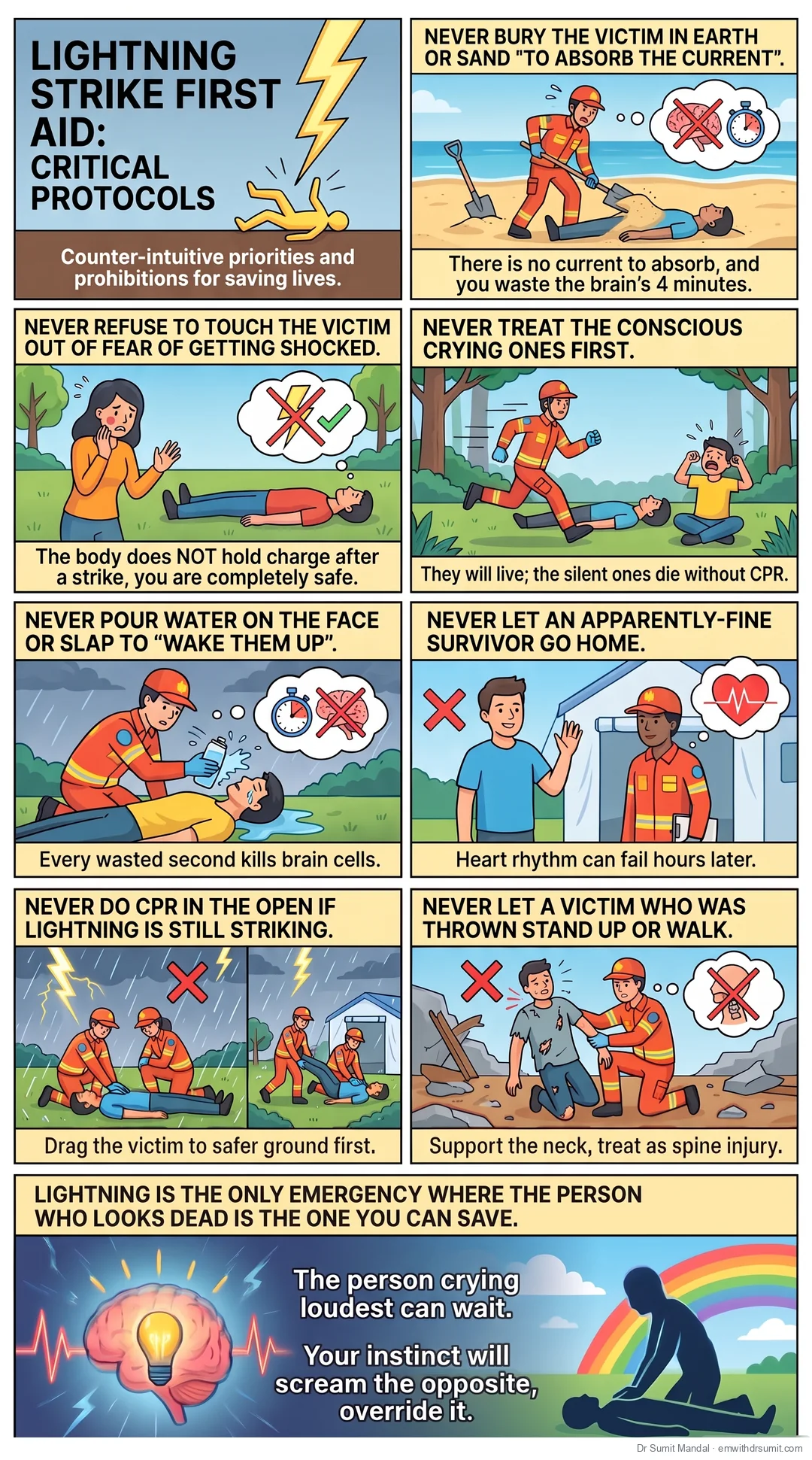
Lightning strike: start with the ones who look dead, they are the ones you can save
Bijli giri: jo murda lag rahe hain, pehle unhi ko bachao, wahi bachne wale hain
When lightning hits a group in a field, temple, or cricket ground, the rule of normal first aid flips. The people crying and moving will mostly recover on their own, the ones lying silent and still are in cardiac arrest and your CPR can bring them back.
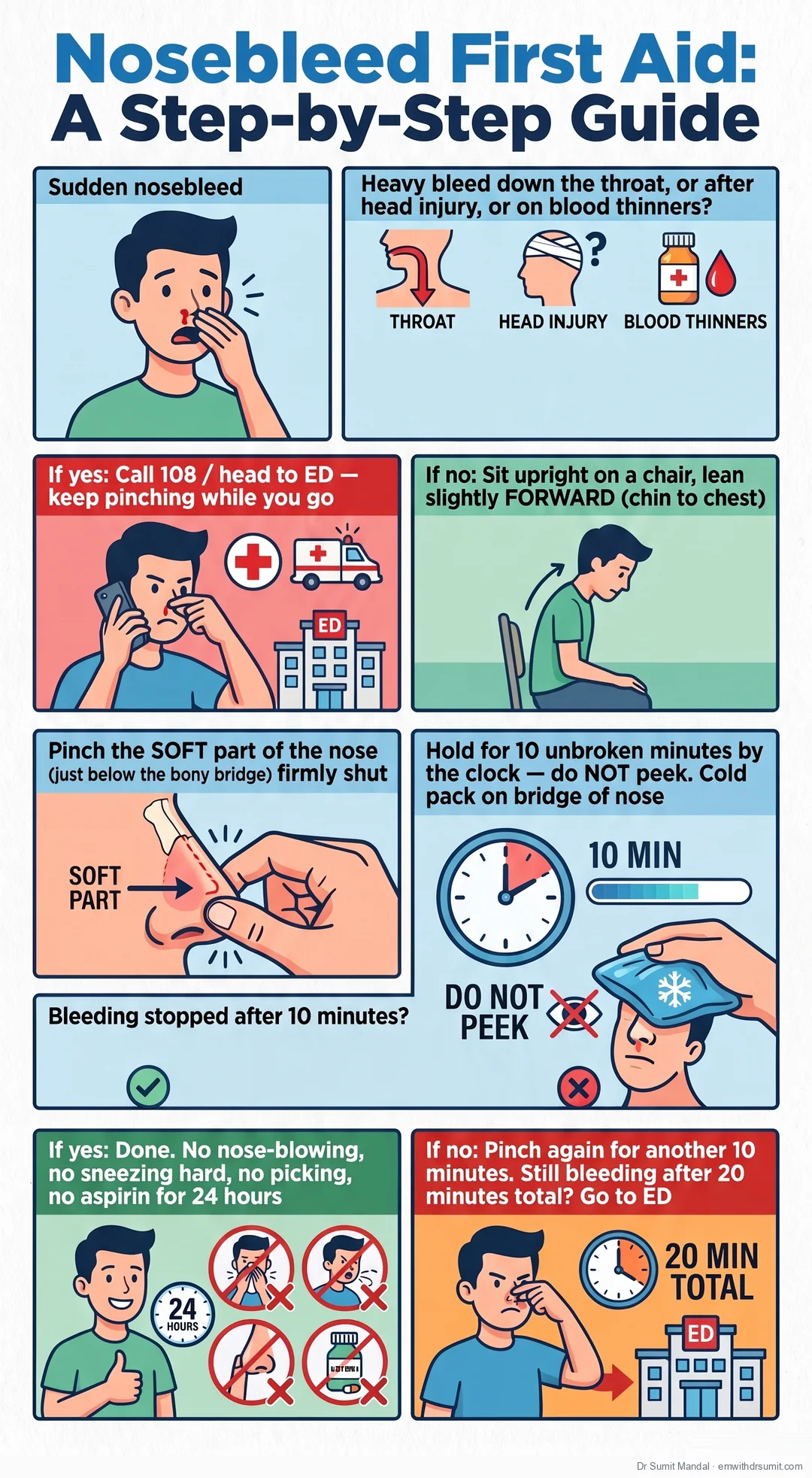
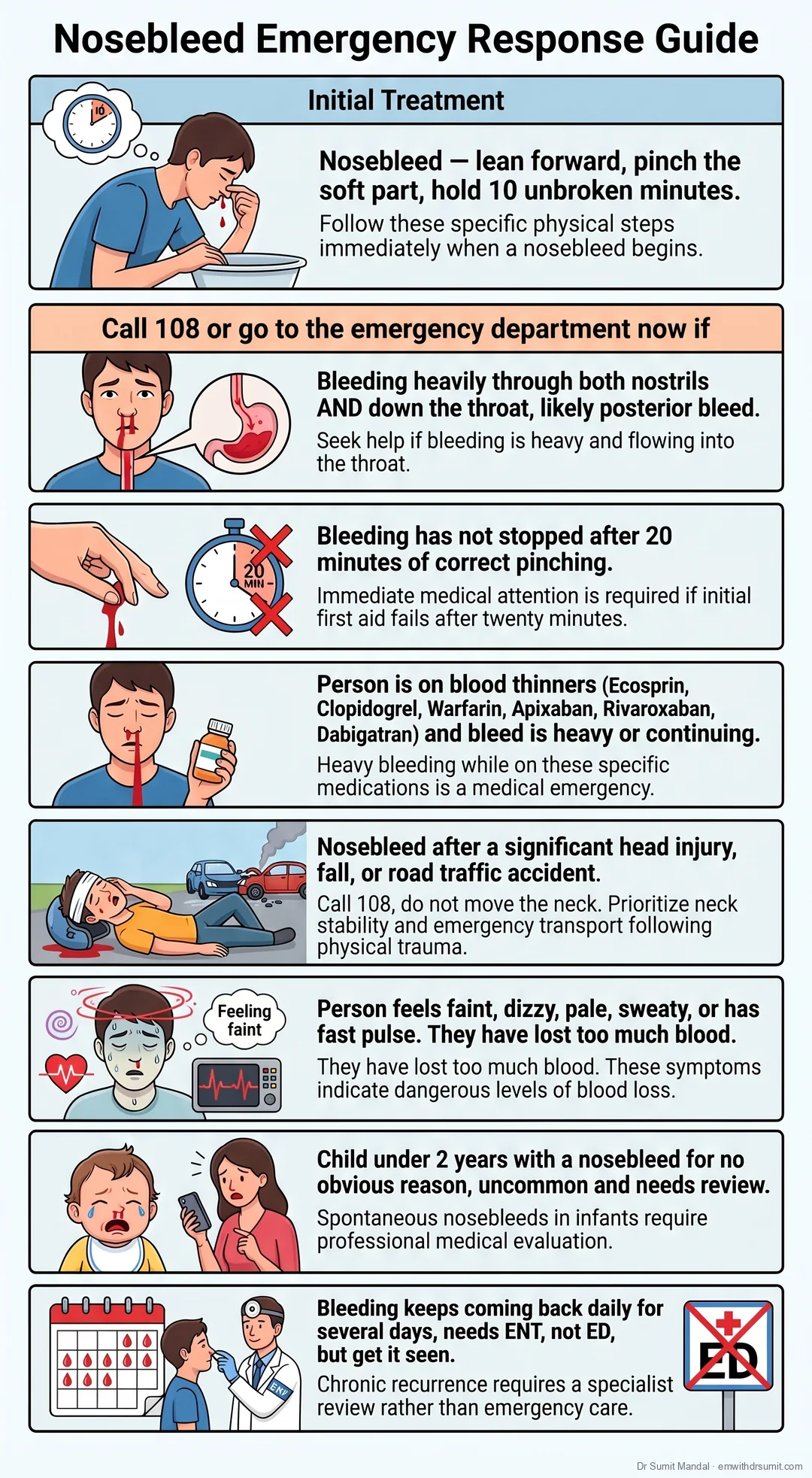
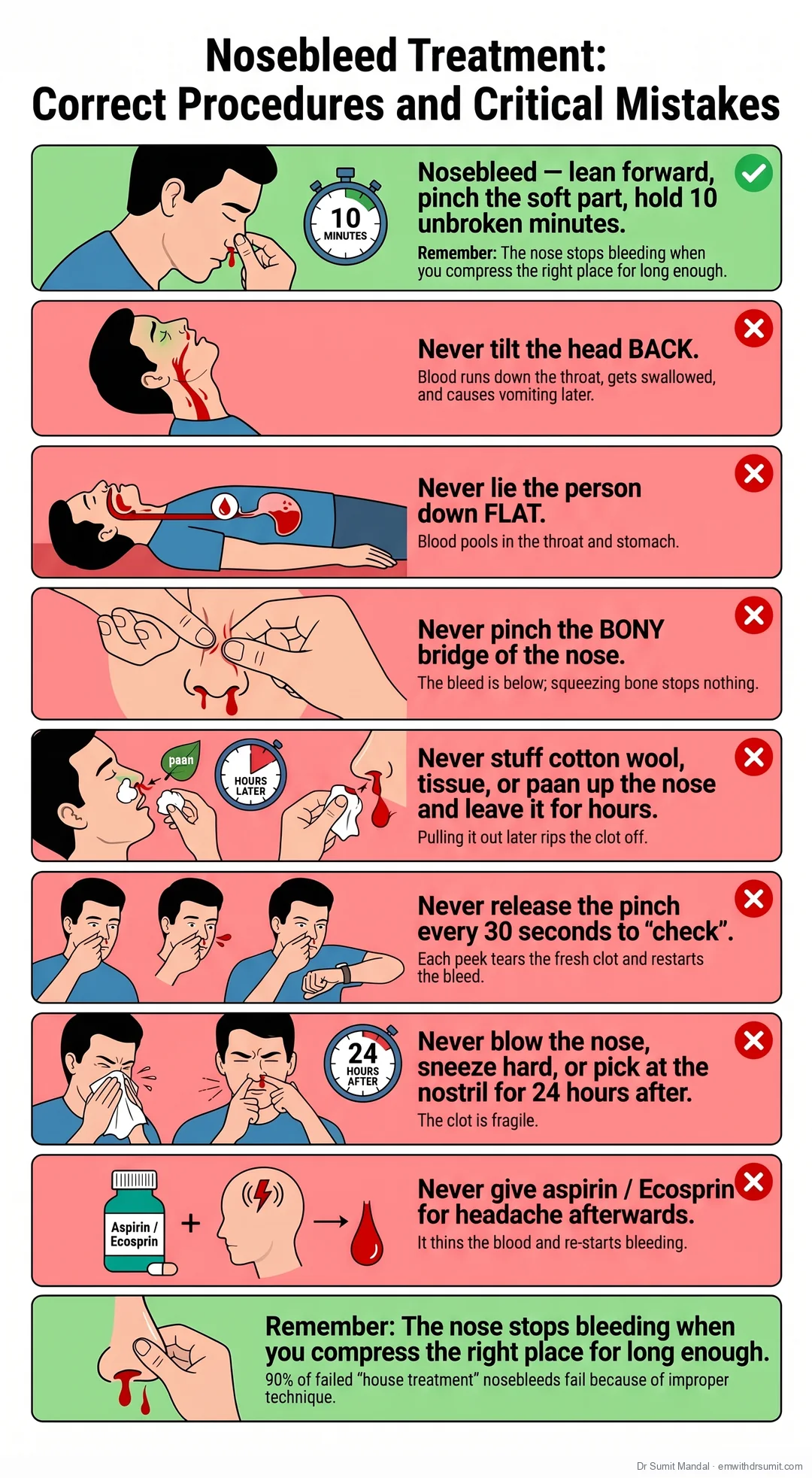
Nosebleed: lean forward, pinch the soft part, hold 10 unbroken minutes
Naak se khoon: aage jhuko, narm hissa daboo, 10 minute bina chhode pakdo
90% of nosebleeds stop with one simple thing done correctly: pinching the soft part of the nose (not the bony bridge) for 10 unbroken minutes while leaning forward. Tilting the head back, stuffing cotton, or lying flat all make it worse.
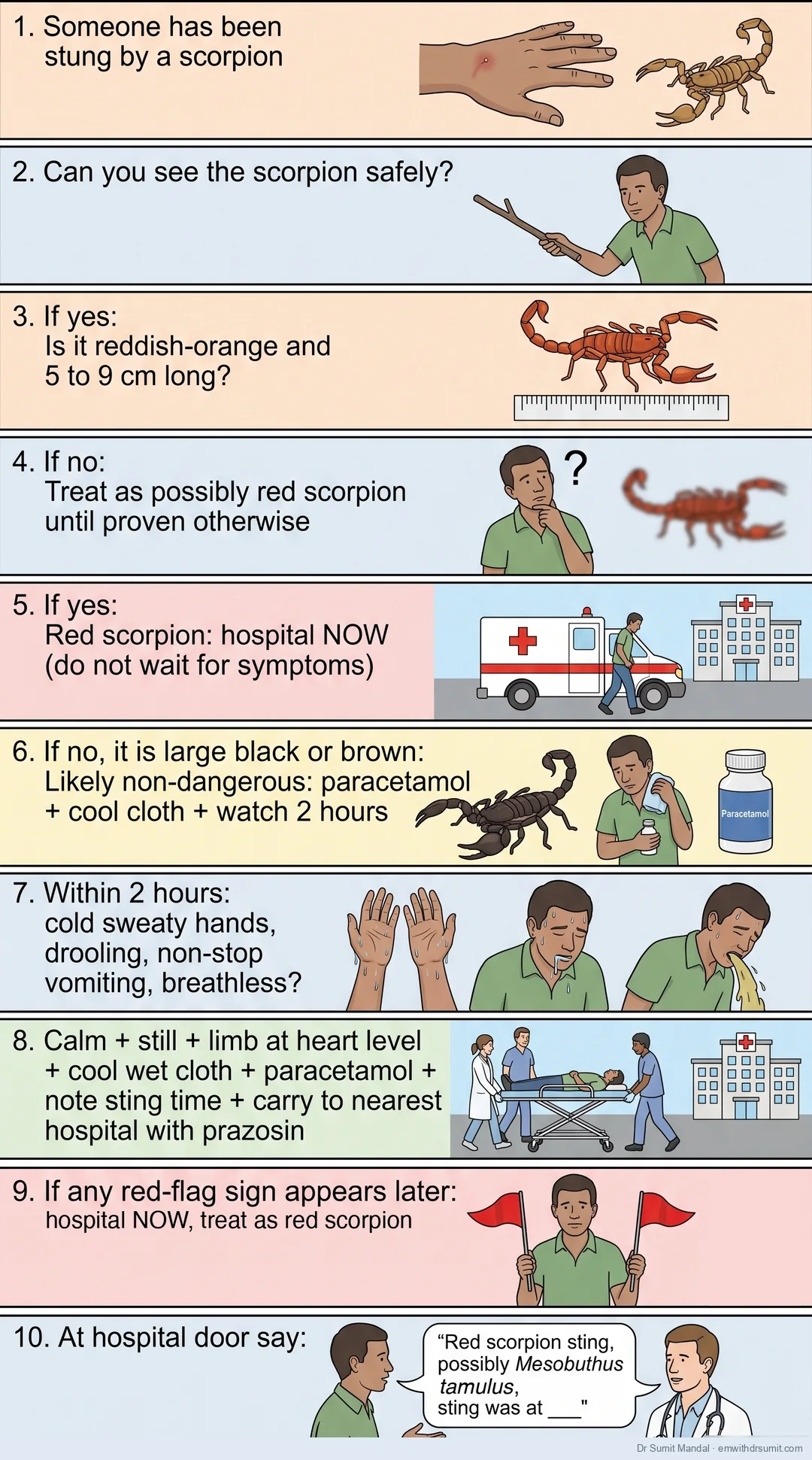
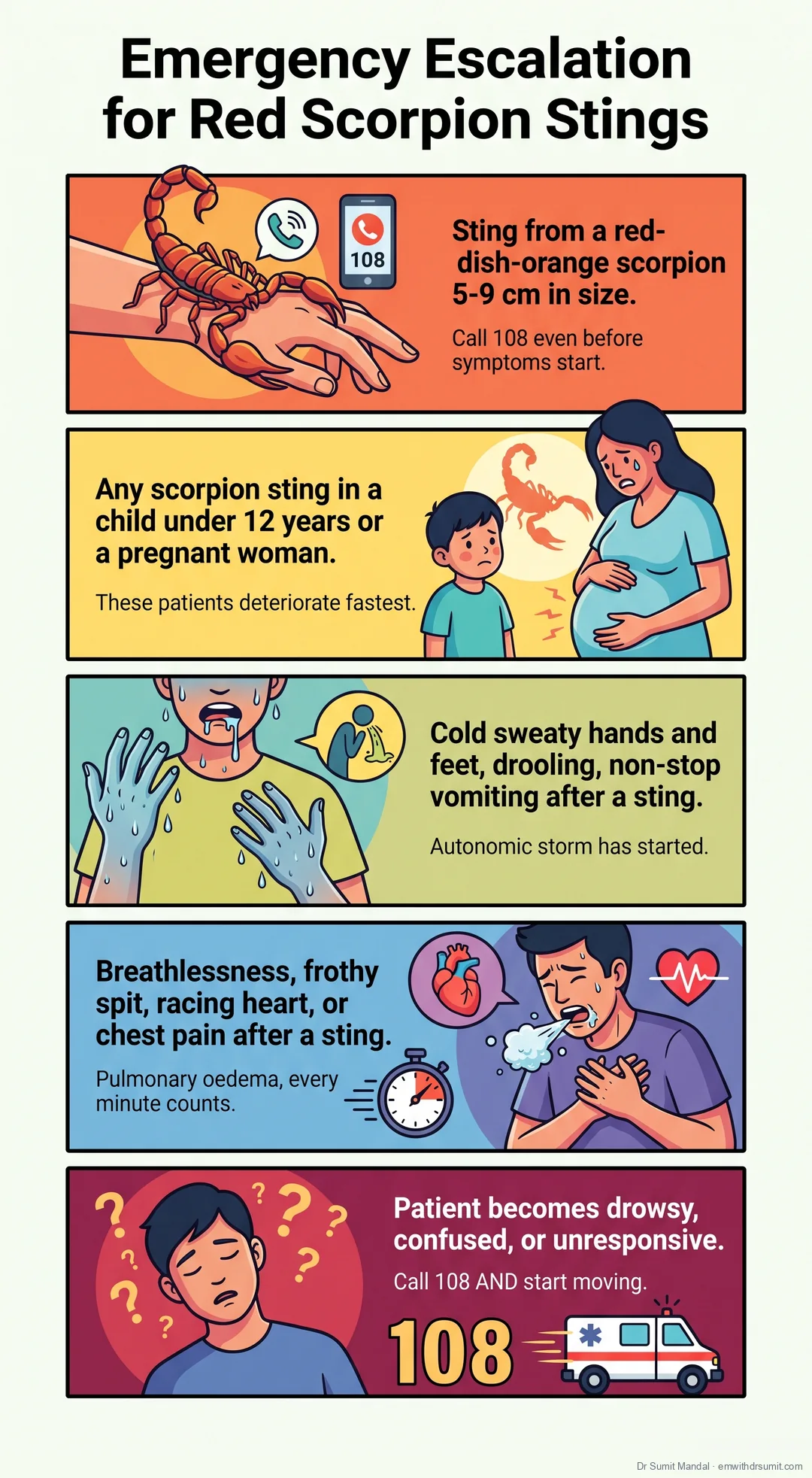
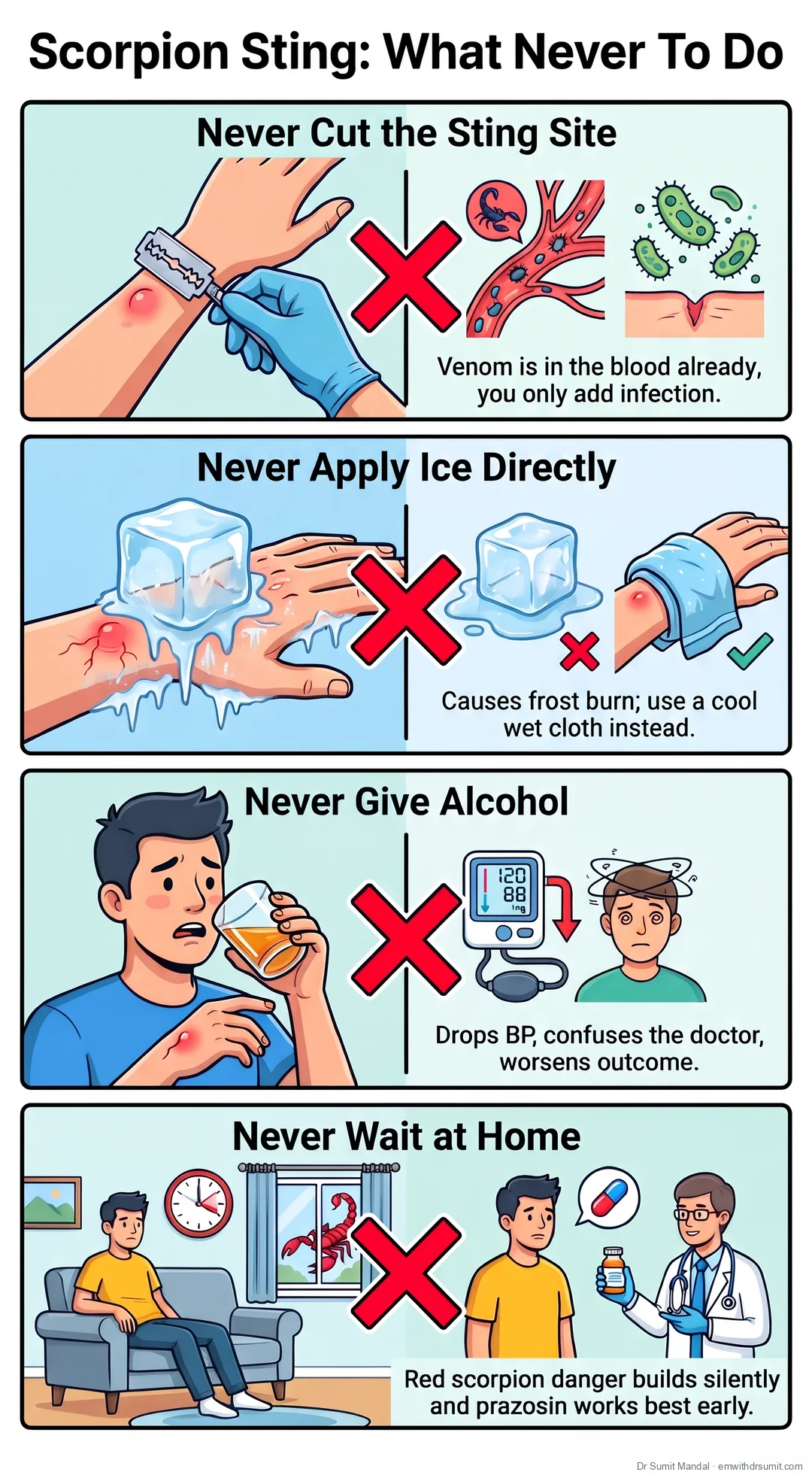
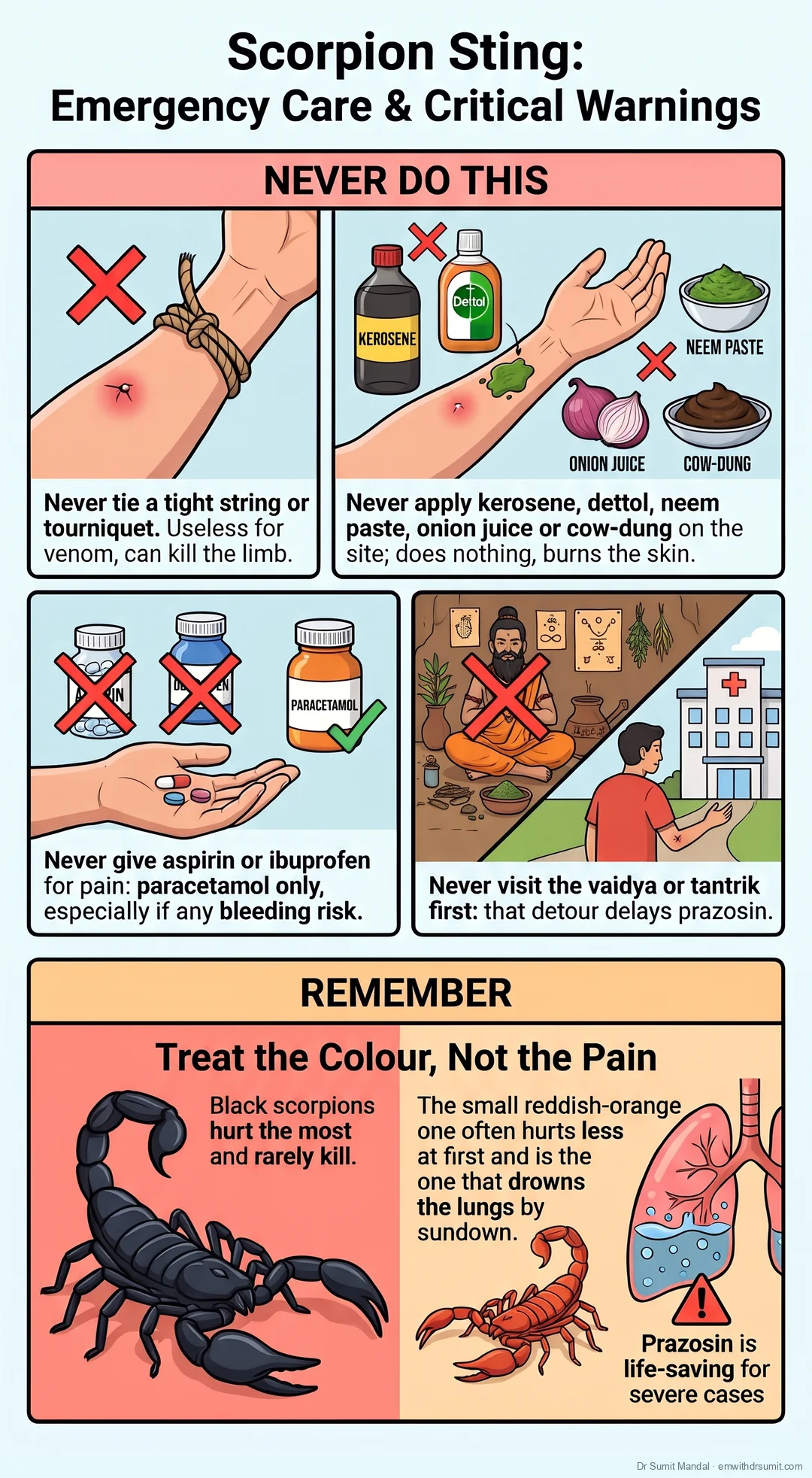
Scorpion sting: pain control, and early prazosin for red scorpion
Bichchu ka kaata: dard ka ilaaj, aur red scorpion ke liye jaldi prazosin
Most scorpion stings in India hurt badly but are not dangerous. The Indian red scorpion is the killer. It causes pulmonary oedema within hours, and oral prazosin, given as early as possible, is what protects the lung and the life.
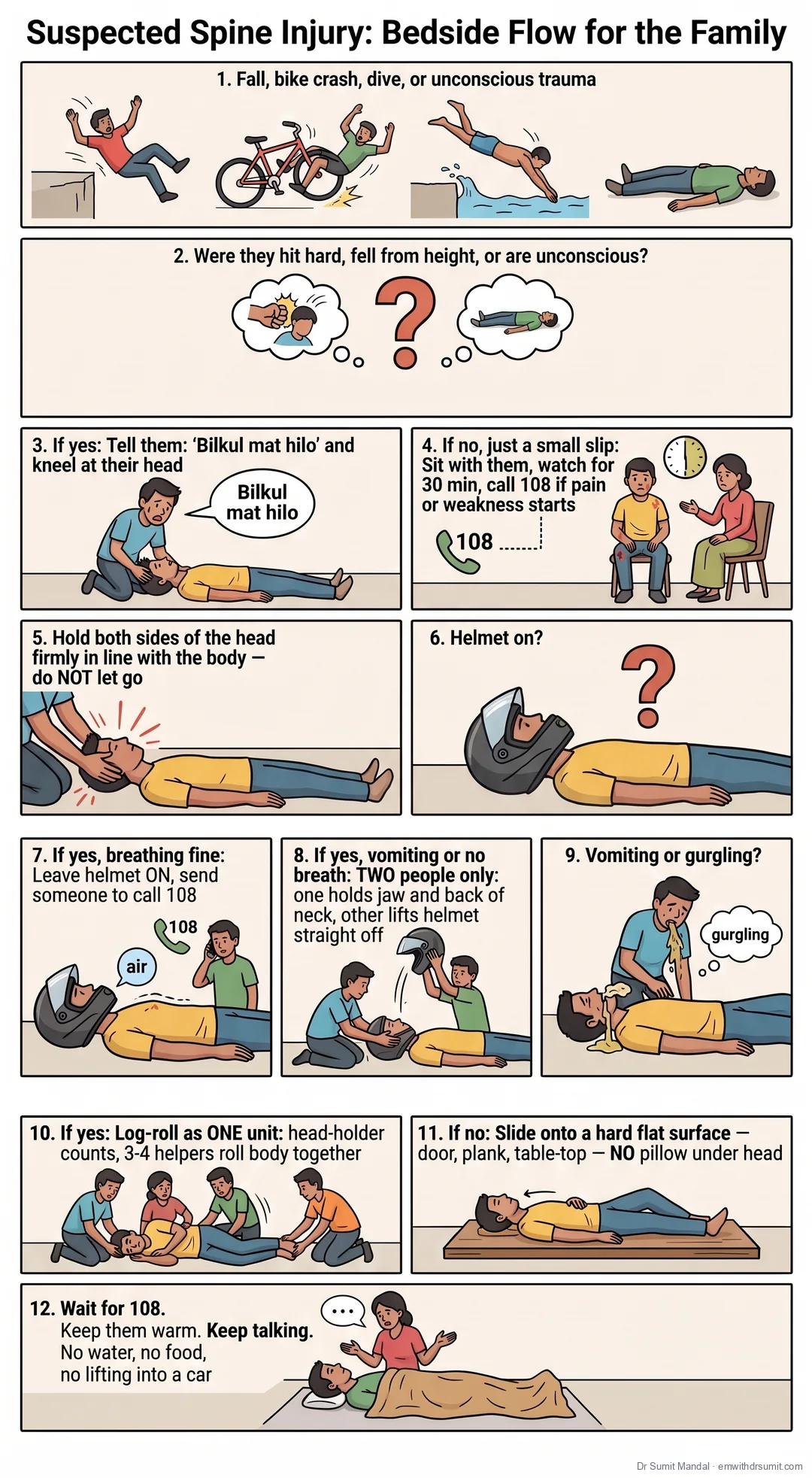
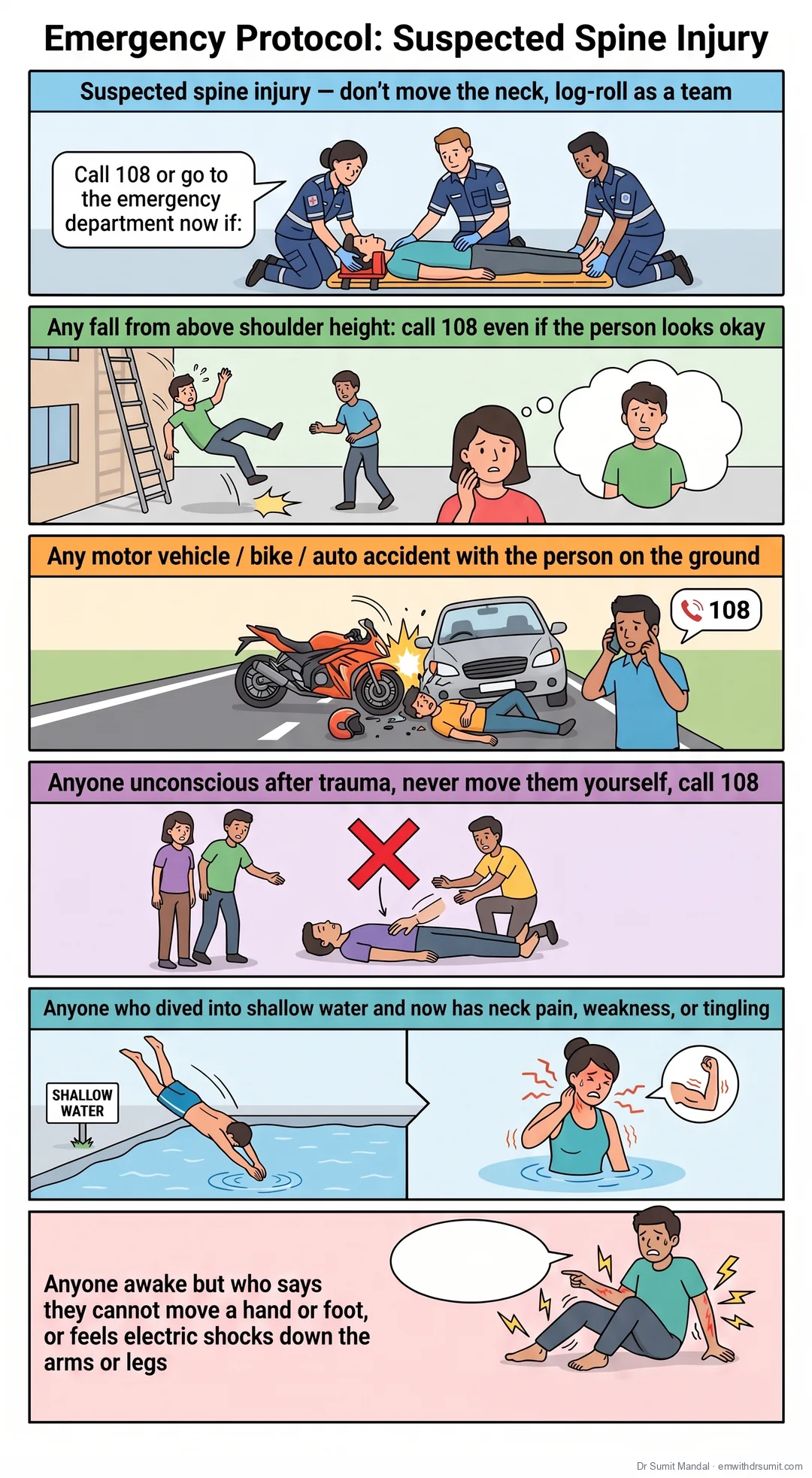
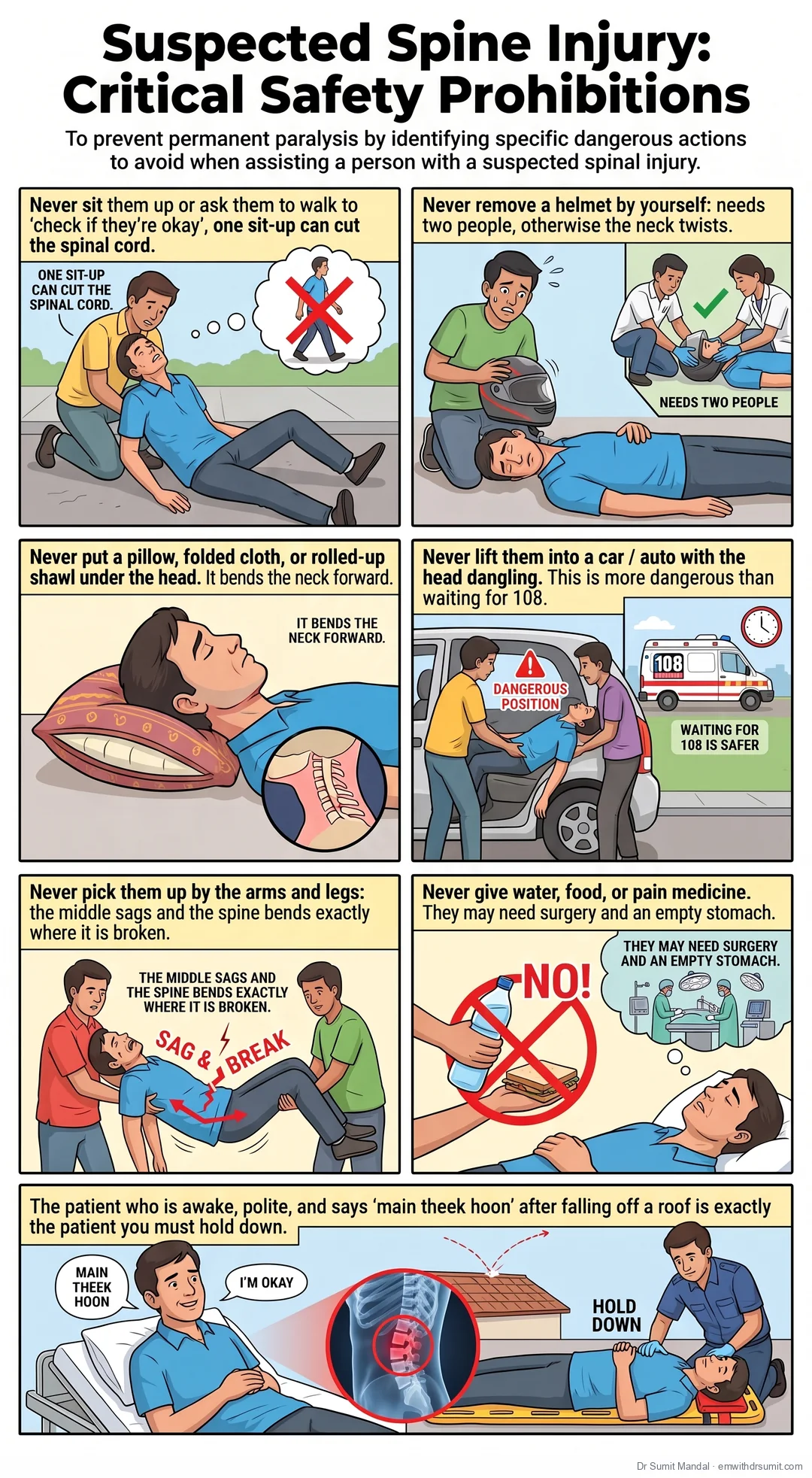
Suspected spine injury: don't move the neck, log-roll as a team
Reedh ki haddi ki chot ka shak: gardan mat hilao, team milkar log-roll karo
After a fall from height, a bike accident, a dive into shallow water, or any unconscious trauma. Assume the spine is broken until proven otherwise. Hold the head still in line with the body, and never roll or lift the person alone.